

- Where
- Lake Guntersville and the earlier Tennessee River setting
- Reports
- Historical
- The site
- Still standing. Open to visit
- Also called
- creature of the open lake and the old river
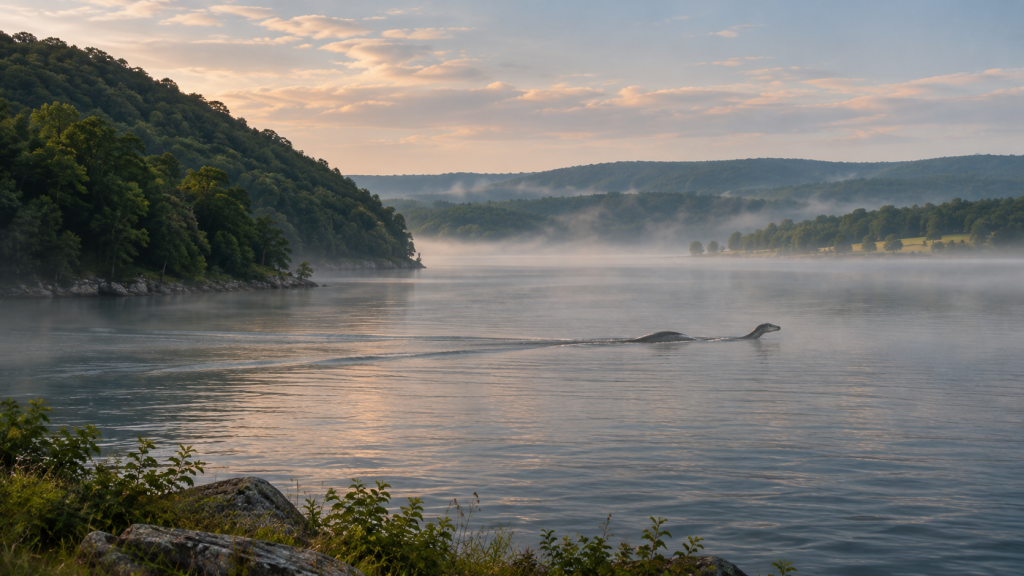
The story begins on the Tennessee River, before there was a Lake Guntersville. In this version, the creature's story is said to go back to settlement days. The water spread when the valley was dammed, but the thing in the story didn't go anywhere. It simply had more room to disappear.
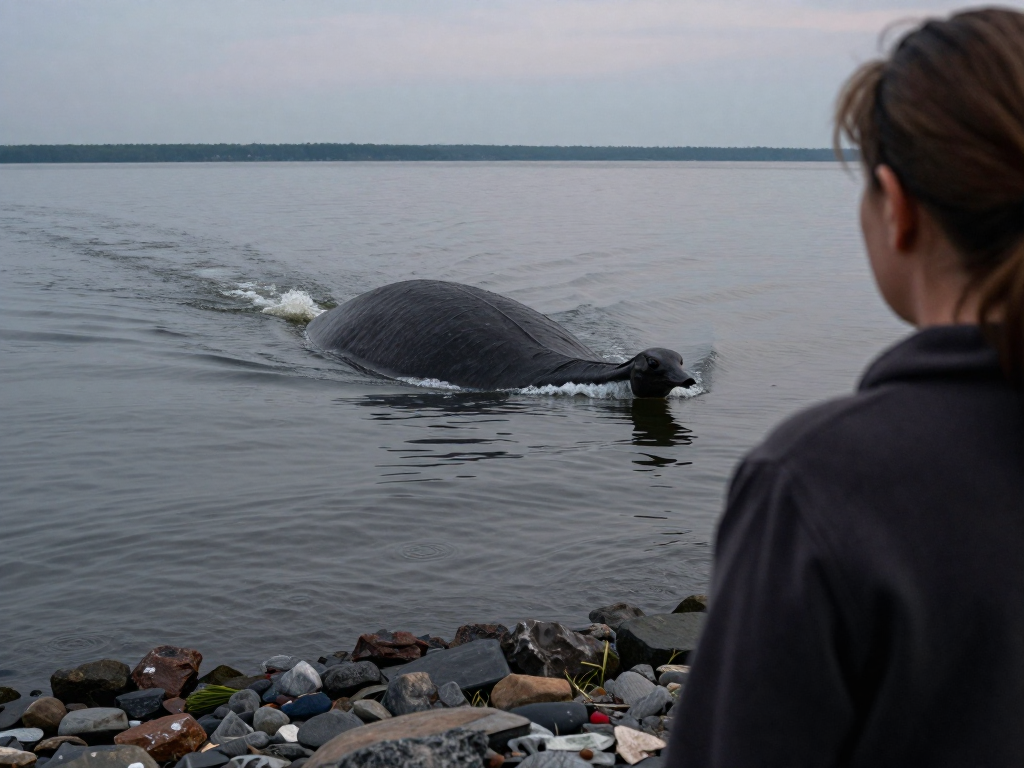
Picture a quiet stretch of the lake where the low ridges meet the water. The shape that breaks the surface is dark and low at first. Then a slender neck rises, just long enough to make out a small head. Behind it, two rounded humps show in succession, far enough apart to suggest a body much longer than the part above water. The neck lowers. The humps slip under. A long wake keeps cutting across the surface after the shape is gone.
In this telling, that trailing wake is the detail that sticks. A floating branch can put a dark line on the water. A boat can send a ripple rolling down a cove. But the lake monster story hangs on the moment those separate shapes look like one thing, moving in one direction.
This is the creature of the open lake and the old river in the telling, not the car-sized catfish said to wait beneath the dam. Guntersville has room for both stories, and they don't have to be the same one.
Part of the lore of Lake Guntersville Monster.
Where it is told
The Full Tale
The Wake Beyond the Point
A woman returning to her father’s fishing place finds the lake carrying an old river story toward shore.
1 The Fish Basket
My father had a fish basket in the kitchen sink when I came home from school, and Mama was trying to get past him with a pot of beans.
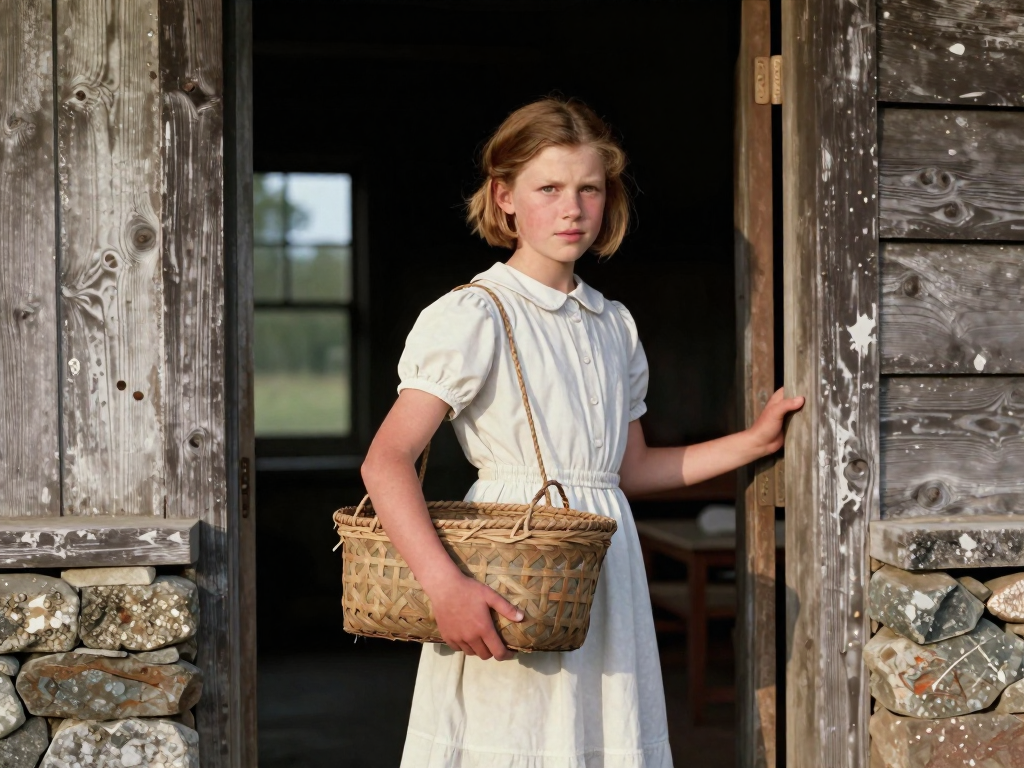
The basket was woven from white oak strips, narrow at the throat and wide through the middle. One hoop had come loose, and Papa held it between his knees while he worked a new strip through the weave. Water dripped onto his shoes.
Mama set the beans on the table. “You planning to catch fish in here?”
He moved over enough for her to reach the stove, but kept working. I stood by the screen door with my schoolbooks against my chest, watching him wet the strip and bend it around the frame. The basket smelled of river mud, though I had always known the water as the lake.
Papa called it the river when he was tired. He had been a boy before the dam, when the Tennessee ran through the valley and farms lay along its banks. By the time I was born, water covered much of that ground. He could point across a cove and tell me where a fence had stood, or where a man named Ledbetter had grown corn, but he never claimed he could see any of it through the water.
We lived outside Guntersville in a house with a tin roof and a porch Papa kept meaning to mend. He fished when he had time and worked at a feed store in town, unloading sacks and keeping the scales honest. Mama took in sewing. On Saturdays I carried finished dresses back to their owners, their hems pinned to sheets of newspaper to keep off the road dust.
That afternoon Papa let me finish the basket. I pushed the oak strip over one spoke and under the next, keeping it tight the way he showed me. It split near the end, and he shaved another with his pocketknife without making much of it. Mama gave us both a look when the shavings fell on her floor.
At supper we had beans, cornbread, and sliced onion. Papa put hot pepper vinegar on everything but his bread. He said he would set the basket after work the next day, along a quiet stretch of bank where the low ridges came down close.
I asked to go with him. School was nearly out, and I had been waiting all winter for a day in the boat.
He said I could come if I got the basket out of Mama’s way.
I took it to the porch and hung it from a nail. From there I could see a strip of water between the trees. A truck went by, raising dust that settled slowly on the pokeweed. Behind me, Mama scraped the plates while Papa shook his shoes over the steps.
2 Along the Bank
The next evening Papa brought home a sack of feed for our hens and a loaf of bread wrapped in paper. I helped him scatter the feed, then carried the basket down to the boat.
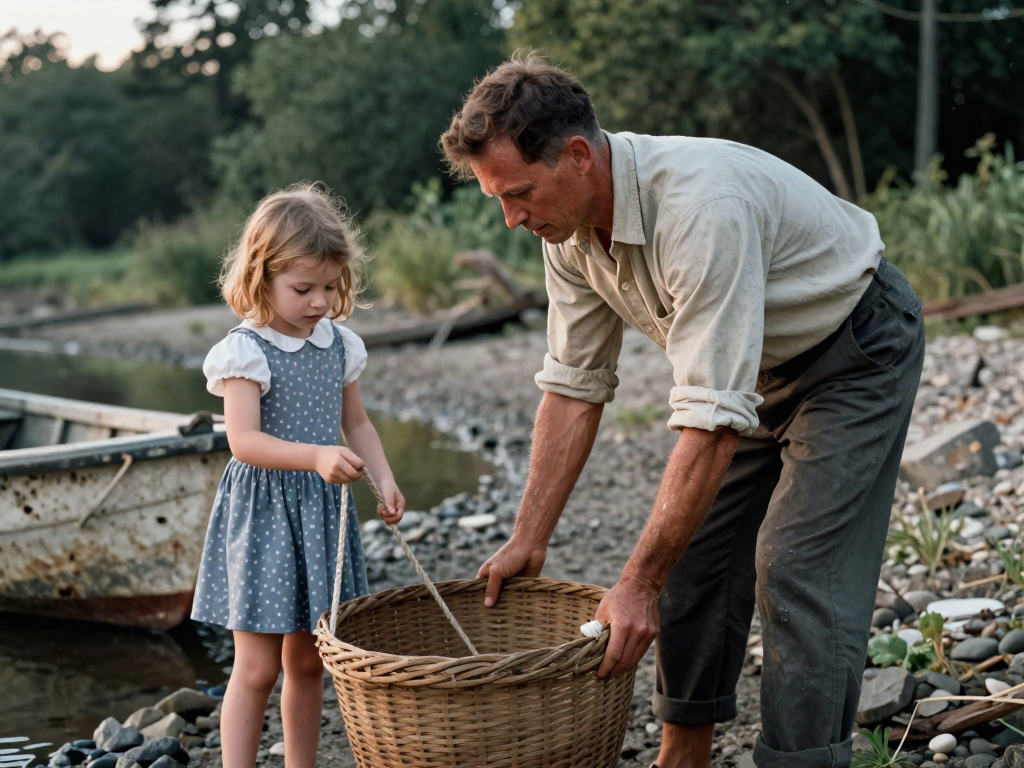
Our boat was narrow and green, with one board across the middle for a seat. Papa kept a rag in the bow to wipe it out, though the rag was usually wetter than the boat. We pushed off from a muddy landing and went around the point under a small outboard motor. I held the basket steady between my feet.
There were houses above the water, but not many along that bank. We passed a man tending a garden, bent over his rows with a hoe. Farther on, a woman shook a rug from her porch. The sound reached us across the water in soft, regular thumps.
Papa cut the motor in the cove. He baited the basket, tied it to a root on the bank, and eased it down until the water closed over the oak strips. I watched the rope straighten in his hand.
He let me take the oars for a while. I pulled too hard on one side and turned us toward a stump. Papa reached out and pushed us clear, then settled back without taking the oars away. I was proud of making the boat go, even crooked.
On the way home we stopped at the store for a spool of thread Mama had asked for. The proprietor kept crackers in a glass jar beside the register, and Papa bought two for me. Men sat near the door with their chairs tilted back. One asked whether we had caught supper yet. Papa told him we had put supper in the water and meant to fetch it later.
While Papa paid, I heard one of the men talking about a shape he had seen beyond the point. He held his hand low over his knee and moved it forward, then lifted his fingers. The others watched him. I could not hear every word over the door banging behind a customer, but I caught enough to know he was talking about a creature in the water.
I asked Papa about it as we walked out. He put the thread in his shirt pocket and carried the empty feed sack under his arm.
His grandfather, he said, had heard talk of a creature in the Tennessee River when families first settled along it. Papa had heard the story from his own father, who had worked the riverbanks before the dam. Folks still talked about the creature after the dam went up and the valley filled.
That was all he told me on the way home. At the house, Mama needed the thread, and the hens had got into her flower bed. Papa and I spent the last of the daylight driving them out with the feed sack.
3 What Papa Heard
We checked the basket on Sunday after church. Mama came along, still wearing her good shoes, and sat in the stern with a dishpan for the fish.

The basket held two catfish and a turtle. Papa tipped them into the boat, and the turtle made straight for Mama’s shoe. She lifted her feet onto the seat while Papa caught it by the shell and put it back in the water. I laughed hard enough to rock the boat and was told to sit still.
We cleaned the fish at home. Mama dredged them in cornmeal and fried them in the iron skillet, and I ate mine with my fingers. After dinner Papa went out to the porch with his coffee. I followed him and sat on the step, picking a loose thread from my church dress.
I wanted to know what his grandfather had heard about the creature. Papa rested his cup on the porch rail and looked down toward the trees.
“People used to see something out on the river,” he said. “Dark, riding low. My granddaddy said it had a skinny neck and a little head.”
He held up two bent knuckles. “And humps behind it. I believe he said two. They didn’t come up together.”
I had seen plenty of things floating in the lake. Floodwater brought down branches and fence posts, and once Papa and I had passed a whole chicken coop caught against a tree. I asked him how anybody could tell the creature from driftwood.
“He said to watch where it all went,” Papa told me.
A branch could make a dark line on the water. A boat could send ripples into a cove long after it had passed. Papa said his grandfather remembered the head and humps going the same way, with a long wake behind them.
There was also talk in Guntersville of a catfish as big as a car beneath the dam. I had heard that at school, with additions from nearly every child who told it.
“That catfish is a different story,” Papa said. “People put him down under the dam. This other thing was out in the river, and now they say it’s in the lake.”
Mama called us in to help with the dishes. Papa dried while I washed, and he put the plates away in the wrong cupboard. Mama found them there the next morning and left them for him to move.
I thought about that conversation for a few days, then school ended and there were peas to shell, clothes to carry, and a sore place on my heel from walking barefoot on the gravel. The basket needed another repair. Papa put it in the sink again, and this time Mama made him take it straight back outside.
4 The Far Shore
I left Guntersville after I married. My husband found work in Huntsville, and we rented a house near a road that grew busier every year. We came back for Sundays when we could, then for holidays, then mostly when Papa needed help with something Mama could not do alone.
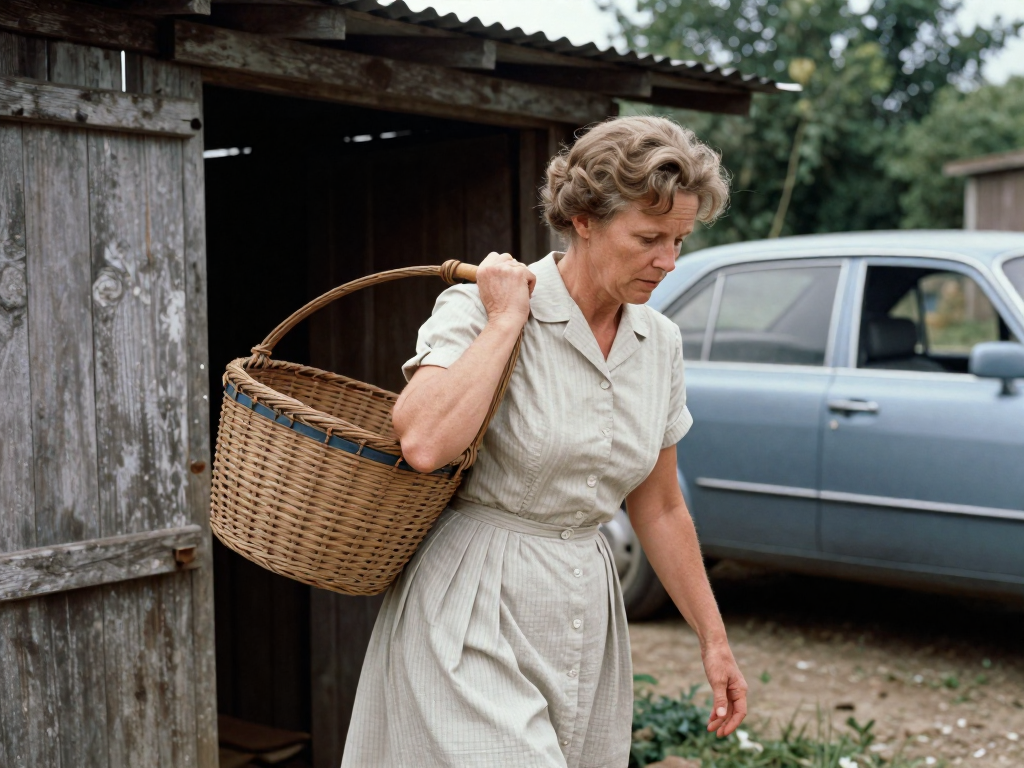
He kept fishing longer than Mama thought he should. Once, after he had trouble starting the motor, he rowed all the way back to the landing and arrived home late for supper. Mama did not say much while she warmed his plate. The next morning she sent me down to the shed to find the motor’s instruction booklet, which had been tucked inside a biscuit tin with a packet of hooks.
The last time I visited before he died, he asked me to go down to the landing with him. I told him I had to get home before dark. He said all right and walked me to the car, though I could see he was disappointed. He had waited until I had my coat on to ask. I was cross with him for that all the way home.
Papa died in the spring, and Mama moved in with my sister that fall. There was a house to empty. I went back on a Saturday with boxes in the trunk and a list in my purse. Mama wanted her sewing machine, the skillet, and the blue bowl with a chip underneath the rim. My sister wanted the porch chairs if they would fit in her truck.
By noon I had wrapped the dishes and found three jars of buttons, all sorted by color. With the curtains packed away, the sun showed pale squares on the wallpaper. I ate a biscuit at the kitchen table and brushed the crumbs into my palm, just as Mama would have wanted.
The fish basket was in the shed. Papa had hung it from a nail above the workbench, where it had gathered dust and a few dry leaves. I took it down and turned it in my hands. One hoop was newer than the others, pale where the oak had been protected from the sun.
I put the basket in my car. At the road I started to turn toward town, then backed up and took the way to the landing. The boat was gone; Papa had sold it years before. I had passed the turn that morning without slowing, and now I gripped the wheel hard enough to make my hands ache.
At the store I bought a cold drink and a packet of crackers. A boy behind the counter counted my change twice. Outside, two men were talking beside a pickup with a dog asleep in the bed. I recognized neither of them. They moved aside so I could open my car door.
They had paved most of the road to the landing, but dust still rose behind me on the last stretch. I parked under a tree and carried my drink to the water. Across the cove, the low ridges met the shore. A fisherman in a small boat was working farther out, moving slowly along the opposite bank.
I sat on a flat rock and ate my crackers. The fisherman rounded the point and went out of sight. His wake reached me in small waves that lifted a twig against the bank and laid it down again.
5 Across the Water
I stayed longer than I had meant to. There was work waiting at the house, and my sister would be coming with her truck before dark. I could have finished my drink in the car. Instead I sat on Papa’s rock and watched the point.
A heron stood near the opposite bank. It lifted one foot, set it down, and waited. I watched it until it flew toward the trees. The water beyond it had gone smooth again after the fisherman’s boat passed.
Then something dark showed low on the open water, beyond the place where Papa used to set the basket. I took it for a piece of wood until one end lifted. I stood up so fast I nearly dropped my drink, then shaded my eyes with my free hand.
The part that rose looked thin, with something small on top. Before I could make it out, a round shape came up behind it, then another farther back. There was water between them. I kept looking from one to the next, afraid I would miss one going under. My mouth had gone dry, though I had just had a drink.
The fisherman was out of sight, and I could no longer hear his motor. Water lapped against the bank near my feet. The thin part went down. The two rounded shapes disappeared after it.
I stood with the empty bottle in my hand. A long wake ran behind them. I watched it reach toward the far shore until I couldn’t pick it out against the dark water below the ridge.
I turned to ask Papa if he had ever seen it. There was nobody beside me. He had fished there for years and never said he had. I wished he had asked me to come that last time before I was halfway out the door. I wished I had put my coat down.
When I reached the house, my sister was already there, loading the porch chairs. She asked where I had been, and I told her I had stopped at the landing. We carried out the sewing machine together, each taking an end of its wooden case. Afterward I remembered the fish basket in my trunk and brought it in for Mama to see.
That evening Mama turned the basket over in her lap. She ran a finger along the new hoop, then set it beside her chair. I told her I had gone to the landing. She asked whether the water was high, and when I said it wasn’t, she nodded and picked up a handful of buttons to sort.
I went back to the landing the next morning before driving home. I stood by the rock for a few minutes, looking out beyond the point. Then I drove to Mama’s and found her on the porch with the basket beside her. I sat down and began, “Yesterday, at the landing,” but stopped. Mama waited, rubbing her thumb over a rough place in the oak.
“I thought I saw something,” I said.
She looked at me, then toward the trees. “Your papa used to come home saying that.” She held the basket out to me. “Put this in the shed for me, would you? I don’t want the rain getting to it.” I took it from her and went around the house.
Sources
- TVA Guntersville project history (context) www.tva.com
The Full Tale is a retelling. Its names, voices and scenes are imagined around the legend as it is recorded. Its pictures are imagined scenes.