

- Where
- Red Hills around Franklin, Finchburg and Old Scotland
In the Red Hills of Monroe County, around the Franklin and Finchburg communities and as far east as Old Scotland, people tell of glowing balls of light near the ground or the treetops that run along ditches, bob on fence posts or play over flowerbeds before slipping into the woods. A local newspaper columnist wrote in the early 1970s that the lights had been seen for years and described a foot-wide ball of fire he watched near Flat Creek on Highway 41 in May 1971. Readers added their own sightings in 2021.
One October night, George Singleton was riding his trail bike home near Claiborne when he saw a light moving back and forth above a shallow stream. He stopped to watch. After a few minutes it lifted and seemed to follow the creek into the woods. Singleton said he saw the light six times in all, never twice in the same spot.
Where it is told
The Full Tale
The Long Way Home
A late ride through Monroe County gives one young woman a sight she cannot keep to herself.
1 The Supper Plate
The pea hull split under my thumbnail and dropped three green peas into my lap. I picked them off my skirt before Mama could see, though she was busy at the stove, turning a piece of fatback in the skillet.
It was October, and the garden had given us one last mess of peas. Mama had kept them in a paper sack on the back steps, where it was cool enough, and now we sat shelling them for supper. The radio on top of the refrigerator was talking about football. Every few minutes the signal faded and the man’s voice came back sounding farther away.
I had brought Mama a jar of pear preserves from my sister Ruth, who lived closer to Claiborne. Ruth had made a whole shelf of preserves that summer and was giving them away before anybody could tell her they still had last year’s. I had ridden over on my trail bike, with the jar wrapped in a dish towel and wedged into a canvas bag.
Mama looked at the clock above the sink.
“You staying to eat?”
I told her I would if she could spare another plate. She gave me a look and put another piece of fatback in the skillet.
My husband worked the late shift that week, and there was nobody at home but our old dog. I could ride back after supper. I knew the road, and the bike had a good headlamp when I remembered to keep the battery charged.
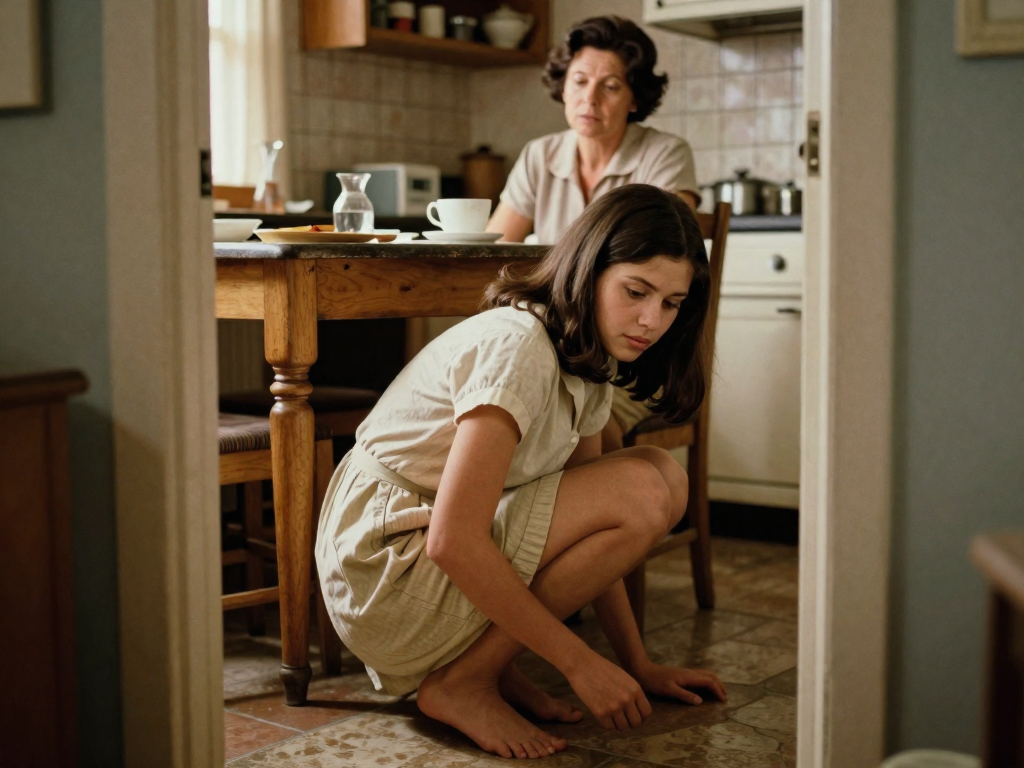
Mama’s kitchen had a table with one short leg. Daddy had folded a piece of cardboard under it years before he died, and every so often the cardboard worked loose. That evening I got down on the linoleum and pushed it back with the handle of a spoon. Mama watched my feet sticking out from under the table and said I had missed a spot with the broom. There was no broom in my hand, but I knew better than to argue about it.
We ate peas with cornbread and sliced tomatoes Mama had brought in green to ripen on the windowsill. She wrapped the last two pieces of cornbread in wax paper for me. I put them in the canvas bag where the preserves had been.
By the time I washed the plates, the windows had gone black. Mama stood on the porch while I kicked the bike to life. Her apron was still on, and she held the screen door open with one foot. I waved before I pulled away, and she lifted the dish towel in her hand.
2 The Road by the Creek
The trail bike had belonged to a boy down the road before it belonged to me. He had painted the gas tank red, getting a little paint on the seat and plenty on his own hands, according to his mother. My husband bought it cheap when the boy left for Mobile. I learned to ride it in a pasture, making wide circles around the cow patties until I could turn without looking down at the handlebars.

It was handy for the short roads between our house, Ruth’s, and Mama’s. A car was better for hauling groceries, but the bike could take a narrow track and did not mind a stretch of sand. I wore an old denim jacket over my blouse and tied my hair back with a strip of cloth. Mama thought a grown woman ought to have a proper helmet. I kept meaning to get one.
That night I took the road I usually took home, near Claiborne. Houses stood back from the road behind yards with swept patches of dirt and rows of late flowers. At one porch a man sat with a dog against his leg, both of them facing the road. I raised a hand, and he raised his.
The headlamp picked up fence wire, pale sand, and the bottoms of pine trunks. My bag knocked against the bike with every rut. I thought about the cornbread and hoped it would not be crumbs by the time I got home.
There was a shallow stream along part of the way. Ruth’s boys liked to fish there, though she had told them not to go near it after dark. The younger one had a habit of slipping out when he was supposed to be in bed. Once I had found him there with a cane pole and marched him home by the ear.
I stopped before I reached the stream because the canvas bag had slipped around and was bumping my knee. The knot in the strap had worked loose. I set the bike upright and tightened it, then moved farther onto the shoulder to let a car pass. Its taillights disappeared around a bend.
When I came to the opening in the bank, I saw a light down by the water. It was small and yellow, and it moved between the trees. I thought of Ruth’s boy with a flashlight and pulled over.
3 Above the Water
I called the boy’s name, but the motor was running and I could hardly hear myself. I switched it off and called again. The headlamp went dark. Down at the creek, the light showed through the brush, though I could see no one holding it.

I got off and started toward the bank. The bike leaned when its stand sank into the soft shoulder, so I caught the handlebar and stayed beside it. My hand grew tired after a while, and I changed my grip.
The light moved along the far bank, paused beside a low branch, and dropped out of sight. I waited for the boy to climb up through the brush. Instead, the light appeared farther downstream, just above the water. It stayed there long enough for me to see its reflection tremble in the current.
I called his name once more. Nothing answered. I could hear water running over something and, farther off, a dog barking. The light rose between two tree trunks and disappeared behind the leaves.
I stood there until my hand began to ache again. If the boy was down there without his flashlight, I did not want to leave him in the dark. I called that I was going to his mama’s house. Then I listened once more and heard only the water.
My foot slipped off the kick starter and struck the ground. The second try brought the motor back. I turned the bike toward Ruth’s, watching the ditch as I rode.
Her porch light was still on. She came to the door in her housecoat, and I told her I thought one of the boys might be at the creek. She went straight down the hall. Both boys were asleep in their beds, the younger one with a sock still on and his other foot hanging out from under the sheet.
Ruth came back carrying his flashlight. She switched it on and shone it across the porch steps. Its beam made a pale patch on the dirt, nothing like the light I had seen through the trees. I told her so, and she put the flashlight down between us.
4 What People Had Seen
Ruth wanted to come back to the creek with me, but she would not leave the boys alone. I offered to stay while she went, and she gave me a look.
“You’re the one who saw it,” she said.
She found her husband’s old lantern and filled it at the kitchen counter. I held the glass chimney while she worked. Kerosene ran down the side of the can, and she wiped it with the hem of a rag before she put it away.
I rode back with the lantern wedged in my bag. The opening was empty. I carried the lantern down the bank, calling once in case somebody was there, and saw a white bottle lying near the water. Its glass was whole. I picked it up because Ruth’s boys sometimes fished there barefoot, then climbed back to the road with the bottle in one hand and the lantern in the other.
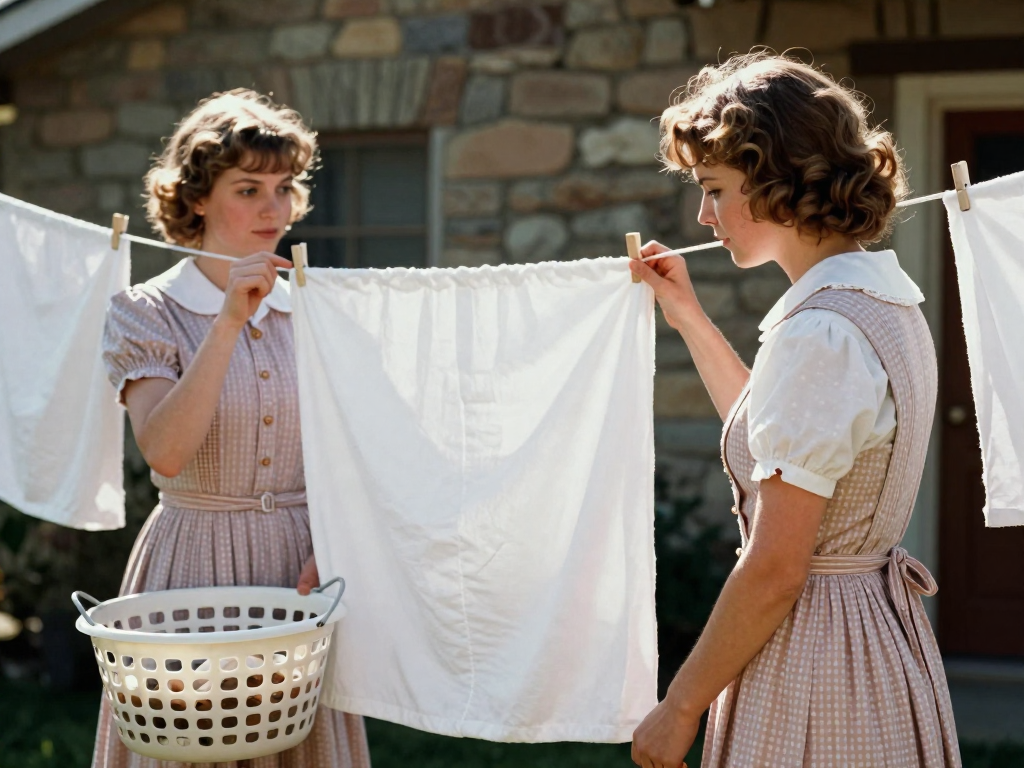
The next afternoon I returned the lantern. Ruth was hanging sheets on the line, and I helped her pin the corners while I told her about the bottle and the empty bank. The sheets kept filling and falling against us whenever a breeze came through. Ruth listened without interrupting. When I had finished, she reached into the clothespin bag and handed me another pin.
She knew I had not been drinking, since Mama would have mentioned it before I got off the porch. She also knew I could mistake one thing for another. We had both spent an afternoon looking for a hen that turned out to be under an overturned wash tub.
Ruth told me she had heard people talk about lights over toward Franklin and Finchburg. I had heard a little of it too, though I had never had much reason to keep the accounts straight. People had seen glowing balls near the ground and up by the treetops. They had watched them run along ditches, bob on fence posts, and play over flowerbeds before slipping into the woods. The talk reached as far east as Old Scotland.
There was a newspaper column somebody had saved, written by a local man in the early seventies. He said the lights had been seen for years. In May of 1971, he watched a ball of fire about a foot wide near Flat Creek on Highway 41. Ruth thought she had seen the clipping at a neighbor’s house, folded into a cookbook or tucked behind a picture. She could not remember which.
We finished the sheets and brought out a basket of shirts. One of Ruth’s boys had left a pencil in his pocket, and the lead had marked a pale blue shirt. She rubbed at it with her thumb, then hung the shirt anyway.
“I’ll tell him it’s a new kind of stripe,” she said.
That evening, when my husband came in, I told him what I had seen. He listened while he took off his work boots. I left out the part about my foot slipping on the starter, because he had been after me to get the kick lever adjusted. The next morning he did it anyway.
5 A Place to Stop
I rode past the stream many times after that. Sometimes I had a sack of groceries tied behind me, or a jar for Mama, or a part my husband needed from the store. Sometimes I took the car and had children with me, their knees knocking the back of my seat. The opening in the bank became familiar enough that I could find it in the dark without looking for a landmark.
I did not see the light there again.
Over the years I heard other accounts at kitchen tables and beside trucks in parking lots. One woman drew a ditch in the dust with the toe of her shoe to show me where she had seen a light, then rubbed it out when a car pulled in. I told my own part when I was asked. Once a man wanted me to show him the exact tree, but I could no longer pick it out from the road.
In February of 1994, The Monroe Journal carried an account from George Singleton. One October night near Claiborne, he had been riding his trail bike home when he saw a light moving back and forth above a shallow stream. He stopped to watch, and after a few minutes it lifted and seemed to follow the creek into the woods. He said he saw the light six times in all, never twice in the same spot.
I read the account at Ruth’s kitchen table. She had the paper spread beside a bowl of butter beans, and I held one corner down while she worked. I went back to the beginning and read it again. Ruth set an empty pod on the pile and waited for me to finish.
“I wonder if it was our creek,” she said.
I could not tell her. The account did not name it. She slid the paper closer to her bowl and read it herself, leaving a damp thumbprint on the edge.
Years later, in 2021, readers added sightings of their own. By then Mama’s table was mine, the short leg still resting on folded cardboard. I read at that table with a lamp on and a cup of coffee going cold beside my elbow.
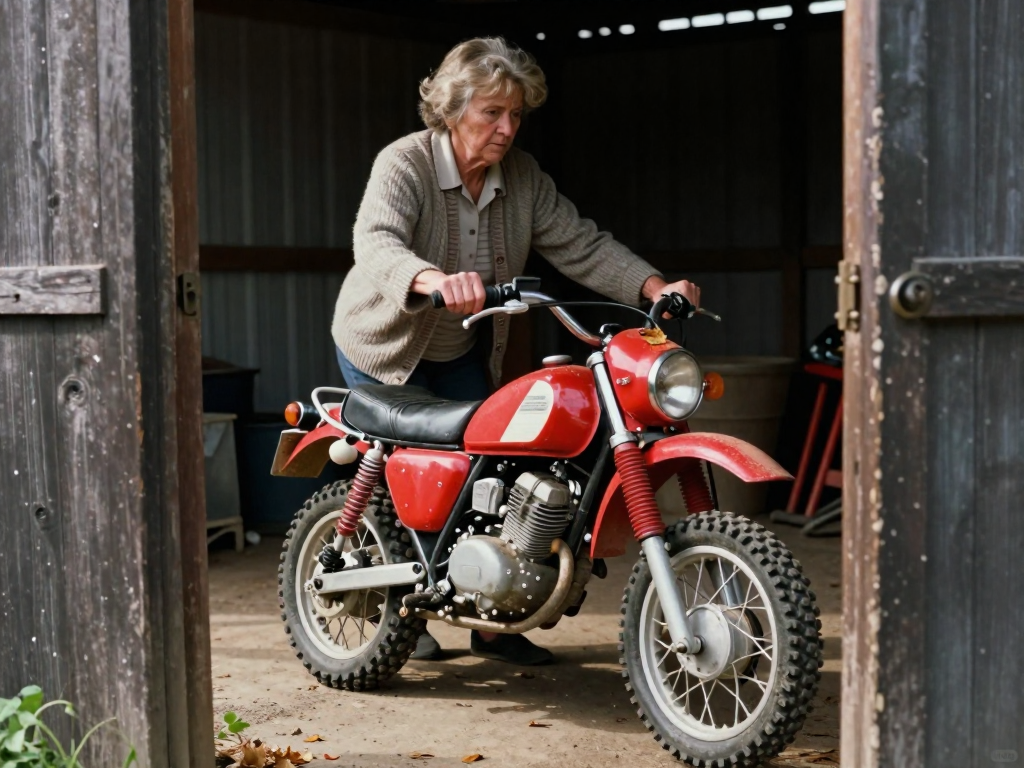
The road near the stream has changed in places, and I do not ride the trail bike anymore. It stands in Ruth’s shed now, its red tank dull under a layer of dust. The canvas bag is gone, but the strap left a rubbed patch just behind the seat.
Last fall Ruth asked me to fetch a jar from a shelf in that shed. I moved the bike a little to reach it. A dry leaf had caught between the handlebar and the brake lever, its stem held fast when the wheel turned.
Sources
- Many claim to see ghost lights in Franklin (Dispatches from the LP-OP blog) leepeacock2010.blogspot.com
- George Singleton, The Monroe Journal, February 3, 1994 (reprinted by Lee Peacock) leepeacock2010.blogspot.com
- Context: U.S. Army Corps photograph of Claiborne Lock and Dam, 1993 commons.wikimedia.org
The Full Tale is a retelling. Its names, voices and scenes are imagined around the legend as it is recorded. Its pictures are imagined scenes.