
Henry Wells is a figure of Alabama folklore.
Where it is told
Field Guide
Henry Wells and the Garret Window
In Carrollton, Alabama, people still look for a likeness said to be Henry Wells in a courthouse window.
How to know it
- Where
- In Carrollton, Pickens County, Alabama, in one pane of the courthouse garret window.
- When
- During a storm, as lightning flashed.
- Habits
- Took shelter high in the courthouse while a crowd gathered below, then looked out.
- Appearance
- A likeness said to be Henry Wells remains in the glass.
1 What Carrollton says it is
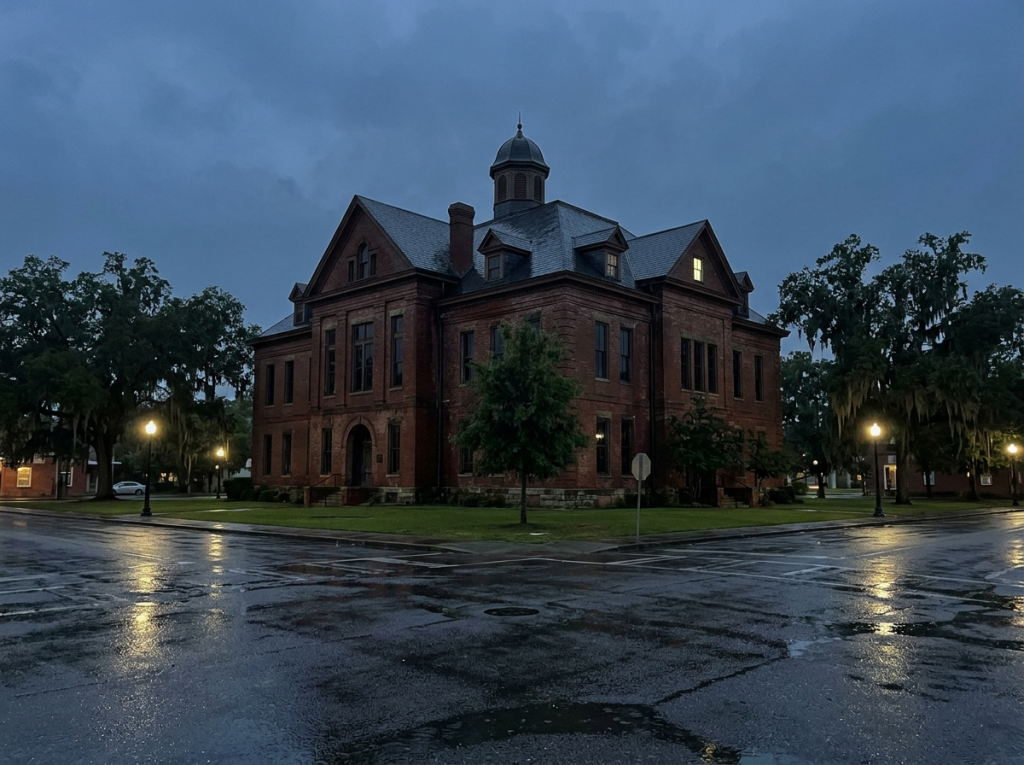
In Carrollton, Pickens County, people tell of a face in the courthouse window. I first heard the story when I was nine, after a thunderstorm had passed through town. Granddaddy took me down to the square to show me where to look.
2 A boy on the courthouse lawn, Carrollton
The grass on the courthouse lawn was soaking, and my shoes were ruined before we stopped. Granddaddy pointed up toward the roof.
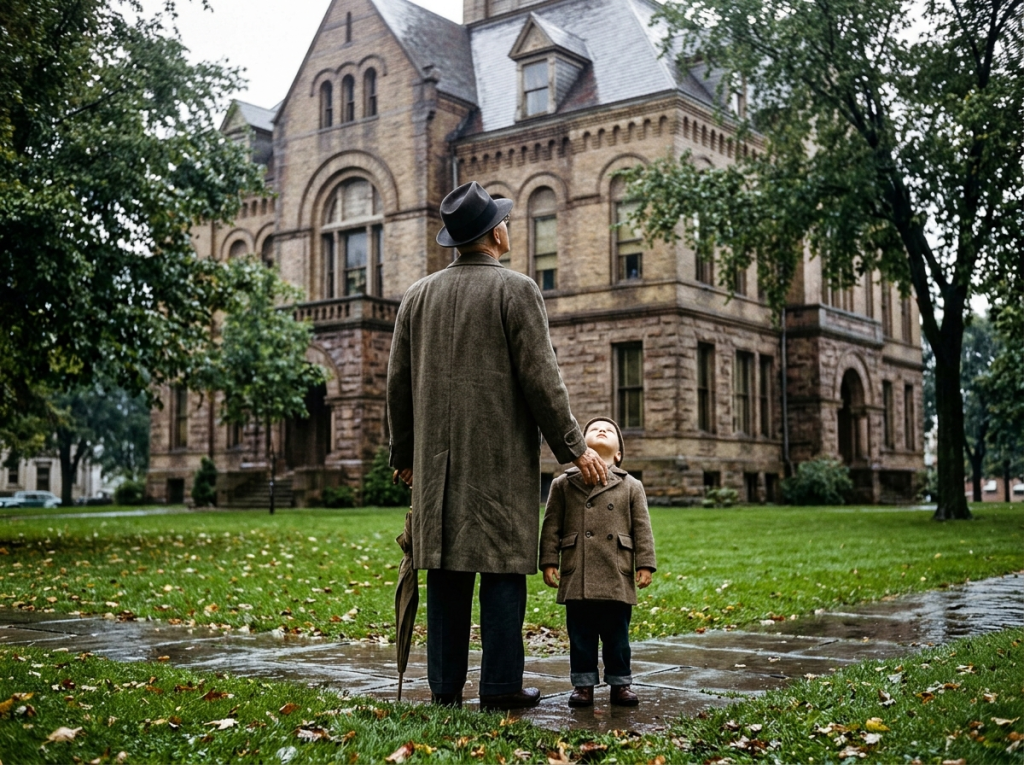
“Look in the garret window,” he said.
I tipped my head back, but all I could see from the lawn was glass. Granddaddy stood beside me and told me why people came to look.
3 Where and when it turns up
In the tale, Henry Wells took shelter high in the courthouse while a crowd gathered below. He looked out just as lightning flashed. Afterward, a likeness said to be his remained in one pane of the garret window.
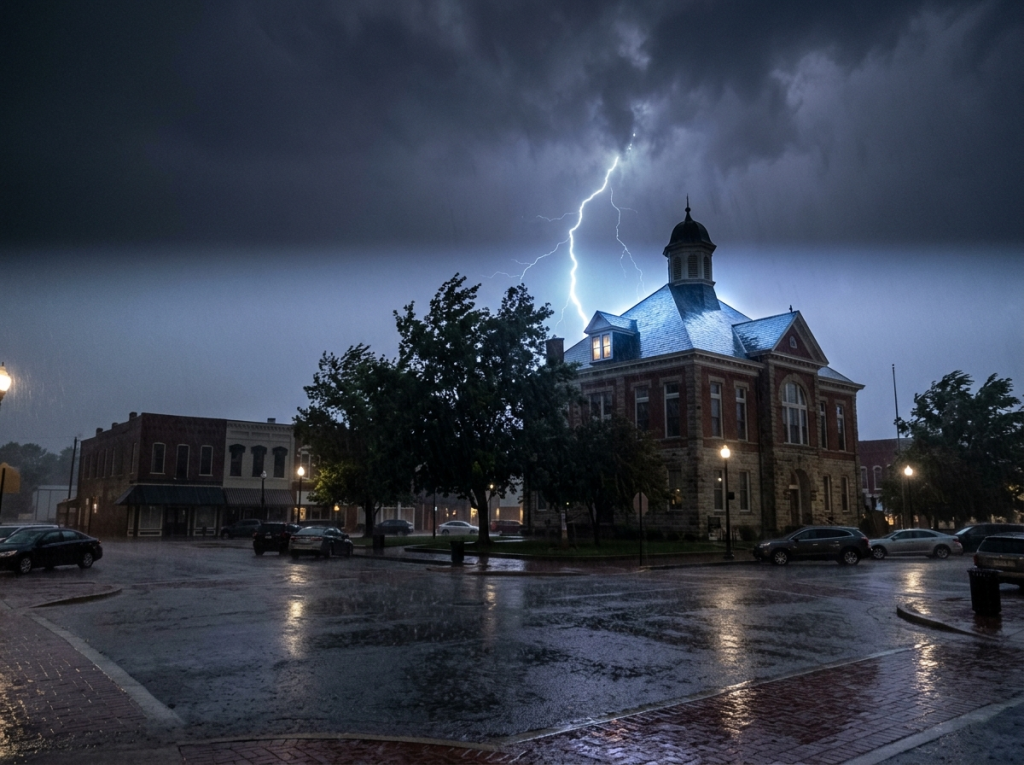
I looked at the wet roof and tried to imagine the flash against it. Then I asked Granddaddy which pane held the face.
4 What he did and what it did
“You’ll know it when you see it,” Granddaddy said, which was no help to a child.
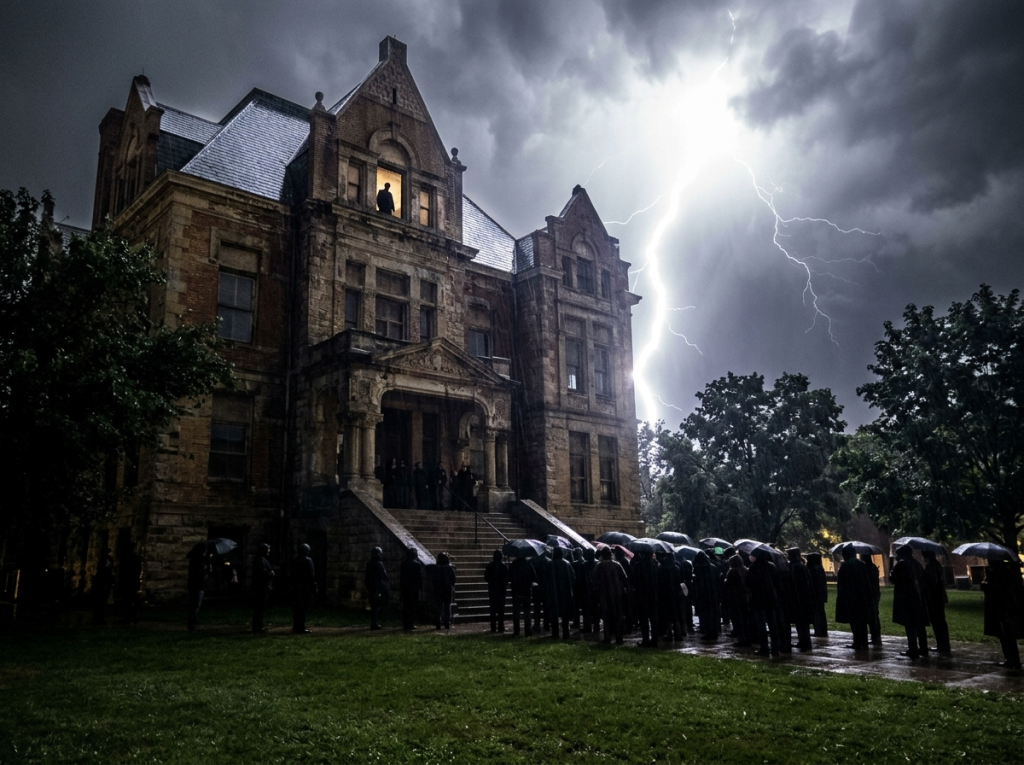
I squinted at each pane in turn. I tried to picture Wells looking out over the crowd and the lightning lighting up the glass. Water ran off my hair and into my collar, but I kept searching.
5 Telling him from a trick of the glass
“I can’t see anything,” I told Granddaddy.
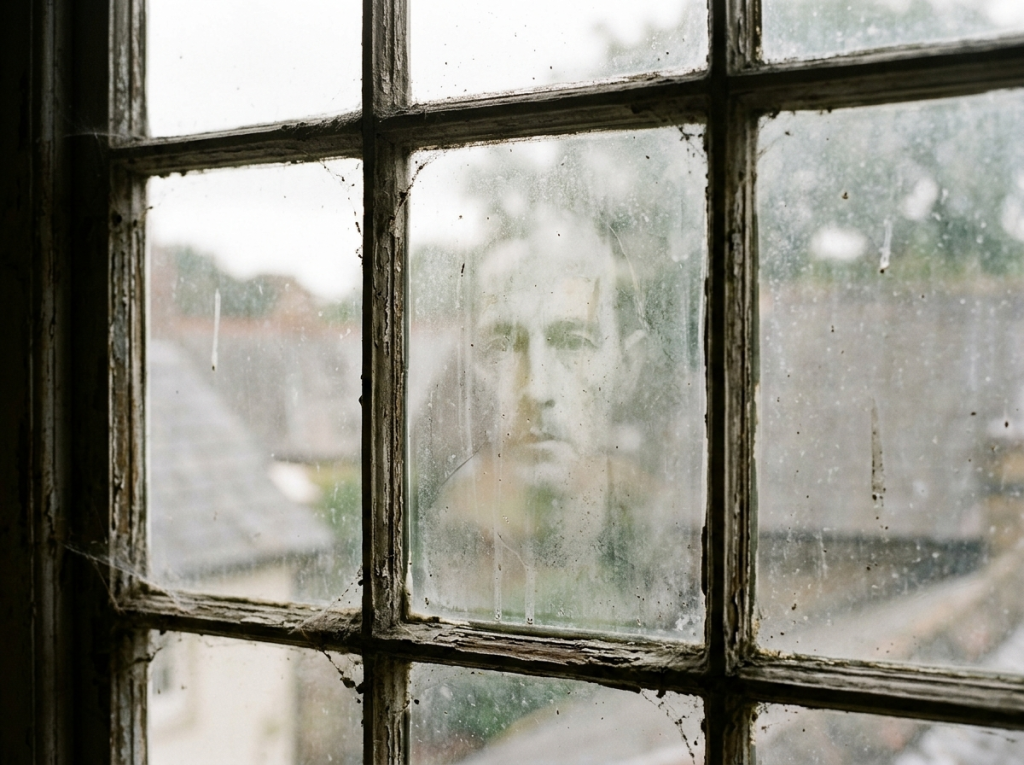
“Keep looking,” he said.
I did, until my neck hurt and my shoes squelched whenever I shifted my feet. Granddaddy finally laughed and took me home.
6 Looking up
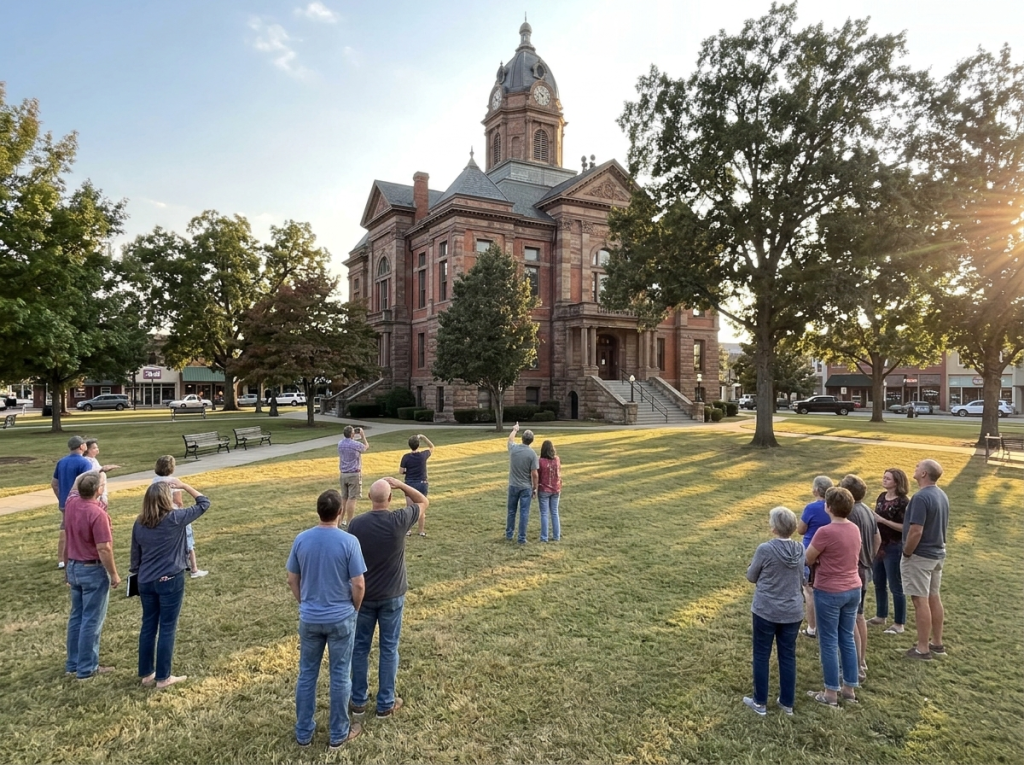
I am an old man now, and I still look toward that window when I pass. Sometimes other people are on the lawn, their heads tipped back toward the garret.
Sources
Field Guide is drawn from the legends as they are recorded. Its first-hand account is imagined. Its pictures are imagined scenes.