
Alligator Gar is a figure of Alabama folklore.
Where it is told
Field Guide
The Alligator Gar of the Delta
An armored, toothy fish and the Thanksgiving catch that set an Alabama record.
How to know it
- Size
- The Raft River fish measured about 84.5 inches and weighed 162 pounds on a certified scale.
- Build
- Armored and toothy.
- Kind
- An alligator gar, called a “living fossil” of Gulf Coast rivers.
- Where
- The Raft River in the Mobile-Tensaw Delta, with earlier records from the nearby Tensaw River.
- When
- The Raft River catch was made on Thanksgiving Day and reported in early 2023. The earlier records came in 2004 and 2009.
- Catch
- A father and his teenage son followed the hooked fish for about two and a half hours before landing it.
1 Raft River, Baldwin County
I first heard the story over coffee from a fellow who liked a fish tale, but this one came with a number he could point to.

On Thanksgiving Day, a father and his teenage son hooked an alligator gar in the Raft River, part of the Mobile-Tensaw Delta. They followed the fish for about two and a half hours before landing it.
It measured about 84.5 inches and weighed 162 pounds on a certified scale. That made it a new Alabama record. The catch was reported in early 2023.
My friend set down his cup after giving me the weight. “That one went on a scale,” he said. For a man fond of stretching a fish story, he seemed pleased to have a number that needed no help.
2 What they call it
The fish is an alligator gar, one of the armored, toothy “living fossils” of Gulf Coast rivers. It has a long snout and a covering that looks fit to turn a blade. The teeth are easy enough to notice, too.
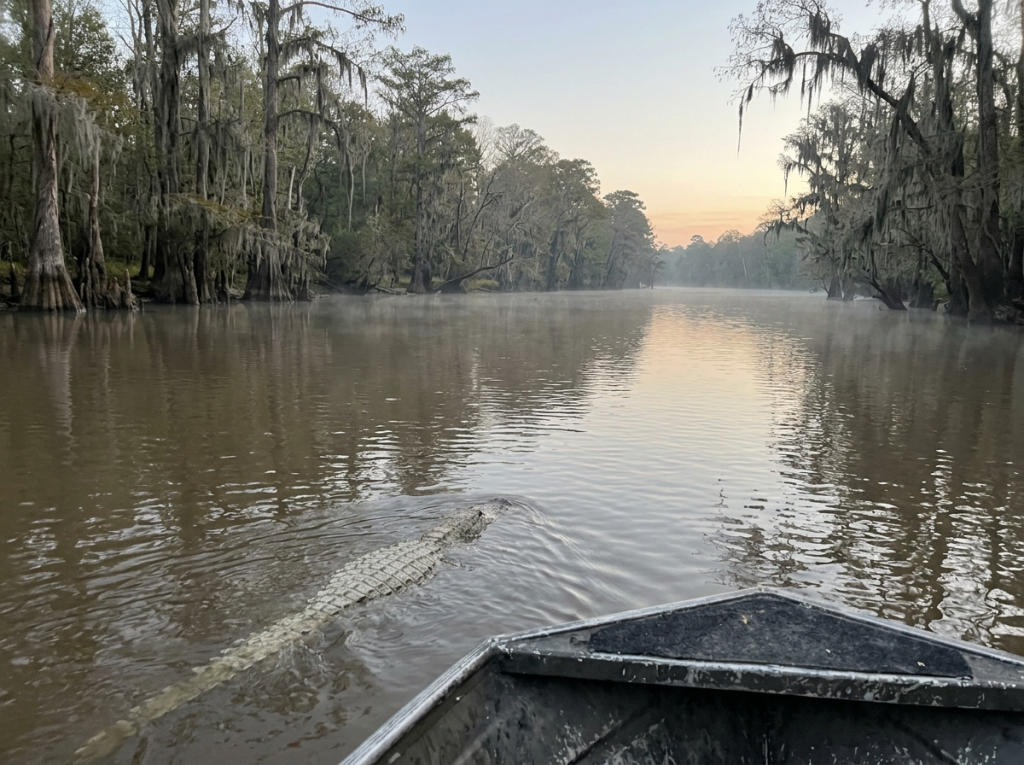
My friend held his hands apart as he described the snout, then moved them farther apart when he came to the fish as a whole. I had seen him do that before. This time, though, he had a measurement, and he left his hands on the table when he gave it.
Gulf Coast rivers inspire plenty of big-fish talk, and the Mobile-Tensaw Delta has produced real giants. The Raft River catch gave people one more to talk about.
3 Armor, teeth, and inches
I took a tape measure from the kitchen drawer and pulled it across the floor to see how much room a fish that long would need. At seven feet, it was still a little short. The last half inch brought it close to the recorded length.
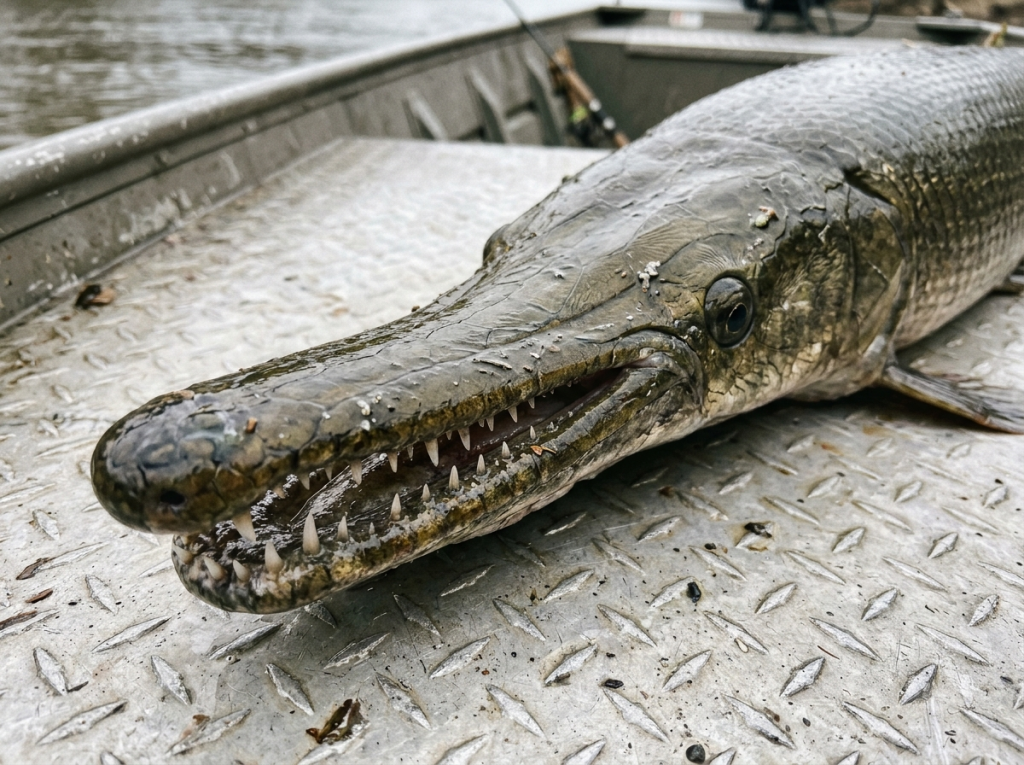
My friend stood at one end and looked down the tape. “I would have needed a bigger table,” he said.
The picture of the fish was beginning to take shape for me. Its armored body would fill that length, with a long, toothy snout at one end. I wound the tape back into its case before we sat down again.
4 The delta and the years
The Raft River lies in the Mobile-Tensaw Delta in Baldwin County, Alabama, near Spanish Fort. The nearby Tensaw River has its own place in the record. Earlier gar records of about 151 pounds came from that river in 2004 and 2009.
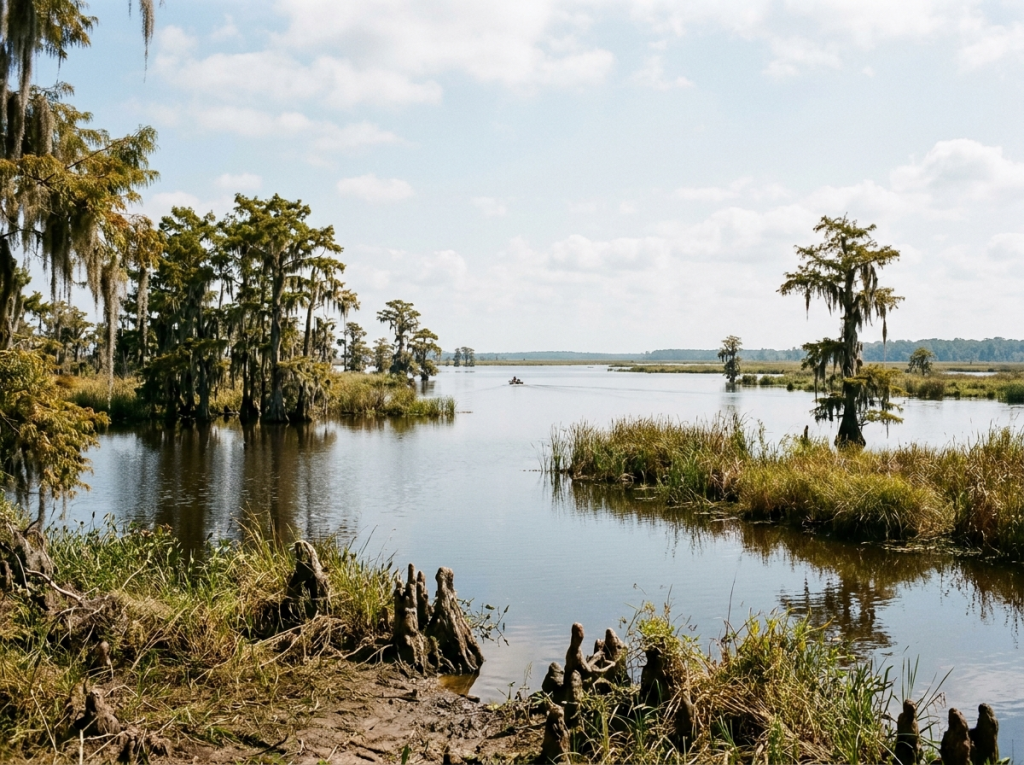
My friend knew those numbers too. He took a pencil and wrote them on a scrap of paper, with the Raft River weight below them. The difference between 151 and 162 was plain enough, even in his cramped handwriting.
5 Two and a half hours
The length of the pursuit stayed with me as much as the weight. I looked at the clock above the kitchen door and tried to imagine watching its hands move through two and a half hours while following a fish.
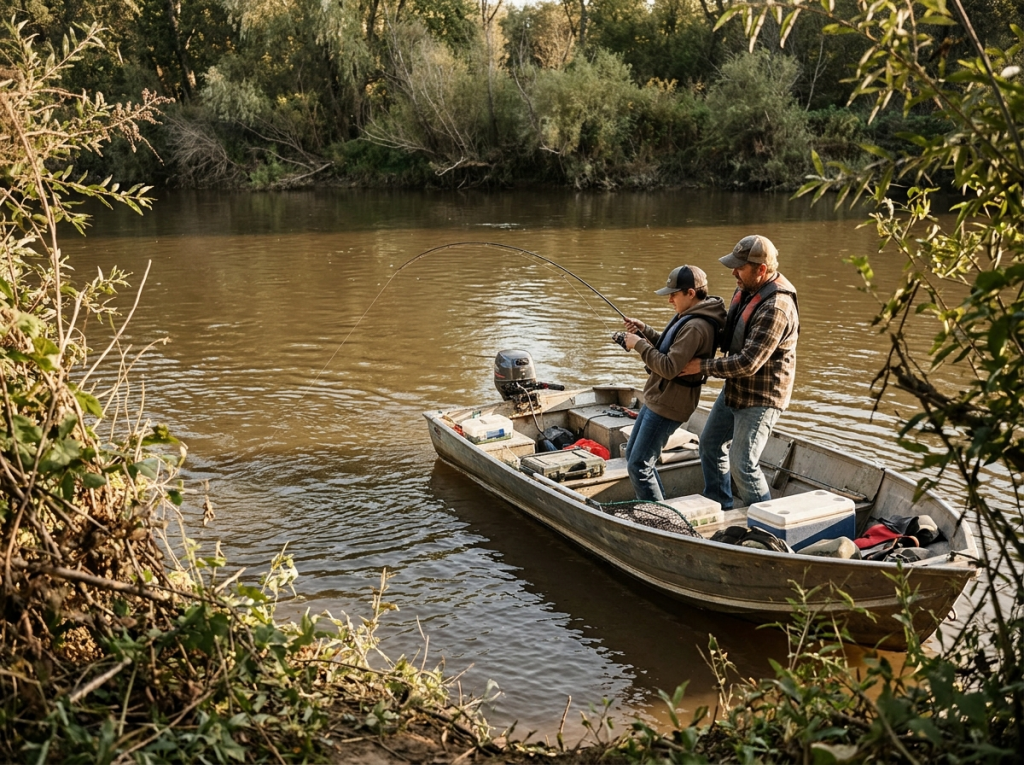
My friend went to refill our cups. When he came back, the clock had advanced only a little. He looked up at it, then at the paper on the table.
“That would have been a long day of fishing,” he said.
6 Telling it
My friend folded the paper and slipped it into his pocket. He had come over to talk, and by then the coffee pot was nearly empty. At the door, he took the scrap out again to make sure he had it.

“I might need those numbers,” he said.
I watched him tuck it away and head down the walk. He would have a story ready the next time someone held out their hands to show him the size of a fish.
Sources
Field Guide is drawn from the legends as they are recorded. Its first-hand account is imagined. Its pictures are imagined scenes.