
The Black Dog of the Hanging Hills is a small, silent dog said to leave no tracks on the ridges above Meriden. A saying assigns joy to a first encounter, sorrow to a second and death to a third.
The familiar version appeared in W. H. C. Pynchon’s 1898 Connecticut Quarterly story. Though published as fiction, it entered regional folklore and is still retold by hikers and local writers.
Where it is told
Field Guide
The Black Dog of the Hanging Hills
A silent dog on the rocks of West Peak, and the Meriden saying that counts its meetings.
How to know it
- Colour
- Black, as the name has it.
- Build
- It looks like an ordinary dog until it opens its mouth.
- Sound
- Its bark makes no sound.
- Tracks
- It leaves none.
- Where
- West Peak in the Hanging Hills, Meriden, New Haven County, Connecticut.
- Meetings
- The first means joy, the second sorrow, and the third death.
1 A Sighting on West Peak, Meriden
When I picture the black dog, I imagine a climb with my brother-in-law, the Saturday after his wedding. He has talked me into it, saying, “We need to walk off the cake.” We are well up West Peak, rock all around and both of us breathing hard, when he stops and points. A black dog sits on the rocks ahead. It looks like anybody’s dog, and I whistle to it.
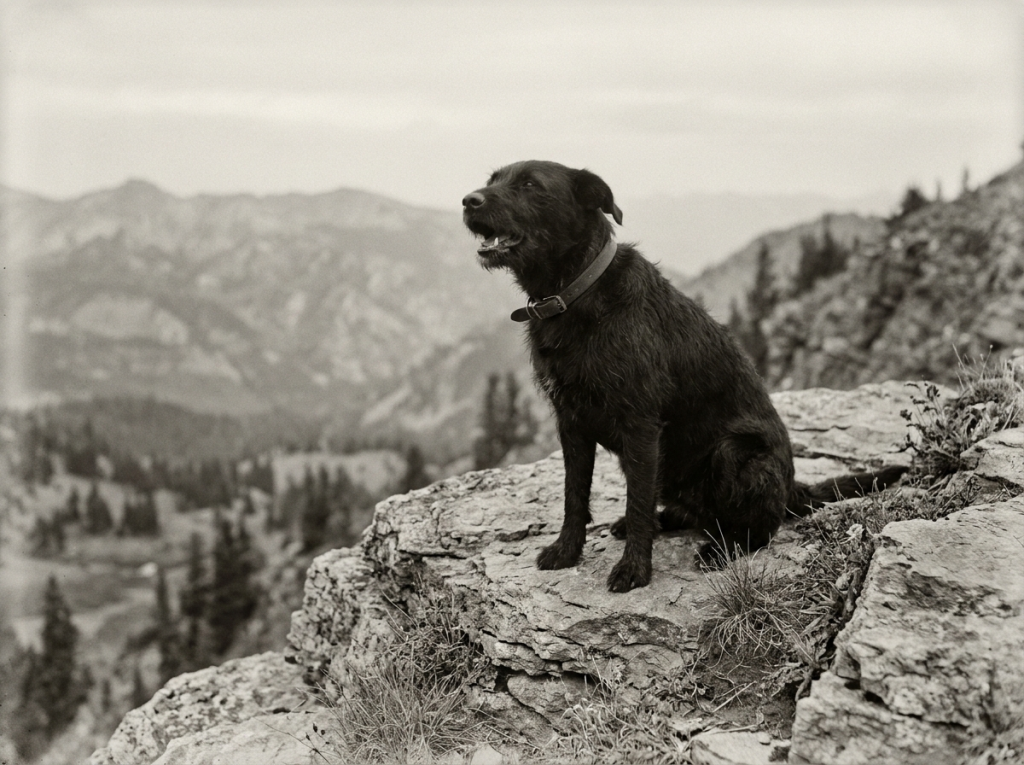
The dog opens its mouth to bark, but I hear nothing. I stand with my head cocked, waiting for the sound. My brother-in-law gives a short laugh that quits halfway. When we reach the spot, I look for prints and find none.
2 What Meriden Calls It
The name I know is Black Dog of the Hanging Hills. In Meriden, a saying gives each meeting its meaning: the first means joy, the second sorrow, and the third death.
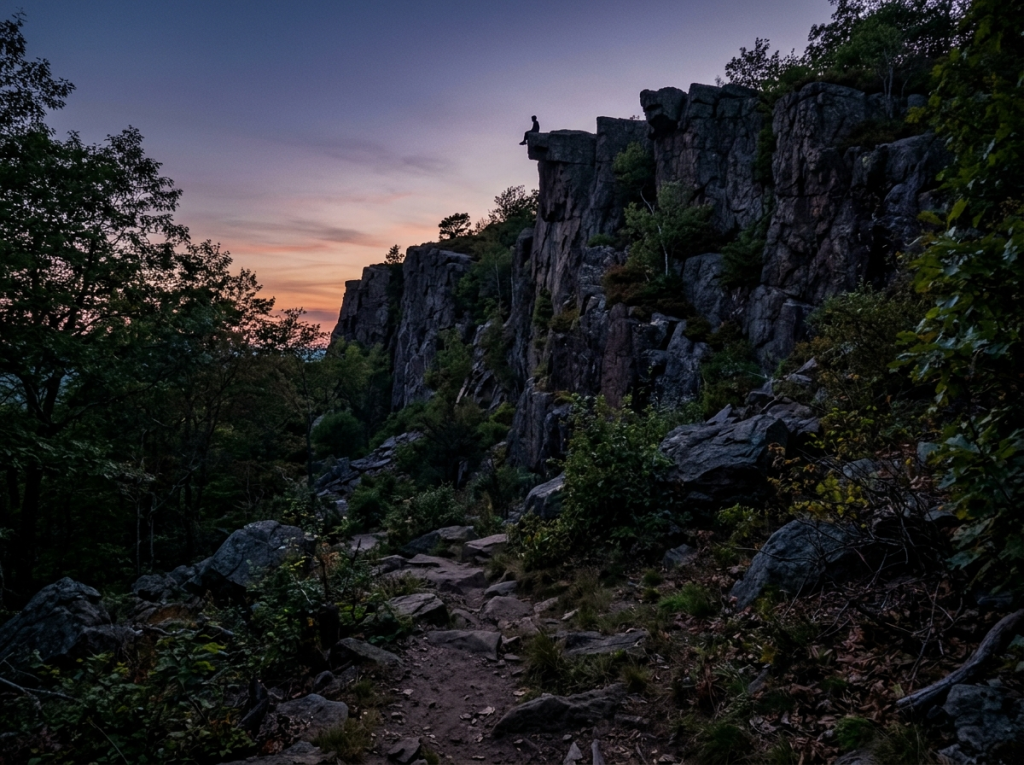
In my imagined scene, my brother-in-law and I know the saying. As we make our way down, we count the dog as our first meeting and tell ourselves his wedding must be the joy.
3 What the Tale Shows
The saying gives the old printed tale its hold on me. In it, two men climbing West Peak spot the dog on the rocks. I can picture them stopping on the slope, with the climb still ahead.
4 The Ledge
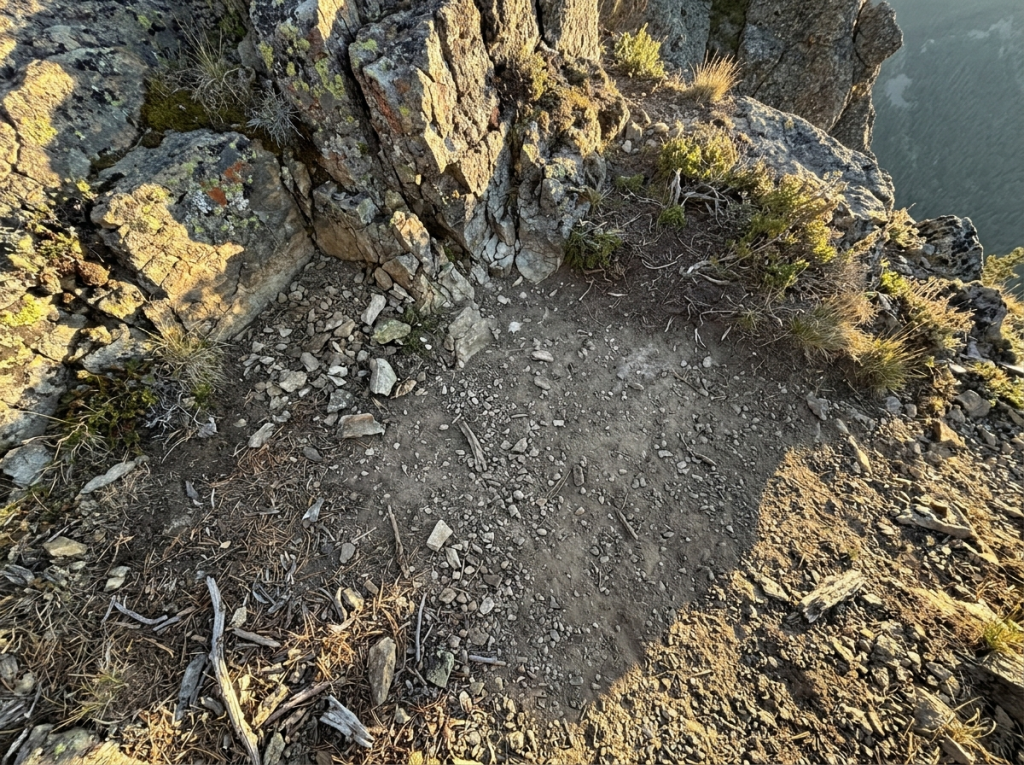
A ledge gives way beneath one of the climbers, and he falls. The other man makes it down that day.
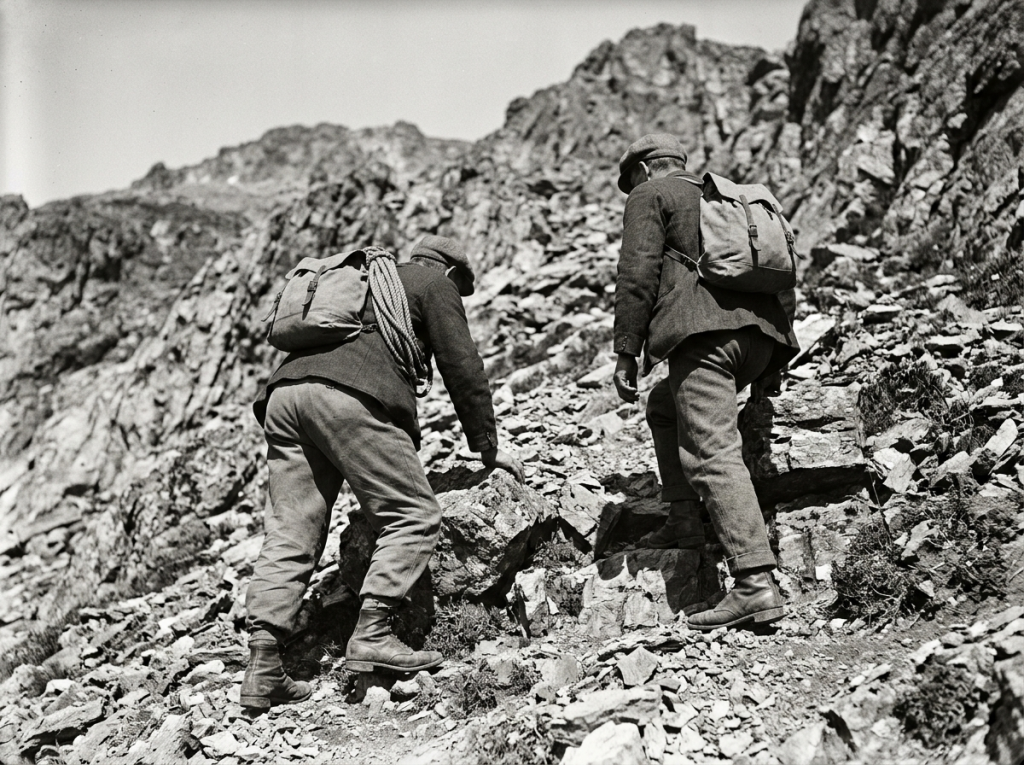
5 Years Later
Years later, the surviving climber is found dead close to where his companion fell.
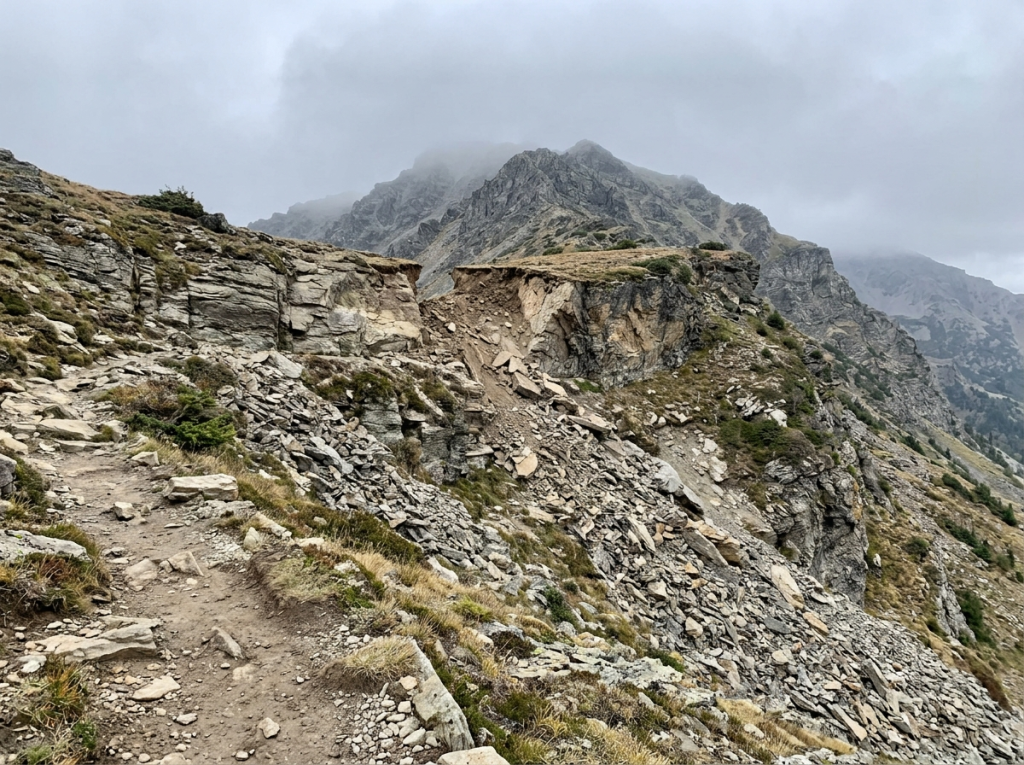
6 The Last Meeting
The tale does not show the dog at the end. Readers who remember the saying can supply the last sighting for themselves.
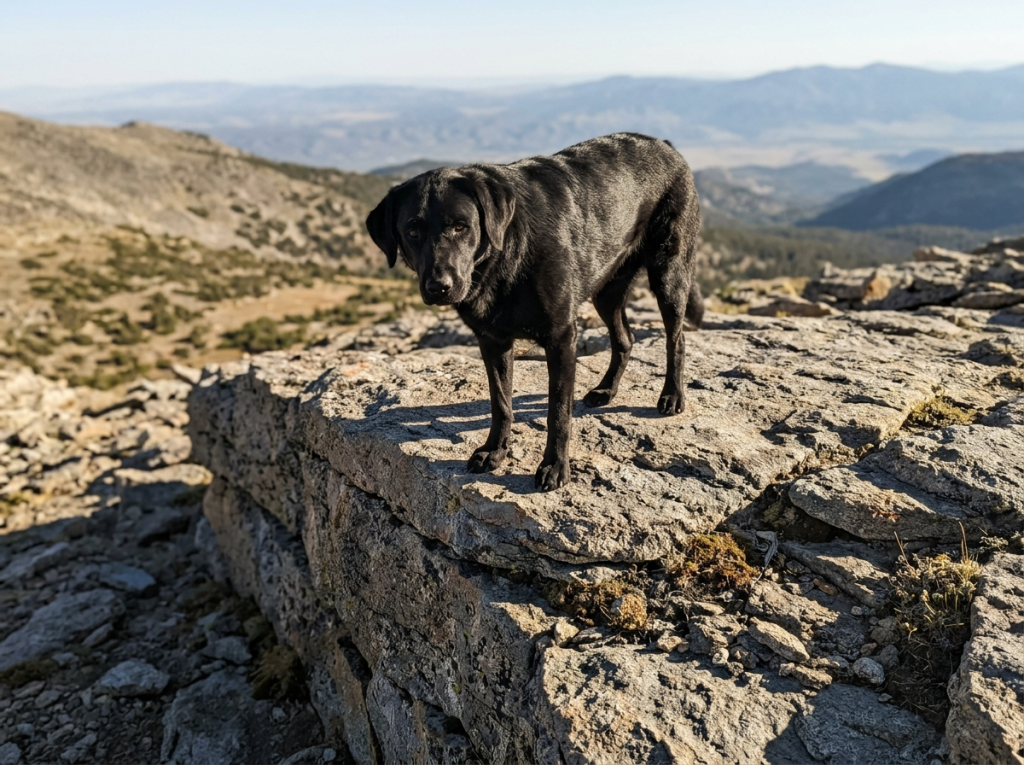
Sources
Field Guide is drawn from the legends as they are recorded. Its first-hand account is imagined. Its pictures are imagined scenes.