
Bull Shark is a figure of Alabama folklore.
Where it is told
Field Guide
The Bull Shark of the Tombigbee
A young shark on a trotline at Mount Vernon, a baby one at McIntosh years before, and a river that runs more than 45 miles from Mobile Bay.
How to know it
- Size
- About three feet long and ten pounds, the one pulled up at Mount Vernon in July 2024.
- Age
- Young both times, a "young" shark in 2024 and a "baby" one in 2016.
- Where
- The Tombigbee River near the Shepard Lake area at Mount Vernon, Mobile County.
- Where
- McIntosh Boat Landing, where a baby bull shark was caught in 2016.
- Distance
- More than 45 miles from Mobile Bay.
- When
- July 2024 for the Mount Vernon fish, 2016 for the one at McIntosh.
- Habits
- Tolerates fresh water and is known to push far up Gulf rivers.
- Mistaken for
- Nothing in the Mount Vernon story. The shark in question was a live fish on a line, not one of the planted sharks of North Alabama.
1 What the River Gave Up, Mount Vernon
Ask anybody who runs lines on that stretch and you'll get the same picture. July, the air thick enough to chew, mud and cut bait on your hands, a boat nosed into the bank. An eleven-year-old is checking a trotline near the Shepard Lake area at Mount Vernon.
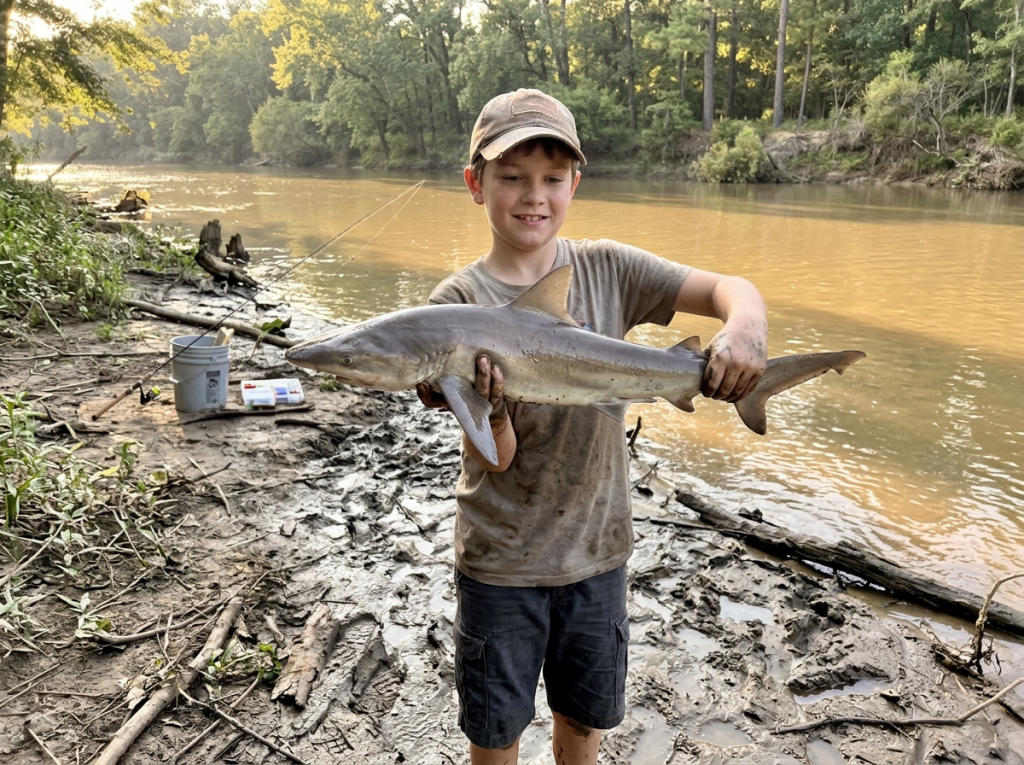
Then comes whatever he found on that hook. It was a young bull shark, about three feet long and about ten pounds, according to the news coverage. That is all the coverage gives.
I've heard it told the way it would sound at a boat ramp. Some old fellow with a cooler for a chair counts it off on his fingers. "Mount Vernon. Mobile Bay. You tell me how many miles that is." Nobody at the ramp knows for sure, but everybody knows it's far, and they go quiet doing the sum.
Nobody was telling a joke. A shark that size had come up out of the Tombigbee and was lying wet in the bottom of a boat. After that, the river looked a good deal longer than it had that morning.
2 What They Call It
This one has no name beyond the one on the label. Bull shark. No river-monster title is attached to it, no bend in the road named after it, no verse. Folklore usually hangs a nickname on the things people fear, and nothing got hung here.
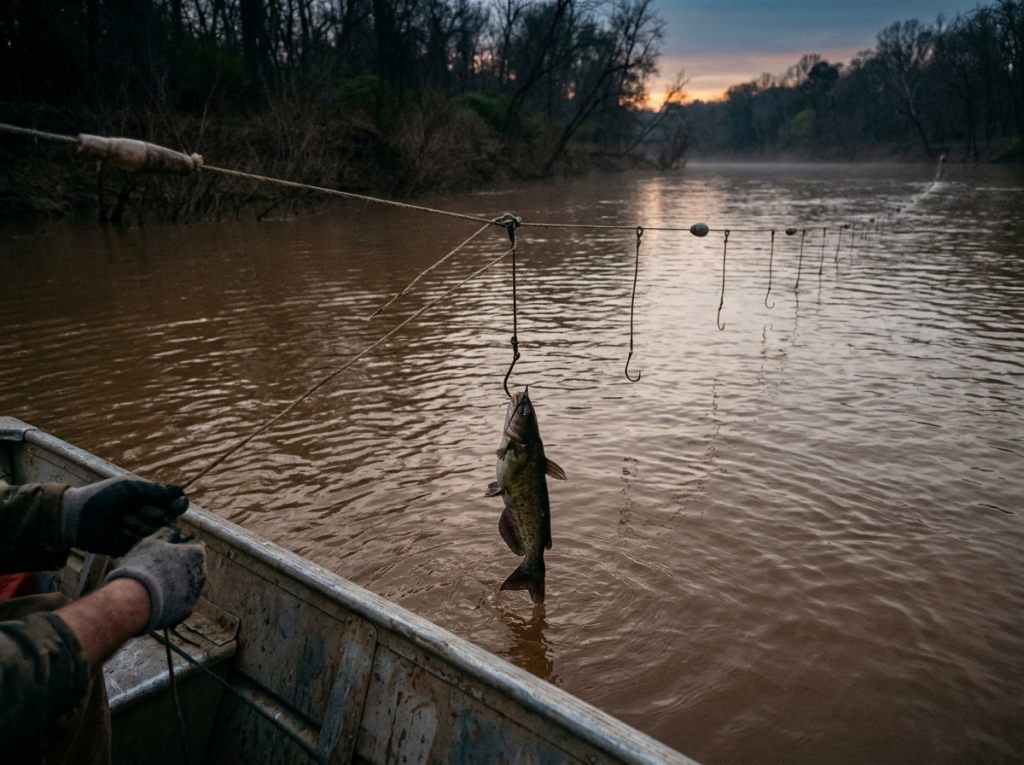
That makes it an odd entry in a book of Alabama beings. Most of the others are known by what people half saw in the dark. This one was seen whole, hauled up, measured and written about in the paper. Nobody argues over what it was. They argue over how it got there.
The guide files it under creatures, and the filing holds up for the same reason a good fish story holds up. It sounds like something a man would invent to win an argument at the ramp. Then it turns out somebody has the fish.
3 How It Looks on the Line
The report gives little to go on. The Mount Vernon fish was about three feet long, about ten pounds, and young. You can work with that. It is a fish you could lift in both arms, and you would feel every pound of it.
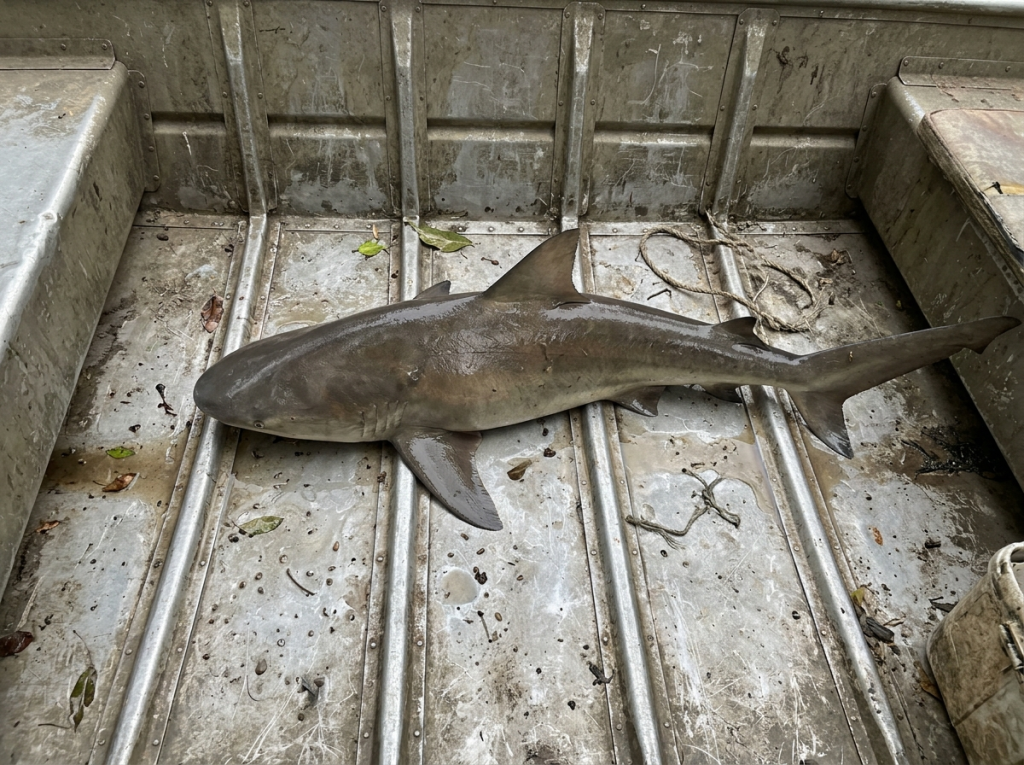
The fish from McIntosh Boat Landing in 2016 was called a baby. A baby bull shark is a smaller thing than a grown one, but it's the stranger of the two to me. A grown shark could have wandered up from anywhere. A baby makes you think about where it started.
The coverage says nothing about the color of it, or the eyes, or how it moved in the boat. So picture what you'd picture for any river fish hauled up in July heat. It would be slick, it would be heavy, and it would be wrong in a way you couldn't name at first. Whatever came up at Mount Vernon had a shape that river doesn't usually hand out.
4 Where and When It Turns Up
Two places are on record. McIntosh Boat Landing is where a baby bull shark was caught in 2016. The stretch near the Shepard Lake area at Mount Vernon, in Mobile County, is where the boy's fish came up in July 2024.
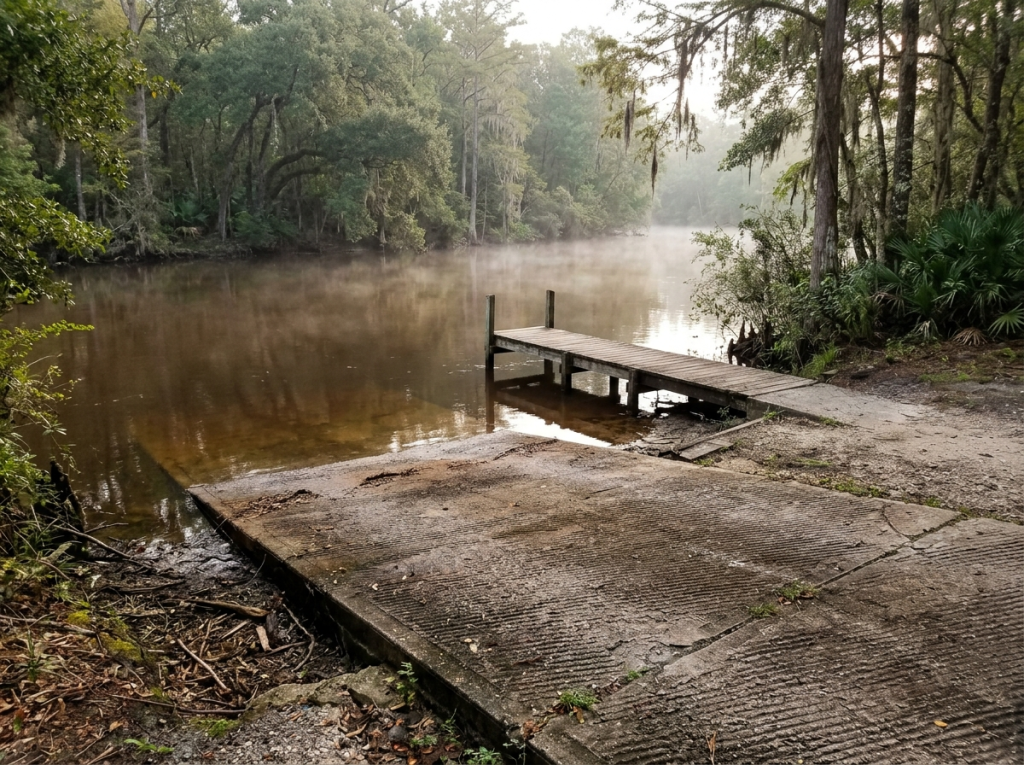
The report puts the McIntosh catch more than 45 miles from Mobile Bay, and that number carries the whole story. Bull sharks tolerate fresh water and are known to push far up Gulf rivers. You can read that in a book and still never expect to feel it pull on your own line.
The only dated catch fell in July, which tells you very little. Two fish don't make a calendar. They do make a person look at a river the way you look at a neighbor who turns out to have a secret.
5 How to Tell It Apart
North Alabama has its own shark stories, and those sharks were planted. Somebody put them where they were found. That is a different business from the Tombigbee, and the news coverage keeps the two apart without being asked.

The Mount Vernon fish and the McIntosh fish were live fish caught in the river. Nobody carried them in. They came up on a line out of water they had been swimming in. If you want one sentence to tell the two kinds of story apart, use that one.
A trotline is rigged for catfish, and that is the other thing to keep straight. Nobody holding that shark would have mistaken it for one. The surprise was in what the hook brought up that day, and nothing about the river said it would bring up only one kind of thing.
6 How the Stories Hang Together
The two catches share little. One was 2016 and one was 2024. One was a baby and one was a young fish. One was at McIntosh Boat Landing and one near Mount Vernon. When the news told the boy's story, it went back to the earlier fish to say what a bull shark can do in fresh water.
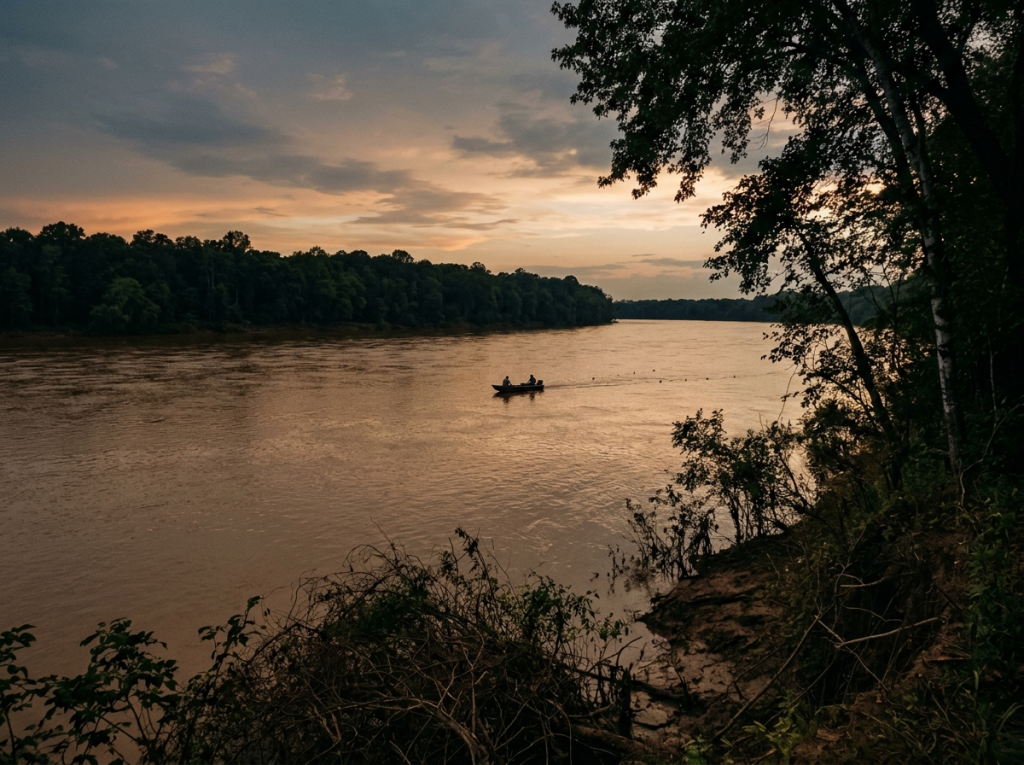
Set them side by side and the same river runs under both. Whatever came up in 2016 and whatever came up in 2024 had mile after mile of fresh water to cross, with the bay a long way behind.
There are no lights in this one, no screams in the swamp, no tracks in the clay. There is an eleven-year-old, a trotline, a three-foot fish, and a river that turned out to run farther than the people at the ramp had figured.
Sources
Field Guide is drawn from the legends as they are recorded. Its first-hand account is imagined. Its pictures are imagined scenes.