
Cougar is a figure of Alabama folklore.
Where it is told
Field Guide
The Cougar of Alabama
One source puts Alabama’s last confirmed wild cougar killed in 1948. Another puts the last record in 1956, while reports of big cats continue.
How to know it
- Where
- St. Clair County in the 1948 account, Tuscaloosa County in the 1956 account.
- When
- The sources disagree between 1948 and 1956. Since the 1960s, the record notes tracks in Clarke County and a reported den in north Baldwin County.
- Tracks
- Tracks were found in Clarke County.
- Habits
- A den was reported in north Baldwin County.
- Movement
- Later big cat sightings have been reported across Alabama.
- Mistaken for
- The record names no look-alike.
1 A St. Clair County Porch
I picture an elderly man sitting on a porch in St. Clair County, looking toward the dark pine ridge as evening comes on. He has been talking about a cougar, and he begins with the date that anchors the account.

“One source says 1948,” he tells me. Alabama’s state large-carnivore biologist has been quoted as saying the last confirmed wild cougar killed in the state was taken in St. Clair County that year.
The man lets the date sit between us. It sounds firm enough, until he tells me there is another account.
2 What Folks Call It
“Cougar,” the man says, giving the cat its name as we talk. It is the word used in the record too.
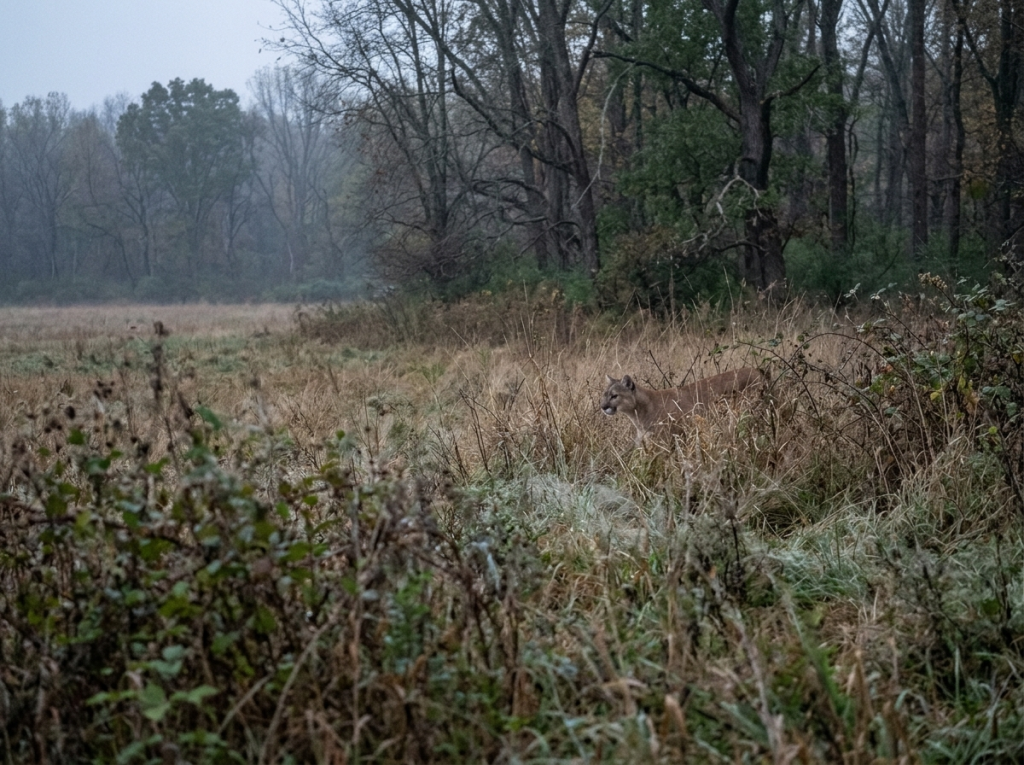
From the porch, I can imagine the cat at the edge of the trees, its tawny coat half hidden by grass. The 1948 account does not describe the animal, so the picture remains in my head.
3 What Was Seen
The record gives two other signs: tracks in Clarke County and a reported den in north Baldwin County. Neither gives me a description of the cougar taken in 1948.
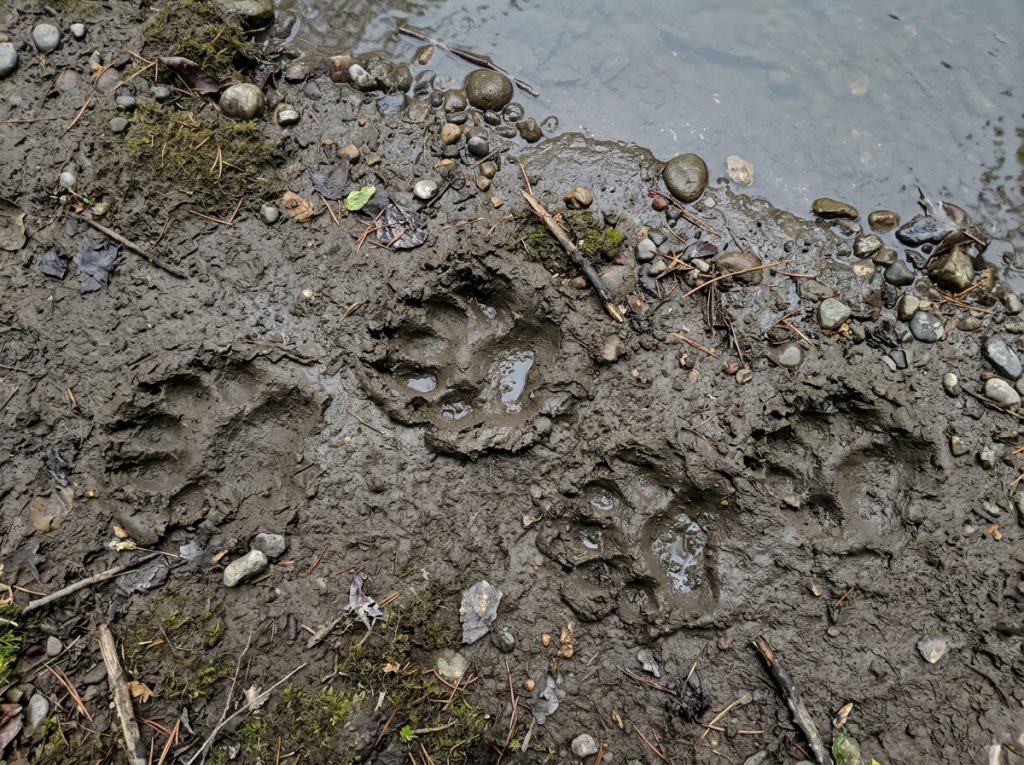
I picture the man leaning forward as he talks about the tracks. “A print can stay when the animal has gone,” he says. On the porch, we have only the record’s brief mention of them.
4 Where and When
The second account gives a different date and place. An Alabama Cooperative Extension article puts the last record in Tuscaloosa County in 1956.

The sources disagree. The biologist’s account says that since the 1960s nothing has been confirmed apart from the Clarke County tracks and the reported den in north Baldwin County. Later sightings of big cats have been reported across the state.
5 Telling It From the Rest
The record names no animal that people might mistake for a cougar. It does not give the details of the later sightings, either.
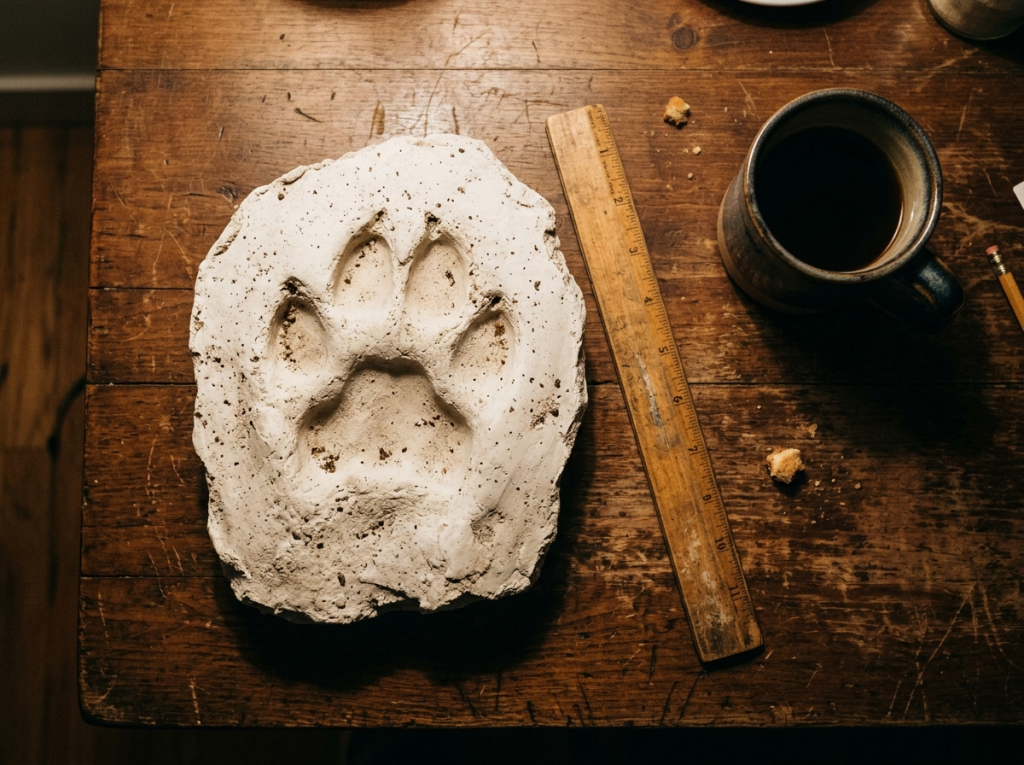
I picture the man showing me a plaster paw print on his kitchen table. He sets a ruler beside it so I can see its size. It is a piece of our imagined conversation, not a cast described in the record.
6 How They Fit Together
At the kitchen table, I ask the man which last record he would choose. He looks from the cast to the window.

“I can’t settle it,” he says. “One says St. Clair in 1948, and the other says Tuscaloosa in 1956.”
I leave him with the two dates eight years apart. The sources do not resolve the disagreement, and the later sightings remain part of the story people tell about big cats in Alabama.
Sources
Field Guide is drawn from the legends as they are recorded. Its first-hand account is imagined. Its pictures are imagined scenes.