
Jeremiah is a figure of Alabama folklore.
Where it is told
Field Guide
The Wet Footprints on Wesleyan Hall's Stairs
A boy named Jeremiah is said to keep to the oldest building at the University of North Alabama, and he leaves water wherever he goes.
How to know it
- Name
- Jeremiah, with no surname given.
- Size
- A boy, and nothing more exact than that.
- Build
- Said to be a Union drummer boy, or the son of one of Sherman's officers.
- Tracks
- Wet footprints.
- Sound
- Dripping on the steps, mostly on the upper floors.
- Habits
- Doors and electronics acting on their own.
- Where
- Wesleyan Hall, the 1855 building on the University of North Alabama campus in Florence, Lauderdale County.
- When
- Usually at night.
- Origin
- Either drowned in nearby Cypress Creek, or kidnapped by townspeople to keep Sherman from burning the city.
- Mistaken for
- Nothing named in the stories.
1 Wet Steps, Wesleyan Hall, Florence
Say his name is Dale. He has cleaned Wesleyan Hall at night for eleven winters, and he likes the work because nobody talks to him. The building was put up in 1855, and after the students go home it ticks and settles like a stove cooling off. Dale knows every noise it makes. He could tell you which pipe knocks.
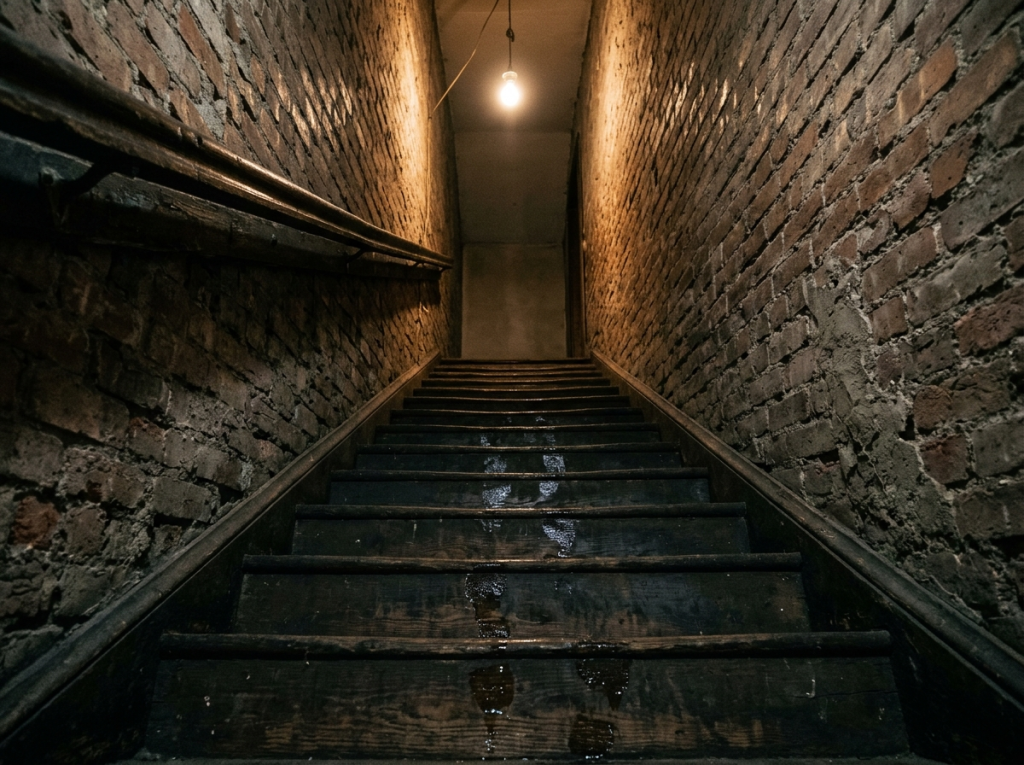
Then one night, on an upper floor with his mop bucket, he hears a drip that doesn't belong to any pipe. It lands on one step. A moment later it lands on the next. Something wet is climbing, and it is taking its time.
He turns around and the landing is empty. He walks back with the mop still in his hand and finds the boards shining in small prints, toes and heel, heading up.
Dale does not run. He wrings the mop and wipes the prints away, because a slick floor in the morning is his problem. When he comes back down the hall, a door he shut is standing open. In the supply closet a machine he unplugged is humming to itself.
He has a name for whoever it is. Everybody who works nights does. Jeremiah.
2 Who Jeremiah Is Said To Be
Ask around Florence about Jeremiah and you get a name and a war. This was the Civil War, when Union troops held the town, and the boy came in with that army. Some say he marched along as a drummer boy. Others say he was the son of one of Sherman's officers. Either way, he was a child among blue coats in a town that wanted them gone.
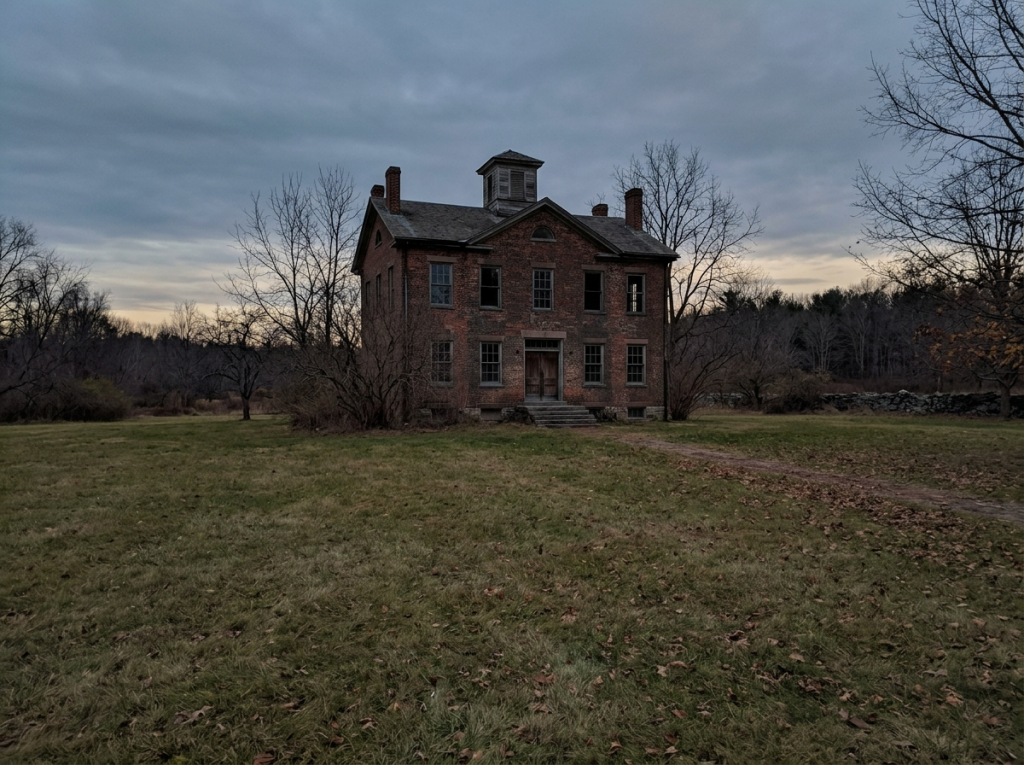
The building was already standing when they arrived. Wesleyan Hall dates to 1855, which makes it the oldest on the campus, and the people who walk its halls have handed it a boy to go with its age.
They are students and staff of the University of North Alabama, and they tell it plainly. Jeremiah. The war. The water. Nobody offers a last name, and nobody seems to miss one.
The university's own historian says these tales cannot be confirmed. The students tell them anyway, mostly in the stairwell, mostly after dark, with one hand on the rail.
3 What Witnesses Actually Report
Wet footprints come first. People find them on the floors, damp and fresh, with nobody walking in them. Then the dripping on the steps, which is heard on the upper floors and usually before anything is seen. Someone standing in the stairwell at night listens for it the way you listen for a car in the driveway.
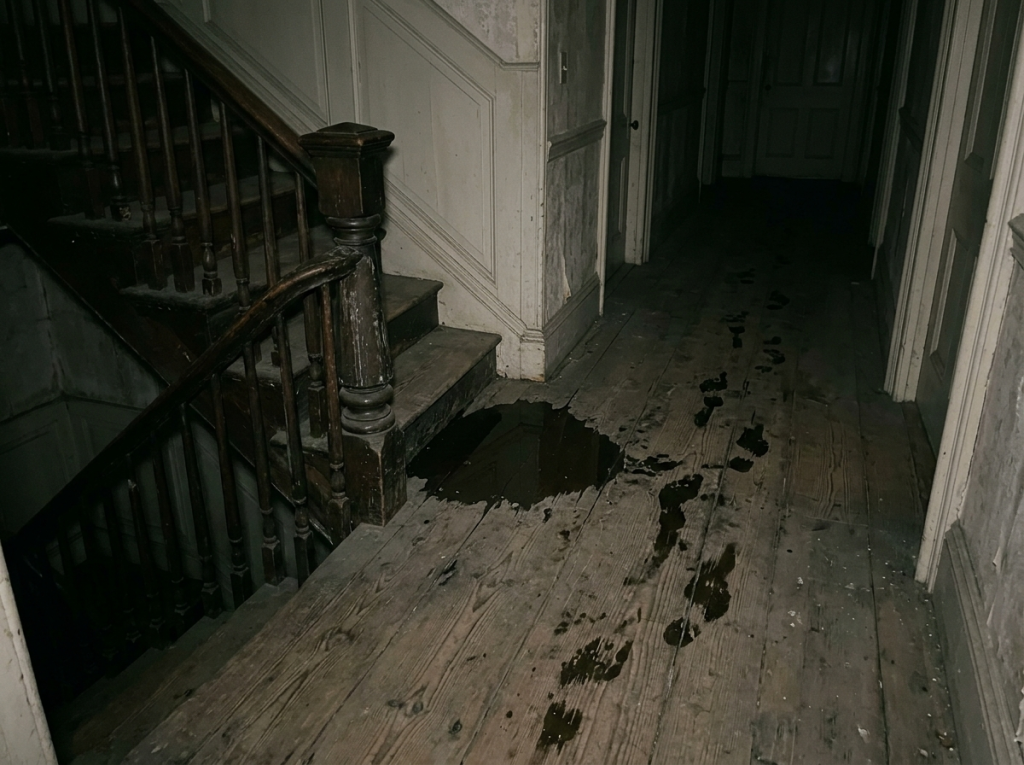
Picture a security guard on his rounds, flashlight out, third floor. The beam slides down the hall and catches a dark patch on the boards. It catches another a stride beyond it. He swings the light back toward the stairs and finds the patches leading there, each one a little smaller than he expected. The hall is otherwise quiet. Not one thing in it has moved.
Then there is the building's mischief. A door swings with nobody near it. A computer lights up in a room that was dark when the teacher locked it. A radio, a projector, a lamp goes on or off by itself. Nothing is smashed or thrown. A door is open that was shut a minute ago, and a machine that ought to be silent is running.
If anybody gives him a shape at all, it is the one from the old stories. A boy. A drummer, if you ask the right person.
4 Where and When He Turns Up
Start with Florence, in Lauderdale County. Narrow it to one building. Narrow it again to the upper floors of that building, where the dripping is heard and where the prints are found.
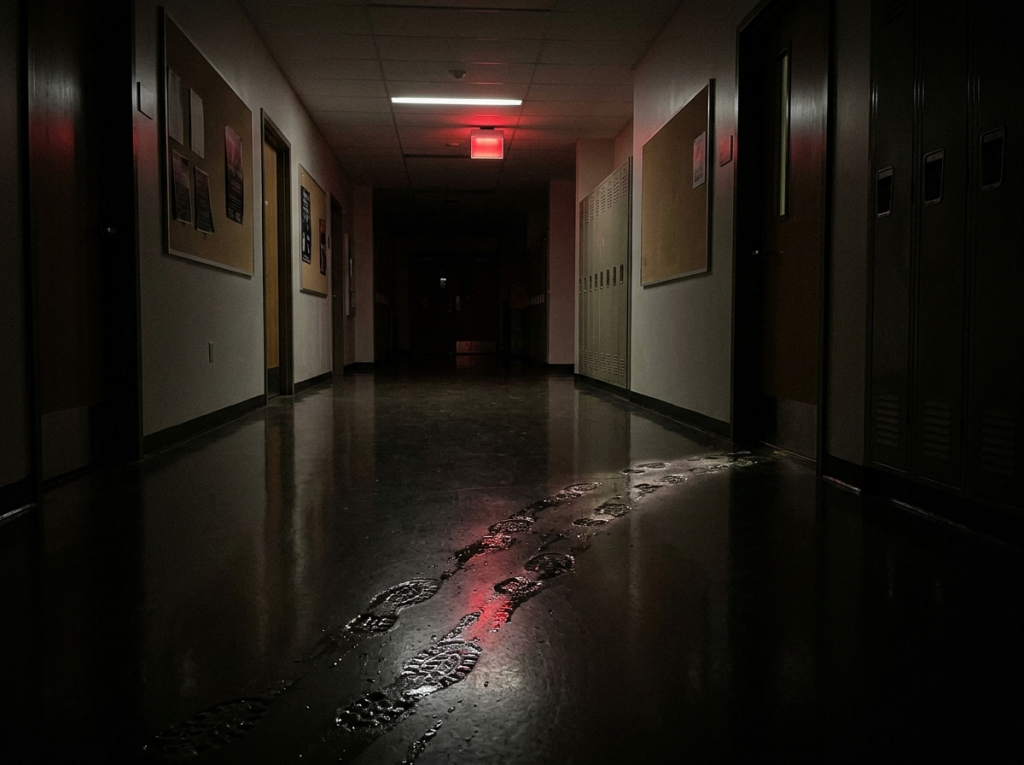
His hour is night. You will not meet him in the middle of a Tuesday lecture. He keeps to the time when the students are gone and the hall belongs to whoever is still inside with a ring of keys: the cleaning crew, a teacher grading late, a guard making his circuit.
Wesleyan Hall is no ruin, either. People work in it today, and in daylight it sits on a mowed lawn like any other campus building. You can walk up to it with a coffee. The ghosts you hike to are in cemeteries and overgrown foundations, but Jeremiah's is a place with a parking lot.
The war gave him his story, and the war was in the 1860s. His visits belong to any night when one person is alone upstairs and the lights are low. More than a century and a half sits between those two, and nobody in the hall seems to feel it.
5 Telling Him From Other Things
It goes in a sequence, and the order seldom changes. First a sound, water dripping on a step. Then a mark, wet footprints on the boards. Last, a door standing open that was shut, or a machine humming that was off.
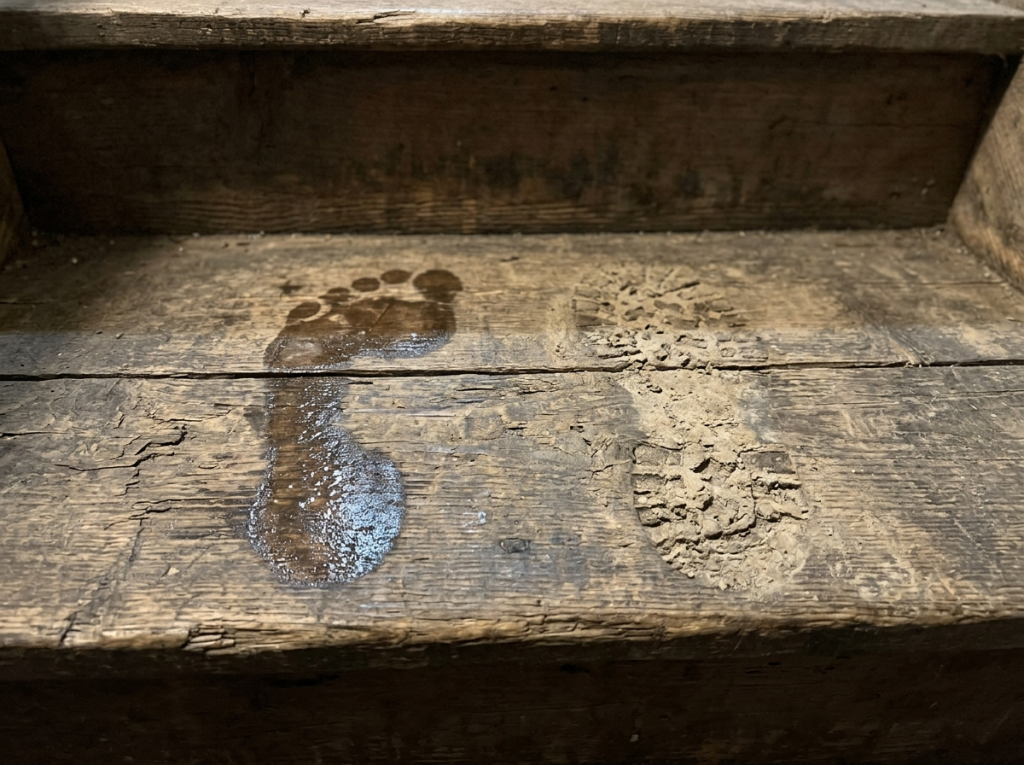
A student comes down from the top floor on a late night with a bag over one shoulder. Behind her a step drips, then the next one. She stops, and the dripping stops with her. She holds her breath for a count of five. Then she takes the last flight faster than she took the first.
Or a worker stands on the second landing with a flashlight, looking at a print that is still dark and shining. He sets his own boot beside it. His boot is large, and the print is small. It is wet, and the boards around it are dry.
Nobody in either story waits to see what happens next.
6 Two Stories, One Boy
There are two ways the boy is said to have ended up wet. In the first, he drowned in nearby Cypress Creek. In the second, townspeople kidnapped him to keep Sherman from burning the city.
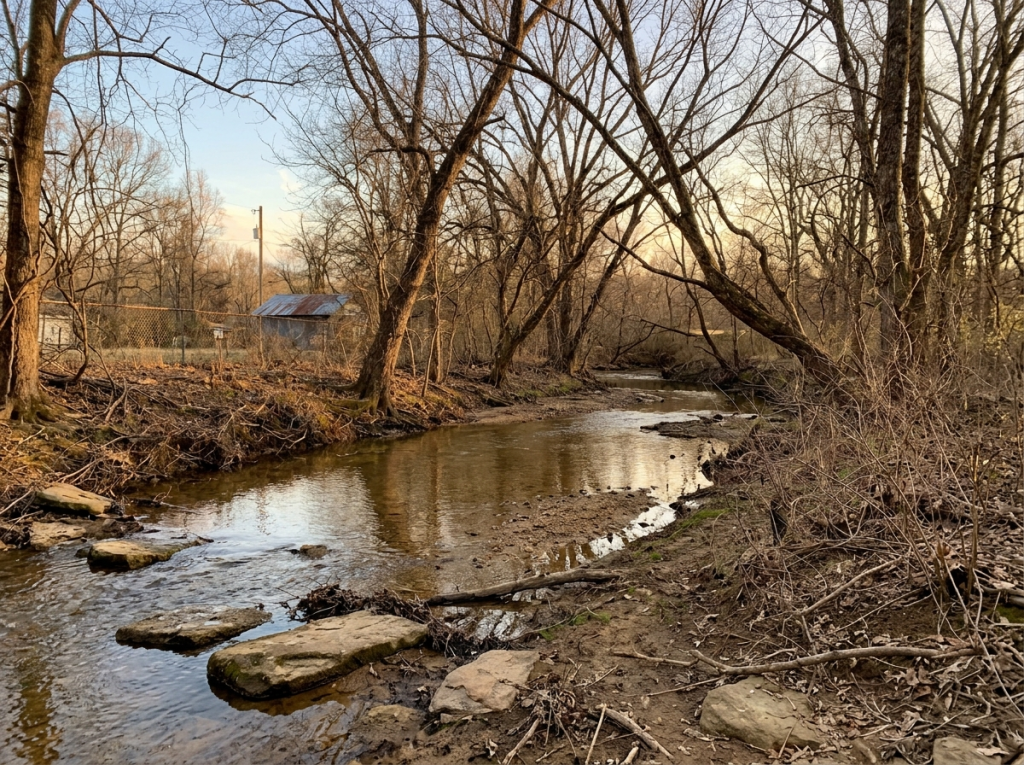
The creek is the easy one. A boy near a creek, in a time of war, with soldiers who had no business minding him. The water follows him up the stairs and into the hall.
The second reaches for something harder. Florence has an occupying army in it, and a handful of townspeople looks at the commander's boy and sees the one thing that might hold the torches back. Whether that was a plan or a panic, the tellers don't say. They leave him in somebody's hands and let the town go on standing.
Either way, what turns up on the floor of Wesleyan Hall is the wet. It is on the treads, and on the landing, and in the shape of a small foot.
The recorded telling carries a title: "Jeremiah, the Drowned Boy of Wesleyan Hall." If you go to see the building, go on a late afternoon, in good light, and look at the steps before the dark gets there.
Sources
Field Guide is drawn from the legends as they are recorded. Its first-hand account is imagined. Its pictures are imagined scenes.