
Mobile Sea Serpent is a figure of Alabama folklore.
Where it is told
Field Guide
The Serpent off Mobile Bay
A tugboat captain, a flat calm Gulf and a fifty-foot swimmer that came alongside in May 1937.
How to know it
- Size
- About fifty feet long and roughly three feet thick, by the one man who put numbers to it.
- Build
- Snakelike in shape, long and even rather than bulky.
- Movement
- Snakelike here too, swimming under its own power.
- Where
- About thirty miles off Mobile, out in the Gulf, off the mouth of Mobile Bay.
- When
- May 1937, reaching the newspapers that same month.
- Habits
- Swam alongside a moving tugboat instead of keeping clear of it.
- Water
- Smooth, calm water, with no chop to blame.
- Seen by
- A tugboat captain, Willie Conway, who was running across at the time.
- Confirmation
- None independent; a later magazine look back called the report itself genuine.
1 On a Mobile Wharf, 1937
I was a boy of eleven in Mobile, Alabama, the spring the paper carried it. My uncle worked the docks, and he read the story out loud to three men who had stopped work to listen. One of them was Hollis, a big man with a chewed cigar who never stopped work for anything. I did not see the serpent, and I will say so before anybody asks. What I saw was three men standing with their hands gone still on the lines.
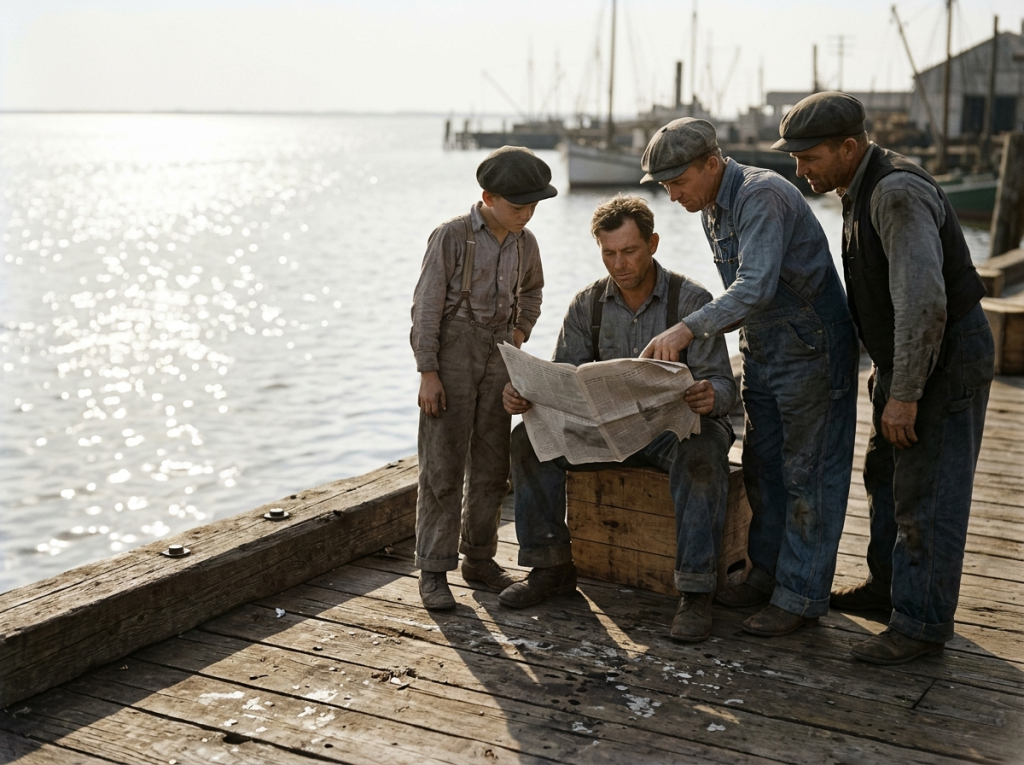
The man in the paper was Willie Conway, a tugboat captain. He had been crossing smooth water, calm as a pan of milk, about thirty miles out from Mobile. The paper said a large living thing had come swimming up beside him. My uncle read that part twice. Alongside, he said, as if it had business there.
The paper gave its length as about fifty feet and its thickness as about three. Hollis said that was a long way for anything to be, and my uncle said that was the whole point of printing it. Hollis took the cigar out of his mouth. "Snakelike," he said. The paper said that too, snakelike in its shape and snakelike in its movement. He kept saying it that afternoon, to nobody.
Hollis asked if anybody had checked it, and my uncle said the paper had printed it, which was what a paper did. They stood in the smell of tar and low tide while my uncle folded the page and put it in his back pocket, and then they went back to the lines. I have gone out on that water many times since. I still look along the side of the boat.
2 What They Call It
The name on the record is the Mobile Sea Serpent. Mobile is in it because Mobile was the nearest town. The sighting itself was thirty miles out, off the mouth of the Bay.
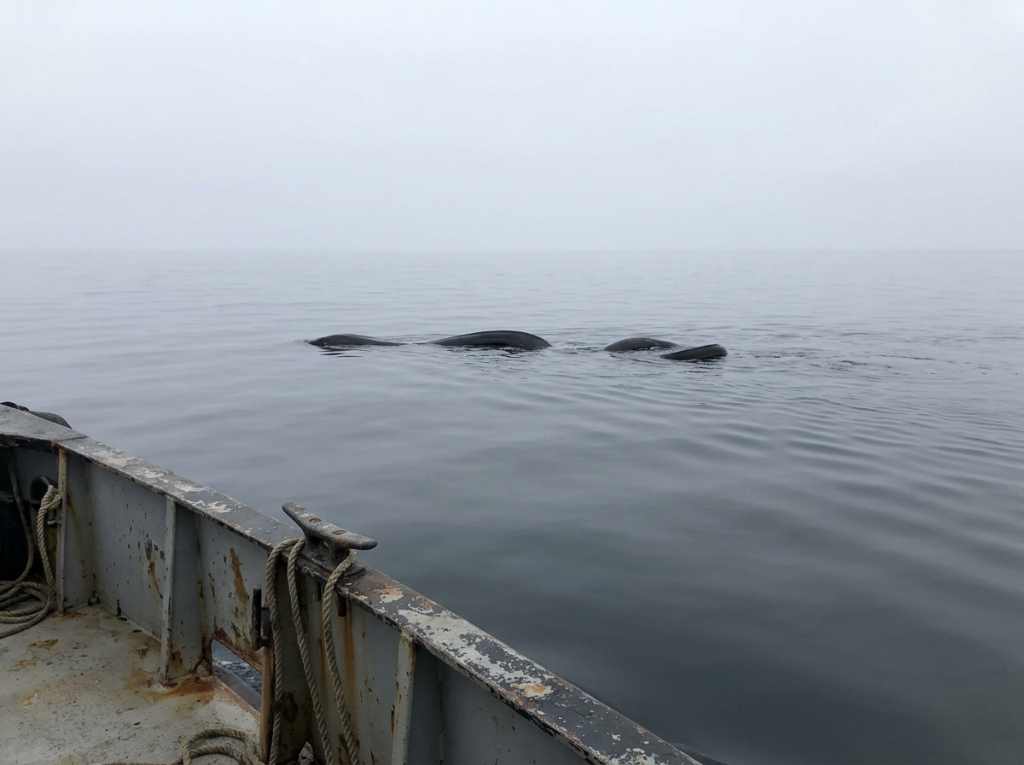
On the wharf the men said serpent and snake by turns. Hollis said sea monster until my uncle told him to quit it, because the paper had not said monster. My uncle stuck to the way the paper put it, a large living thing, and he said it slowly, the way a man sets down something heavy.
I used to lie awake that spring and think about it. Through the window I could hear the harbor, the slap of water on the pilings and a horn somewhere far off. I pictured the shape low and dark in grey water with no land anywhere, keeping pace with a boat. A boy can make a great deal of a picture like that. I still have it.
3 What the Captain Saw
Everything we know of how it looked comes from the captain, by way of the paper. It was snakelike in shape. It was snakelike in the way it moved too, and my uncle liked that part best. Driftwood goes where the water sends it, he said, and this had gone where it pleased.
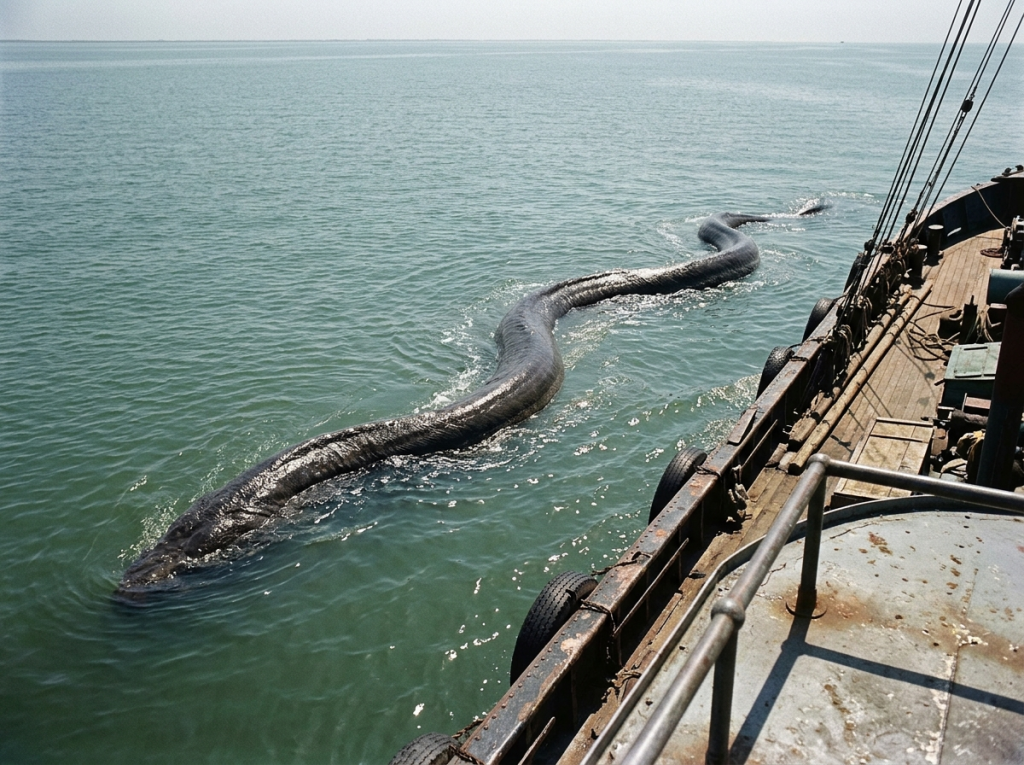
The numbers were about three feet thick and about fifty feet long. I worked it out once on the back of a feed sack, and it came to a body better than sixteen times longer than it was thick. More rope than barrel. I drew it that way, a long even line with no bulge in it, and showed it to my uncle. He held it at arm's length and said that would be about right, as far as anybody could say.
The paper never said what colour it was, so I gave it one. Black the first night, green the second, and I rubbed both out by morning. What stayed was the length, the thickness and the way it moved. On the tug in my head the engine thudded up through the deck plates, and the long shape slid along beside it.
4 Where and When
The place was about thirty miles off Mobile, out in the Gulf of Mexico, off the mouth of Mobile Bay. The county on the books is Mobile County and the town is Mobile, but that is only the home side. My uncle once pressed his thumb on the chart in the dock office and walked it out thirty miles by the scale. His thumb ran off the edge of the part of the chart anybody bothered to mark.
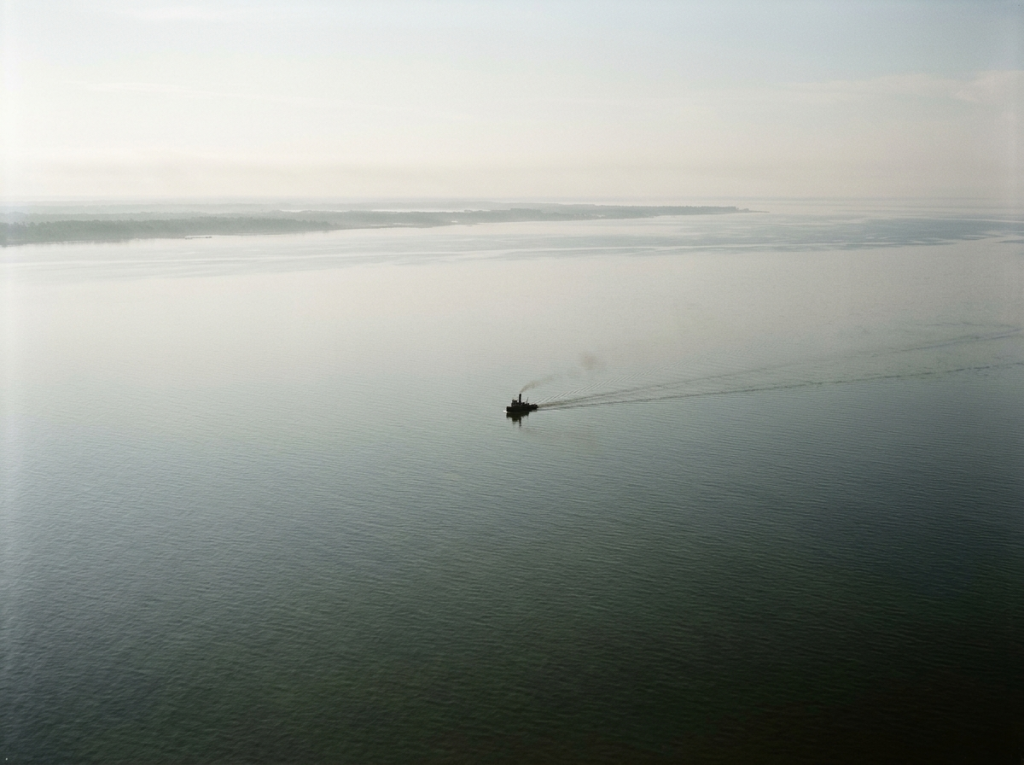
The month was May 1937, and the paper reached our wharf the same month. The water was smooth and calm, and I think about that more than the rest. On a flat day the Gulf smells of salt and warm diesel and little else. The surface lies so still that a long thing moving through it would draw a line you could follow with your eye.
Thirty miles is a long way to go for a look at water, and I never made it in those years. I went as far as the end of the wharf, where the planks gave out and the pelicans sat on the last piling, and I looked south.
5 Telling It Apart
Hollis held out for a log. He said he had once taken a drowned pine for an alligator at forty yards, and a man could be fooled by a lot worse. My uncle said a log sits where it is or rolls, and the paper said swimming. A plank drifts. A swell lifts everything the same way. Hollis said fine, and chewed his cigar, and the next morning he brought it up again.
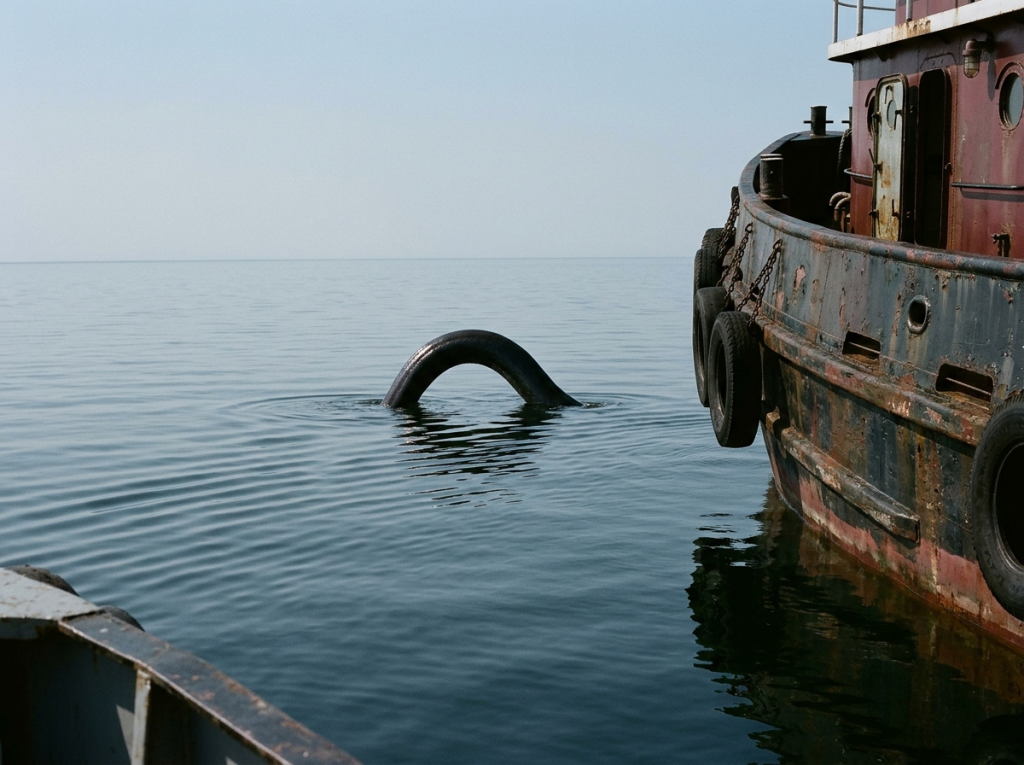
I laid a coil of rope along the planks once and tried to see it moving. It went forward in a snake's way and kept to the side of the boat, and that was how I came to understand why Conway had put the word in twice, shape and movement both.
Years later a Mobile Bay Magazine look back at the story called the report itself genuine. It also noted that nobody had independently confirmed it. I read that to Hollis's son at the fish market, and he said both could be so at once. I said I thought so too, and we bought our shrimp.
6 How the Story Holds
The story came from the captain, and it came to us in the newspaper in May 1937, read aloud on a wharf by a man with tar on his sleeves. The magazine look back came later and kept to the same things: snakelike, three feet thick, fifty feet long, thirty miles out.

I am an old man now. The wharf has changed past knowing, and my uncle is long dead, and so is Hollis. But I still go out on calm days. The engine hums under my boots and the light comes up flat off the water. I find myself walking to the rail and looking along the side of the boat, the way I did at eleven.
I have never seen a thing there but water. The water off the mouth of the Bay is still smooth on a calm day in May.
Sources
Field Guide is drawn from the legends as they are recorded. Its first-hand account is imagined. Its pictures are imagined scenes.