
Piasa Bird is a figure of Illinois folklore.
Where it is told
Field Guide
The Piasa Bird of the Alton Bluffs
At Alton, the memory of old bluff paintings meets the story of a bird that hunted people.
How to know it
- Build
- Faces, horns, scales and long tails appeared in Marquette’s description of the painted figures.
- Movement
- In the bird story, the creature comes down until it is within reach.
- Habits
- The great bird preys on people below the bluff.
- Where
- Alton, in Madison County, Illinois, above the Mississippi River.
- When
- Travelers saw the painted figures in 1673; John Russell’s version of the bird story came in the nineteenth century.
- Story
- A leader offers himself as bait while his companions hide with bows.
1 From the River at Alton
My uncle Dell kept a skiff tied below the Alton landing. The summer I was eleven, he rowed me out under the bluffs without saying why. He shipped the oars and let them drip.
“Look up,” he said.
The rock was pale. The river was brown and slow and kept going past us as if we weren’t there. High on the stone was a painted creature with a face and horns, and a long tail running down the rock behind it. I kept my hands in my lap.
2 What They Call It
Dell called the painted creature the Piasa Bird. He said the name also belonged to a great bird in a later story, a hunter that preyed on people below the bluff.

I asked him if the bird was still up there. He tipped his chin toward the painting.
3 What Marquette Saw
Dell told me that travelers coming down the Mississippi had seen painted figures high on a bluff in 1673. Jacques Marquette described faces, horns, scales and long tails.
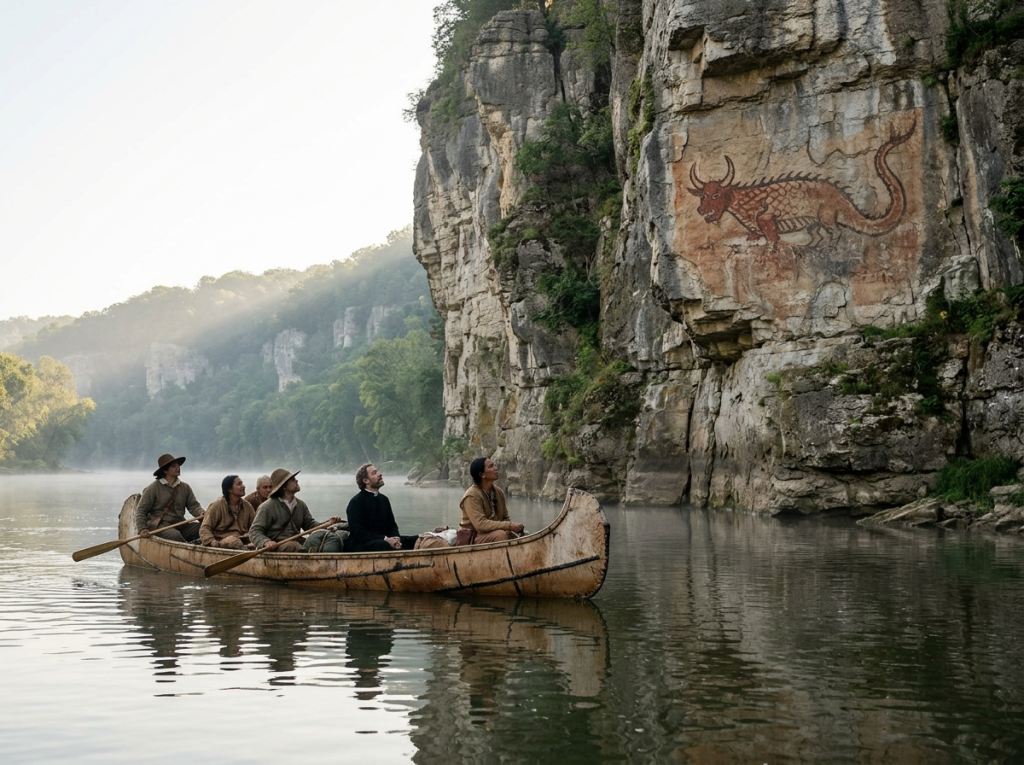
I looked up again, trying to pick out the scales on the creature above us.
4 Where It Turns Up
We floated a little longer below the bluff at Alton, in Madison County, Illinois. Dell said that John Russell had given the bird story a version of its own in the nineteenth century.

Then he took up the oars and began to row us toward the landing. As we went, he told me about the leader and his companions.
5 What It Does
In Russell’s version, a leader offers himself as bait while his companions hide with bows.
The bird comes down toward the leader. His companions wait until the creature is within reach.
6 How to Know It
When Dell finished the story, I looked back at the painted creature above the water. From the skiff I could still make out its horns and long tail.
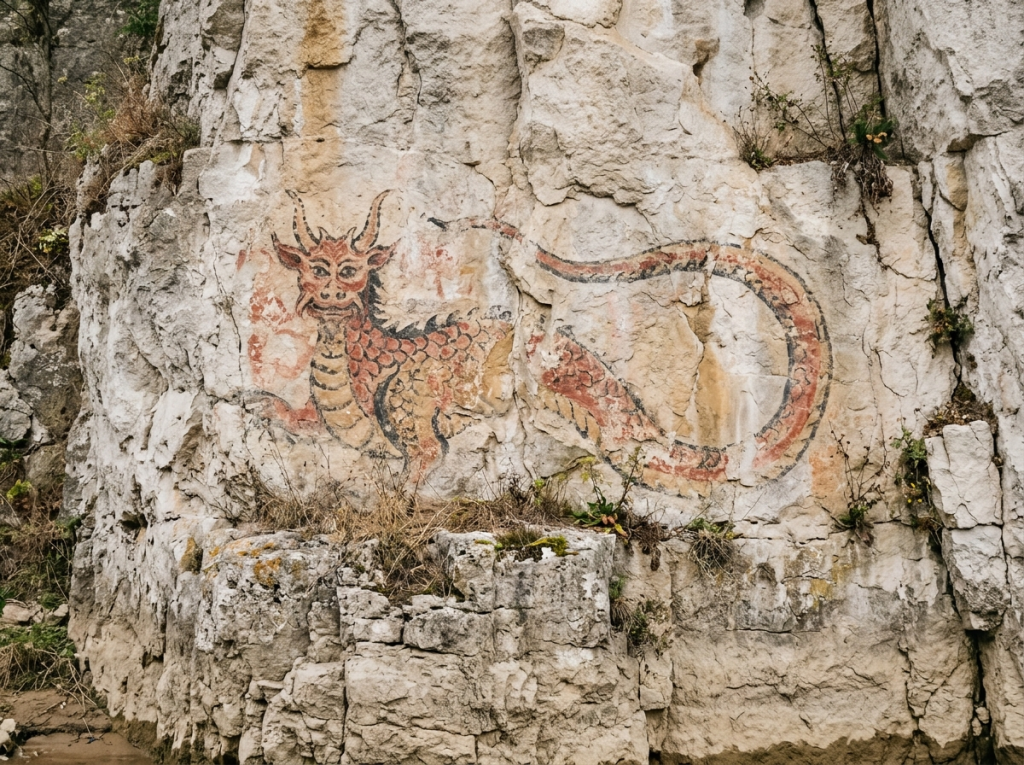
Dell kept rowing, and I watched the painting until I could no longer see it.
Sources
Field Guide is drawn from the legends as they are recorded. Its first-hand account is imagined. Its pictures are imagined scenes.