
Railroad Bill is a figure of Alabama folklore.
Where it is told
Field Guide
Railroad Bill, the Shape-Shifting Outlaw
A train robber’s life ended in Atmore, but stories gave him ways to escape that no ordinary outlaw had.
How to know it
- Place
- South Alabama, including Atmore in Escambia County.
- Form
- A red fox in one collected tale.
- Trail
- Said to throw bloodhounds off his trail.
- Silver
- Said to be the only thing that could kill him.
- PICTURE
- A single silver bullet resting on a worn wooden store counter beside an old ledger, lamplight, shot close from the customer's side.
- CAPTION
- People said only a silver bullet could kill him.
1 The Store at Atmore, Escambia County
I set a picture of an old store on the table before my visitor arrived. It was there to begin the story of Railroad Bill, a real outlaw who robbed Louisville and Nashville trains in south Alabama in 1895 and 1896. He was shot dead at a general store in Atmore on March 7, 1896.
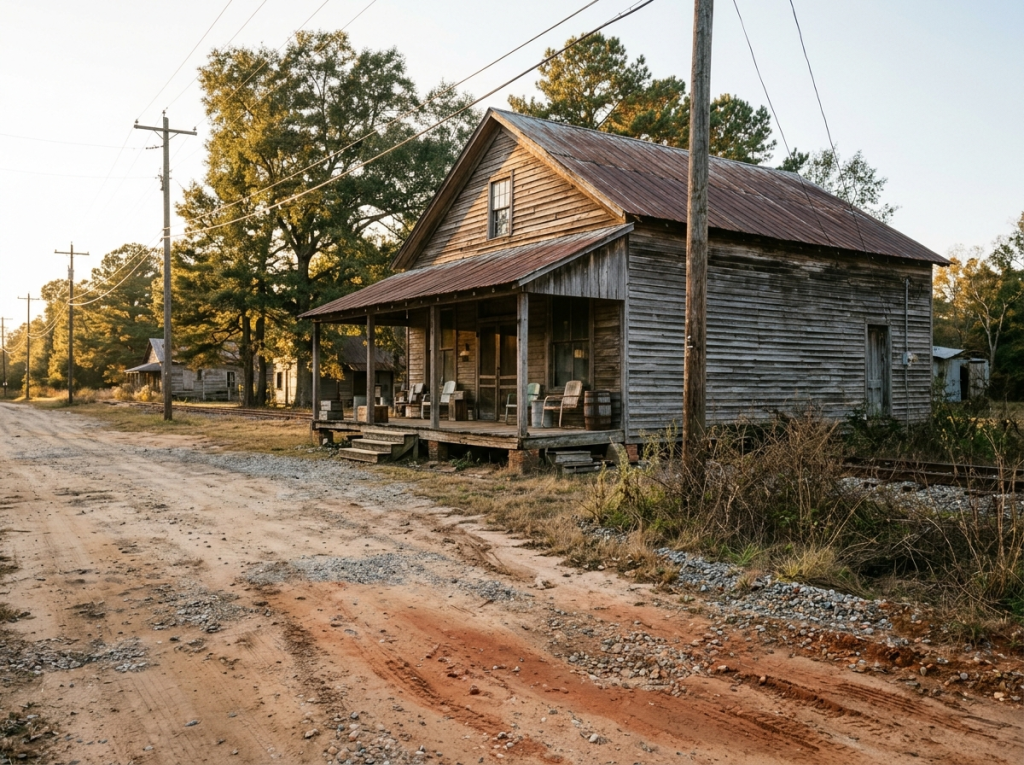
2 What He Was Called
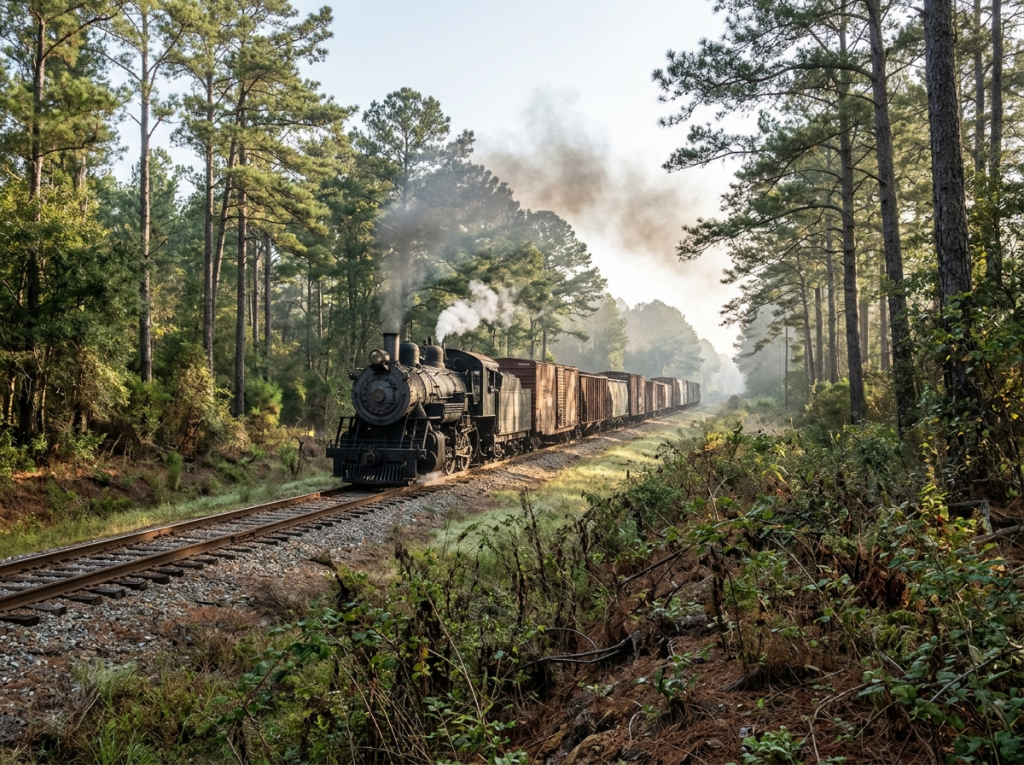
My visitor picked up a picture of a train and read the name Railroad Bill aloud. I explained that stories grew around the outlaw after his death. People said he could turn himself into an animal.
3 What the Tale Describes
“One collected tale gives him a particular shape,” I told my visitor. In it, a sheriff fired at a red fox. The fox laughed like a man, and the sheriff realized it was Railroad Bill.

My visitor set the train picture down beside one of a fox and studied it for a moment.
4 Where He Turns Up
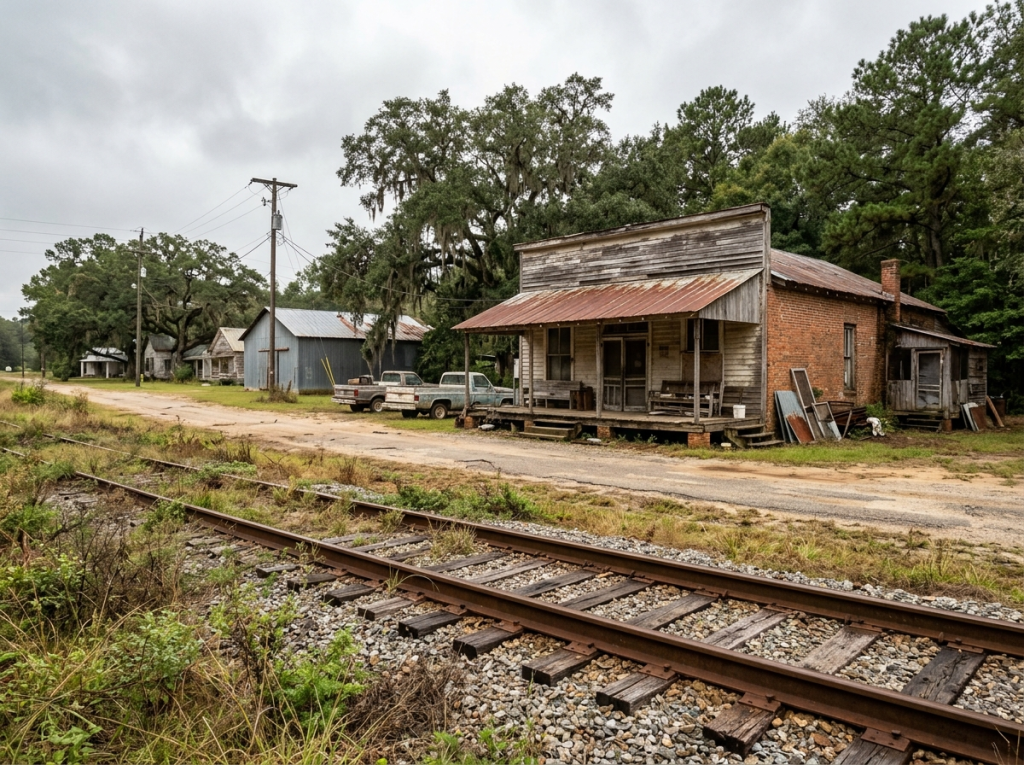
My visitor moved the store picture to the middle of the table. I opened a map and pointed out Atmore in Escambia County. The map could place the store, but the collected tale gave us no place to mark for the fox.
5 Following His Trail
Next I laid down a picture of bloodhounds. People said Bill could throw the dogs off his trail, I explained. My visitor placed the picture beside the fox, leaving room on the table for one more.

6 How the Stories Fit
The last picture showed a silver bullet. People said only one could kill Bill, I told my visitor. We looked at it beside the store picture, where the account of his death had begun.
I wrote a few notes beside the pictures before my visitor left.
Sources
Field Guide is drawn from the legends as they are recorded. Its first-hand account is imagined. Its pictures are imagined scenes.