
Spider Woman is a figure of Arizona folklore.
Where it is told
Field Guide
Spider Woman of Spider Rock
From her home atop a stone spire in Canyon de Chelly, Spider Woman taught the Diné to weave.
How to know it
- Where
- On top of Spider Rock in Canyon de Chelly, near Chinle in Apache County, Arizona.
- Size
- The telling gives no size for Spider Woman. Spider Rock is a slender stone spire.
- Habits
- She made a loom following directions from the Holy People, then taught the Diné to weave.
- When
- At the beginning of weaving.
- Tracks
- No prints are described. The teaching lives on in the work of weavers.
- Mistaken for
- The telling describes no case of mistaken identity.
1 A weaver's yard, Chinle
I was nine, I think, the summer my grandmother put a batten in my hand. Her loom stood between two posts in the yard, and from the wash bank I could see the canyon rim. She showed me how to pass the weft through and beat it down. My first rows came out crooked and loose. She pulled them out and handed the batten back.

While I worked, she told me that the first lessons in weaving came from Spider Woman. I kept my eyes on the warp as I tried another row and asked her to tell me more.
2 What she is called
My grandmother told me that the Holy People gave Spider Woman directions for making a loom, and Spider Woman made it. Then she taught the Diné how to weave.
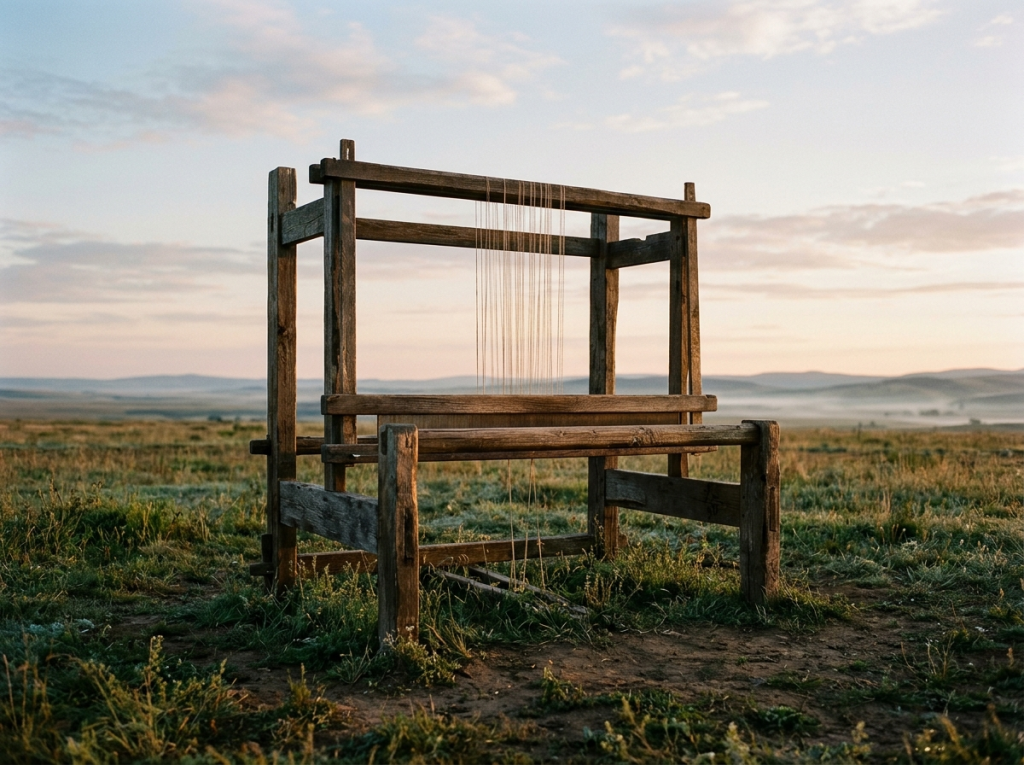
I looked at the frame between the posts. My grandmother waited while I passed the weft through again.
3 Her rock and her canyon
When I asked where Spider Woman lived, my grandmother pointed toward the canyon. Her home, she said, was on top of Spider Rock.

Spider Rock is a slender stone spire rising from the floor of Canyon de Chelly, near Chinle in Apache County, Arizona. From our yard I could see the rim, though the rock itself was out of sight.
4 At the loom
My grandmother watched me draw the weft across and press it into place. This time the row held straight. She let me work a little longer before showing me where I had left it loose at the edge.
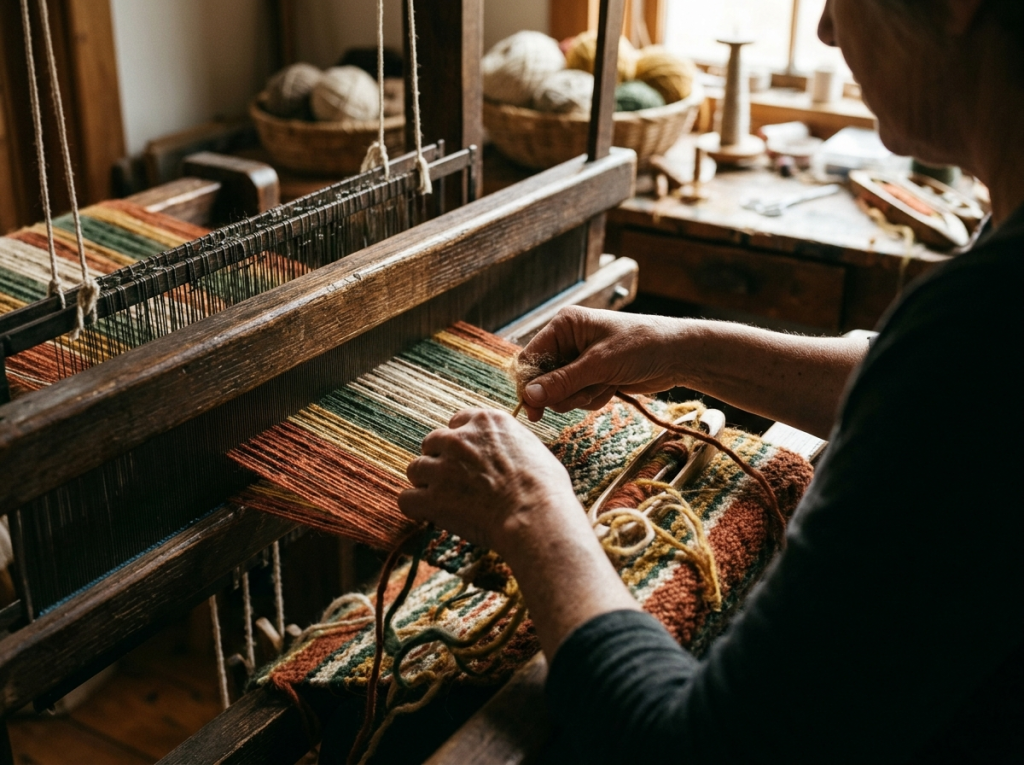
The teaching she spoke of lives on in the work of weavers across the Navajo Nation.
5 Telling the rugs apart
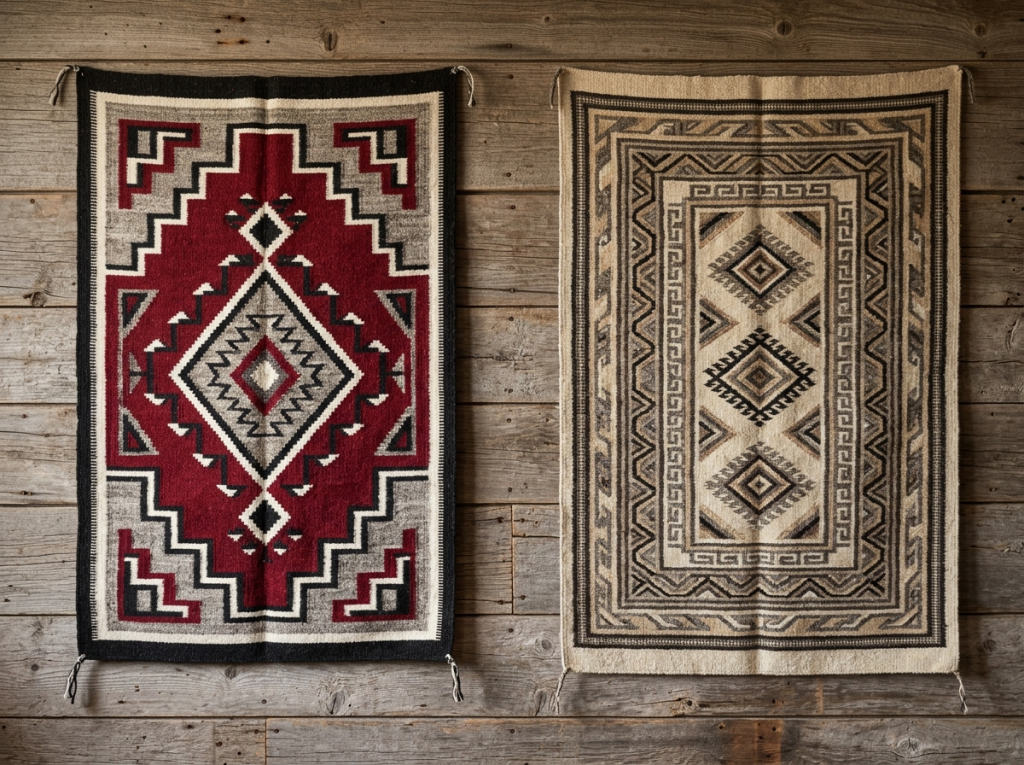
My grandmother had rugs with different patterns in the house. When I had trouble telling where one style ended and another began, she laid two pieces beside each other and let me study them. A rug from Ganado and one from Two Grey Hills can each be recognized by its own regional tradition.
6 Back to the loom
Later that day, I went back to the loom in the yard. My grandmother sat beside me while I worked the next row. When I reached the edge, I held the wool firm and pressed it into place with the batten. She ran her hand along the row, then nodded for me to go on.

Sources
Field Guide is drawn from the legends as they are recorded. Its first-hand account is imagined. Its pictures are imagined scenes.