
Tannehill Monster is a figure of Alabama folklore.
Where it is told
Field Guide
The Tannehill Monster: A Field Guide to the Wild Man of the Ironworks
A half-man, half-beast with wild eyes is said to keep to the woods around old Tannehill Ironworks, on the Jefferson and Tuscaloosa county line.
How to know it
- Name
- Tannehill Monster, also called a wild man.
- Build
- Half man and half beast, and the tellings give no more detail than that.
- Eyes
- Wild, and it is the one feature every picture of it keeps.
- Movement
- Sometimes running through the trees, sometimes walking.
- Habits
- Sometimes stares at people from a distance, and sometimes confronts them.
- Where
- The woods around the old Tannehill Ironworks, now a state park near McCalla.
- County
- The Jefferson and Tuscaloosa county line, with McCalla filed under Tuscaloosa.
- Mistaken for
- Nothing is named, though a man in the dark is the nearest candidate given its build.
- Source
- A 2015 roundup of Alabama monster lore, which credits a collection of short horror stories by David Garrett.
1 Dusk in the Woods, Tannehill
Come with me and make one up. No one has handed down a sighting of this creature, so we will build the evening ourselves. You have left the path behind the old ironworks, the way people do when a trail looks like it might go somewhere. Your boots sink a little in wet leaves. The air smells of pine and cold iron, and somewhere behind you a car door shuts and then there is nothing.
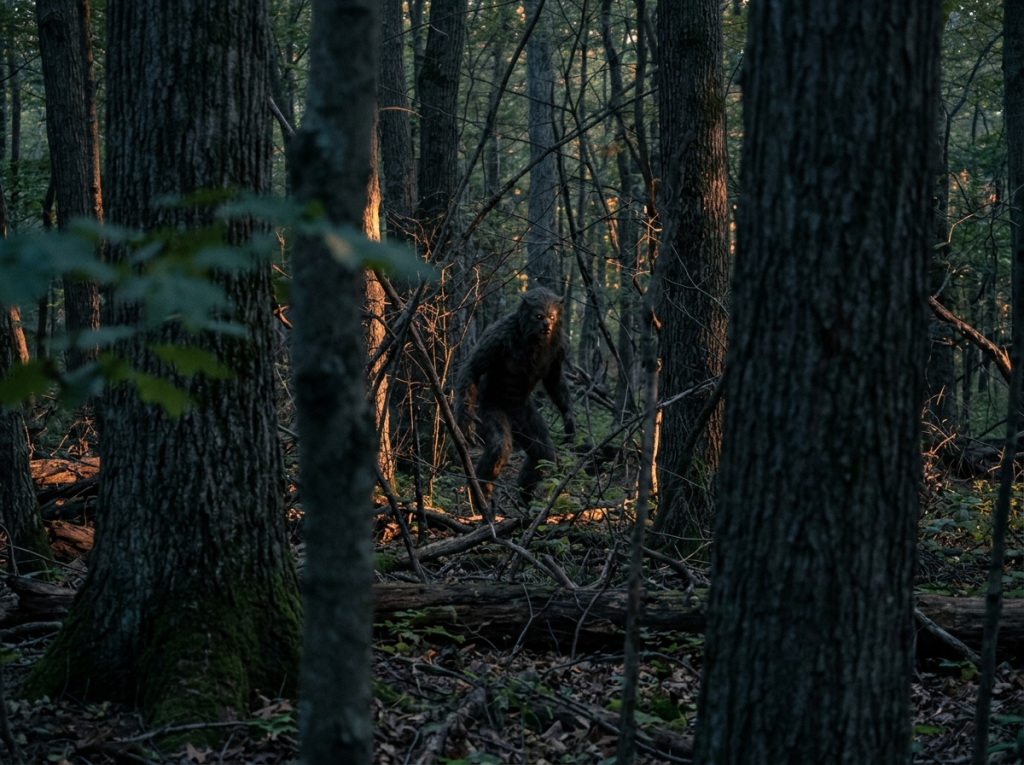
You stop because the picture is wrong. Between two trunks, a good way off, stands a shape that is not a tree. It is upright and heavy through the shoulders. It is too still for anything that wants to be missed.
Then the eyes. The tellings keep that part and use one word for it, wild. They are not the eyes of an animal waiting for you to leave. They have noticed you, and they are working out what you are.
You do not know how long you stand there. Long enough to hear your own breath. In the tellings it sometimes runs through the trees and sometimes walks, and sometimes it stares from a distance and sometimes it confronts. In ours, it stares. You do not move, because moving feels like an answer to a question nobody has asked yet.
When you finally step back, a twig cracks under your heel, loud as a shot. You never look away from the gap between the trunks. You walk the whole way back to the car facing the wrong direction, and you are sure the eyes are still on you.
2 What They Call It
Alabama has enough monsters to fill a list, and the Tannehill Monster is one of the shorter entries. It carries a place in its name, the old Tannehill Ironworks. The people who write it down also call it a wild man.
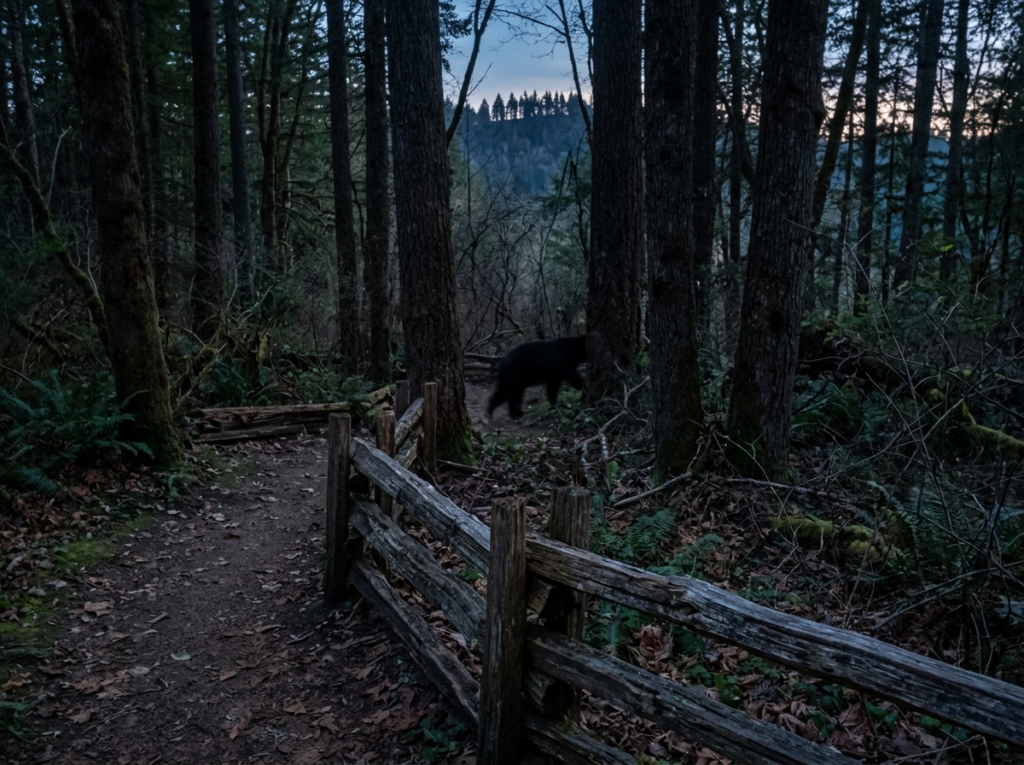
That second name changes things. A monster can be anything, scaled or swamp-born or something nobody has a word for. A wild man was a person once, or looks like one. He is somebody you might have passed on a road who went strange and took himself off to live in the trees. The tellings say half man and half beast, and they stop there.
The story comes from a 2015 roundup of Alabama monster lore. The roundup credits the tale to a collection of short horror stories by David Garrett. That changes how you hold it. A story with an author's name on it sits differently from one nobody can place, and the roundup itself says it may be modern fiction rather than old local lore.
So the Tannehill Monster may be young. Somebody may have sat down and written it, and other people may have started repeating it, because that is what people do with a good monster. The ironworks is real. The woods are real. Whether anything stands in them, the roundup leaves open.
3 How Witnesses Describe It
There is not much to go on. This is all of it.
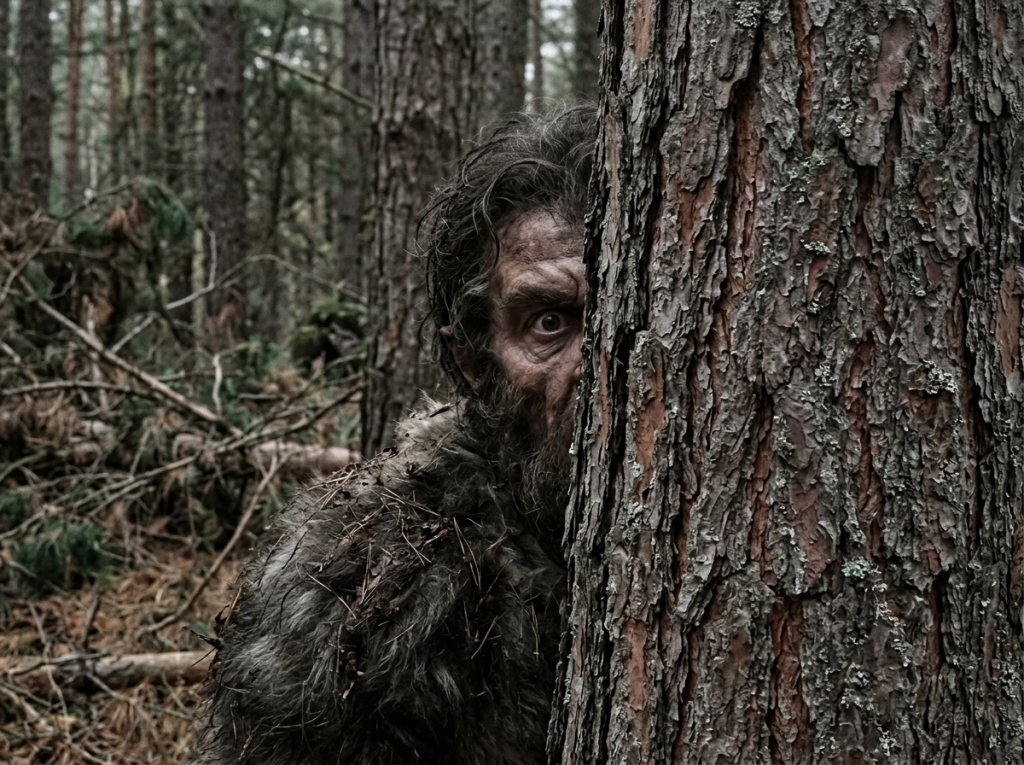
The build is half man and half beast. That could be a man's shape with something animal about it, or an animal carrying itself like a man. The tellings do not choose, so you carry both pictures, and the second one is worse.
The eyes are wild. Nobody gives a colour, a glow or a size. Wild is a word about how eyes behave. They do not settle, and they do not drop the way a stranger's eyes drop on a sidewalk. Meet a pair across fifty yards of woods and you would feel them arrive.
The movement is running, sometimes, and walking, sometimes, and always through the trees. Nobody sends it across a parking lot or down a road. It is kept to the part of the park where the path gives out and the trunks take over.
When it meets someone, it stares from a distance, or it confronts. Those are the only two verbs the tellings use. One is a creature making up its mind. The other is a creature with its mind made up.
Nobody has handed it seven feet of height, a smell or a cry. There is only a pair of eyes and a way of standing among the trees, and people tend to find that enough to keep looking at the trees.
4 Where It Turns Up
It all happens in one place, the woods around the old Tannehill Ironworks, now a state park near McCalla. McCalla is filed under Tuscaloosa County, but the legend sits on the Jefferson and Tuscaloosa county line. The telling picks neither side.
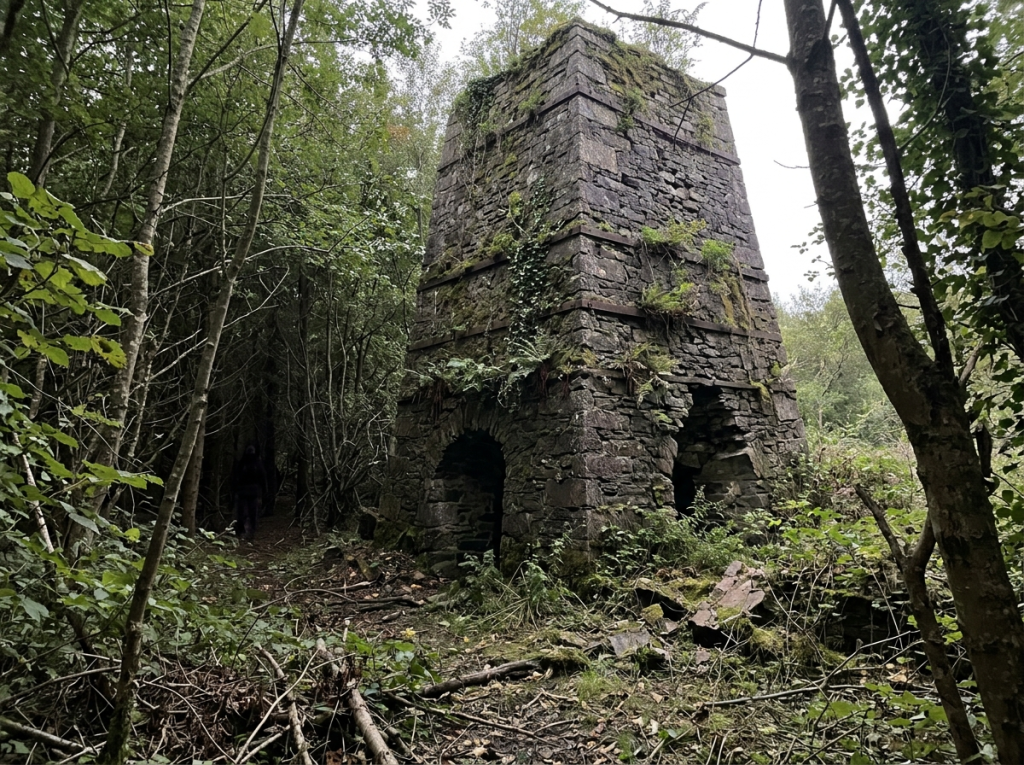
That suits a creature that is half and half. An ironworks is a place where things were made, and the trees grow close around it now. The tellings do not say how a wild man came to be there, and I will not make up a reason. A furnace that no longer burns makes a fine backdrop all the same.
As for when, the legend gives nothing. There is no season, no hour and no year of a first sighting. The only date attached is 2015, and that is the year of a writing, not a meeting. The story could belong to this evening or to a hundred years back. It could also never have happened, and the woods at dusk would look the same either way.
So what you get is a place. Go to where the maintained ground ends and the trees begin, and look at the gap between two trunks. That is the whole map.
5 Telling It From Other Things
The tellings name nothing it might be mistaken for. They do give one candidate by implication, a man in the dark, since the creature is half man and has the build for it.
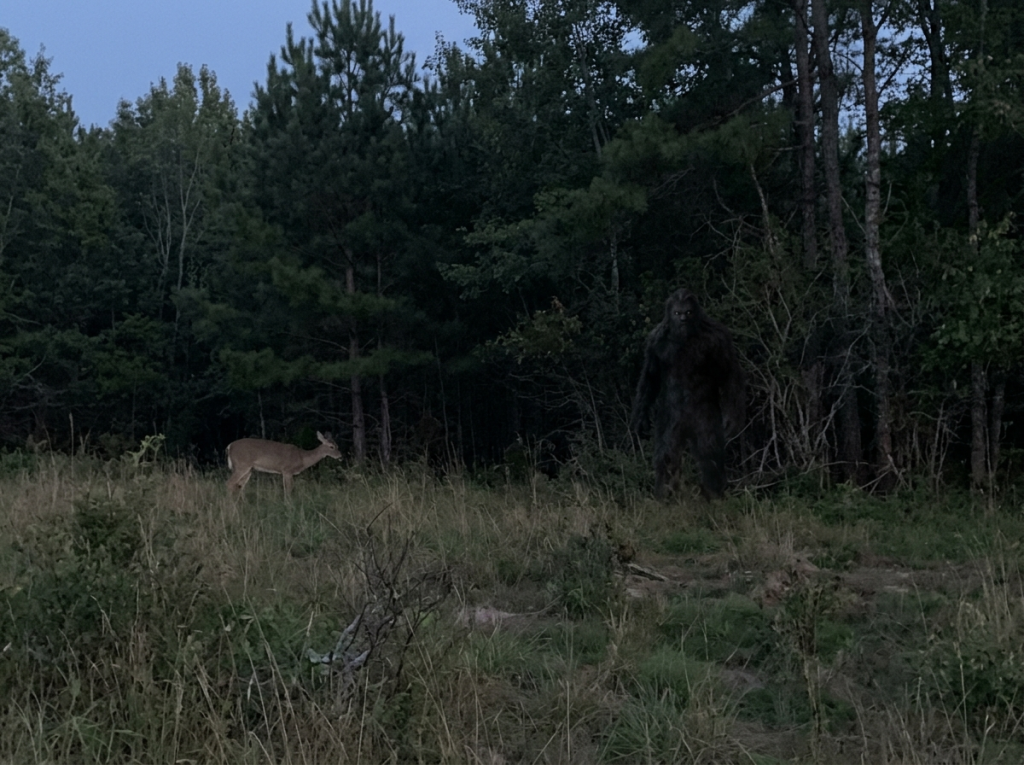
My own mind goes to a deer first, because a deer will stand in the woods and stare, and the tellings have the monster staring too. That is my guess, though, and not part of the legend. What the legend adds is the second verb. Something that sometimes stares and sometimes confronts is doing more than looking.
A man in the dark is the harder one to rule out. A figure at a distance among the trunks, in poor light, is a figure and not much else. If anything separates it from a person, it is the eyes. A man's eyes in the dusk are a man's. The tellings say these are wild.
Most of what you meet in the woods is exactly what it looks like. A stump is a stump. The legend claims only the leftover, the one shape in a hundred that stays a shape after a second look.
Most of us have had that second look. You decide it is a stump, and then you notice you have been watching it for a while, and the stump has not been watching anything. Then, once, it has.
6 How the Story Holds Together
Only one legend sits on the shelf, so nothing crosses it. There is no shared road, no river carrying the monster into another county, no era it runs through. There is a story that agrees with itself.
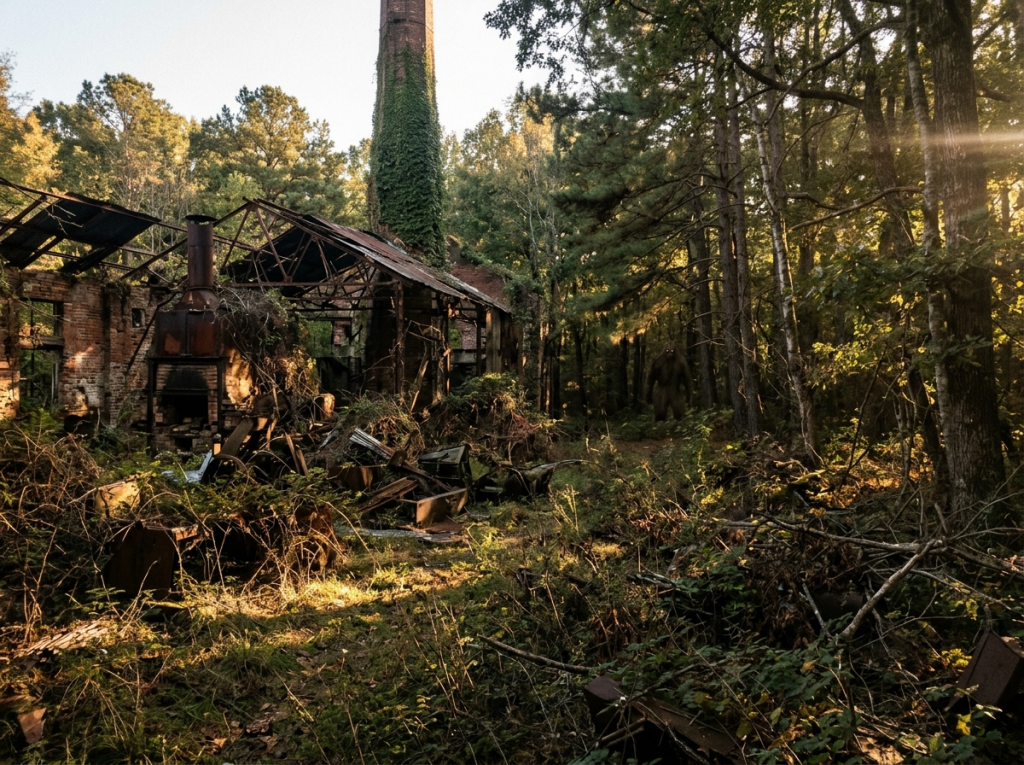
The wild eyes go with the staring. A creature that watches from a distance is one whose eyes you would remember, and one that confronts you is one whose eyes you would not shake. The running and walking belong to the woods, and the woods belong to the ironworks. Each detail leans on the next.
The odd part is where it came from. A roundup of Alabama monster lore sets it down, and the roundup points to a collection of short horror stories by David Garrett. So the Tannehill Monster stands at a crossing, between the things people say happen in the woods and the things people write to scare each other. The roundup allows that the tale may be modern fiction. Nothing here argues with that. Plenty of old local lore began as somebody's well-told yarn, and then one day it was old.
If it was written, a writer put a wild man in real woods, in a real park, on a line between two counties. The roundup does not tell us what the writer meant by it, and I will not guess. But the figure is still out there between the trunks, with those eyes, looking at whoever comes.
Sources
Field Guide is drawn from the legends as they are recorded. Its first-hand account is imagined. Its pictures are imagined scenes.