
Skunk Ape is told of in Florida and Alabama.
Where it is told
Field Guide
The Skunk Ape, From the Wiregrass to the Big Cypress
A tall, long-armed, bad-smelling walker is told of in the cypress country of southern Florida and the Wiregrass of southeast Alabama, and the two places agree about more than you would expect.
How to know it
- Size
- Five to six feet tall, by the Alabama talk; the Florida film gives no height.
- Build
- Apelike, with long arms, and it stands and walks upright.
- Colour
- Dark hair that showed up against pale grass in the Florida film.
- Smell
- Strong, and in the older Florida stories it arrives well ahead of the animal.
- Tracks
- Claws set fixed and bear-like, from half an inch to two and a half inches long, as told at Ashford.
- Movement
- Walks upright on two legs and crosses open ground.
- Where
- Big Cypress country in Collier County, Florida, the wider Everglades, and the Wiregrass around Ashford in Houston County, Alabama.
- When
- Talk in early 2015 in Alabama; the Florida stories are called older, and the film is not dated.
- Habits
- In the older Florida stories it gives its warning by smell first and is seen afterward, if at all.
- Mistaken for
- Nothing is named, though the claws are compared to a bear's.
1 Out Past Ochopee, Big Cypress
I was nineteen the summer I drove a water truck for a survey crew out past Ochopee, in the Big Cypress, and I'll tell it the way it happened and not one inch bigger. We were finishing late, the grass was gone the colour of weak tea, and the sun was low enough that everything had a long shadow except the one thing that didn't.
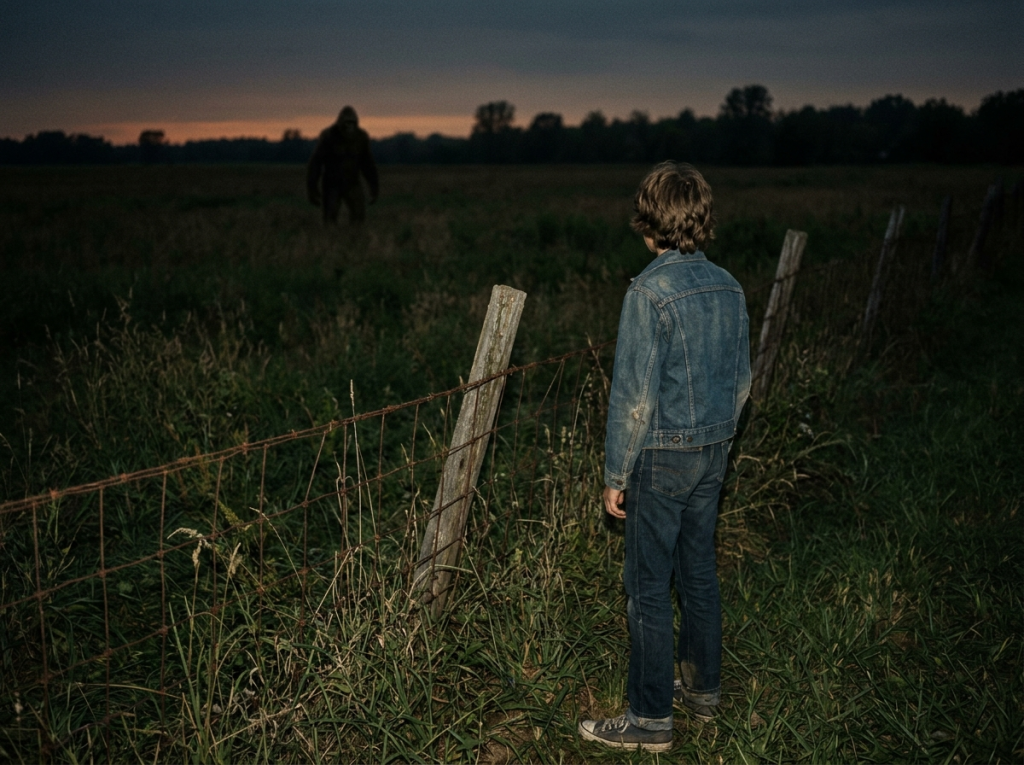
The smell came first. I'd stepped off the running board to check a hose, and it reached me before I had my hand on the clamp. I won't dress it up. It was the worst thing I ever had in my nose, and it was strong enough that I took it for a dead hog somewhere upwind. My partner took it for the truck. We were both wrong, and we found out inside a minute.
There was a figure crossing the open ground beyond the ditch. It was upright, on two legs, walking, and I want to be plain that it was not hurrying. The hair on it was dark, and against that pale grass it showed up like ink on a feed sack. The arms were long. I noticed the arms more than anything, because a man's hang a certain way and these did not hang that way.
It kept going. It never turned toward us, and it never stopped to look. It went across that field the way you'd cross your own yard, and the grass closed up behind it. My partner said afterward that he'd been filming it in his head. I said I'd been trying to hold my breath.
We told the crew chief. He said the old people around there have a name for what leaves a smell like that, and that I wasn't the first to bring it up, and he went back to his coffee. That is the whole of it. I never saw it again, and I have never wanted to.
2 What They Call It
Around the Everglades the animal already had a name, and people would hand it to you before you finished asking. Skunk Ape. It was going around when the stories were old, and it came down the way a nickname does, with nobody left who could say who first used it.
The skunk is the smell, and anyone who has stood downwind of the real thing doesn't need that explained. The ape is the shape, the long arms and the way it rears up and walks on two legs. Two words, and they cover it.
It is an apelike animal, walking upright, with a lot of hair and a worse odour. It is no man in a suit and no spook in the swamp, just a big hairy walker that you smell before you see. When the Dothan station WTVY took up the talk in Alabama, early in 2015, the animal was described as apelike and strongly smelly, and the telling stops right there. No history comes with it, and no one offers a guess at what it really is.
Alabama has its own ground and its own weather, but the word turned up there too. A Wiregrass farmer and an Everglades guide would have little to say to each other about land or crops. Put the animal in front of them, though, and both of them reach for the same name.
3 How Witnesses Describe It
Start with the man with the camera. Dave Shealy said the creature he filmed in the Big Cypress country walked upright, with long arms and hair that made it look dark against the grass. Then the picture shook as it moved away. That's the part people remember. There is no face in it and no hand you could count fingers on, and the viewers were left to decide for themselves what had just crossed that open ground.
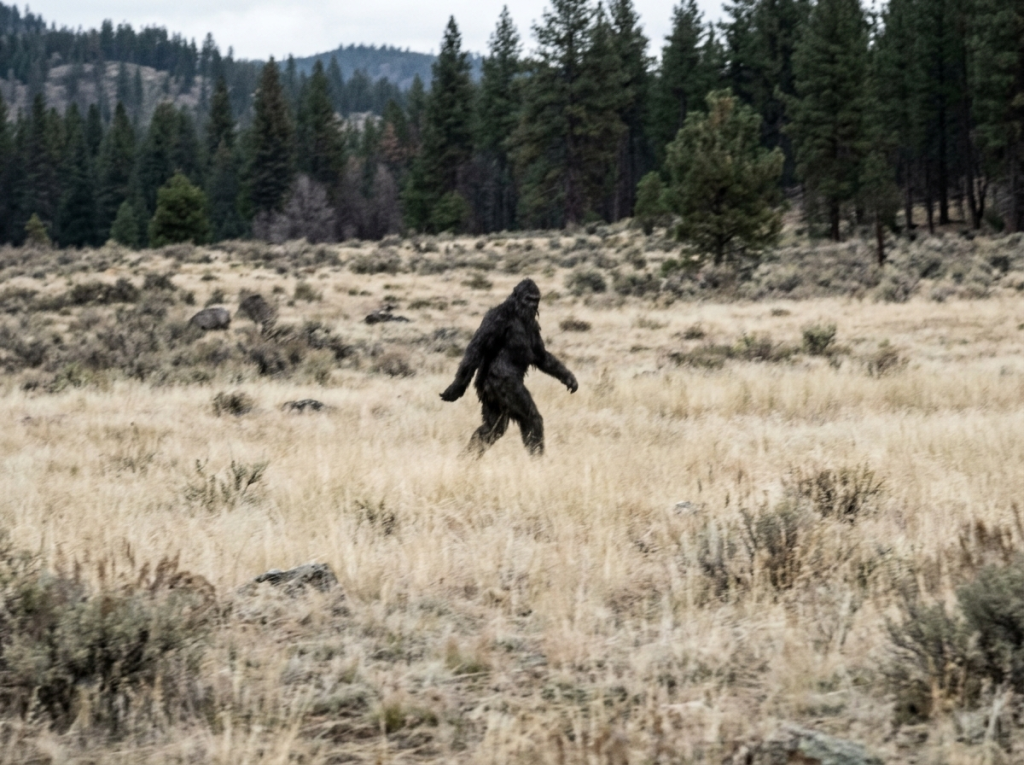
So the Florida picture is a walker, long in the arm, dark against the pale grass, going off across the open with the lens shaking behind it. Whatever it was, it kept moving and the film ran out of reasons to follow.
Now go northwest to Houston County, Alabama, and the town of Ashford. The talk there, as a later roundup tells it, was of an animal five to six feet tall, apelike, and strongly smelly. Michael Clark of Ashford reportedly told of claws, fixed and bear-like, anywhere from half an inch to two and a half inches long. That is an odd thing to hear about an animal that stands like a person. Bear claws on something upright is a picture that sticks.
A Pell City paranormal group commented on the reports. That was the whole of the Alabama record, a description passed from mouth to television to roundup, with no one in it saying they had gone after the animal.
4 Where and When It Turns Up
Collier County sits at the bottom of Florida, and Ochopee is the nearest town you'd find on a map. Out from it is the Big Cypress, which is open grass and standing water and a good deal of country with no road through it. The film was shot out there, on open ground, and the smell stories belong to that same country. The older Everglades stories, where the name Skunk Ape was already known, sit right alongside it.
Houston County is the other end of this, in the Wiregrass corner of southeast Alabama. Ashford is there, and Dothan, whose station carried the report, is not far off. Early in 2015 WTVY reported on the talk, and the Pell City group weighed in. That is the one firm date anywhere in these stories.
The Florida stories carry no date at all. They are called older, and the film is not dated either. You can stand in that country at the end of a day and see how a story would wear smooth over the years, with the dates rubbed off first.
What the Florida stories do give is a habit, and it is a small one. The smell reaches a person well before there is anything to see. You get warned by your nose, and then, if you are lucky or unlucky, you see it afterward. That is the nearest thing to a routine anyone has written down, and it belongs to the Everglades side of the line.
The Alabama talk goes at it from the other end. People described the animal's height, its look, and its claws, and that description is what got passed around.
5 Telling It From the Ordinary
Somebody always says deer, and a deer will not do. A deer doesn't walk on its hind legs, it hasn't got arms, and I never heard of one that sent a smell ahead of itself the way the older Florida stories say this does. A dog is worse as an answer and a cow is worse again. Neither one stands up and crosses a field with its arms swinging.
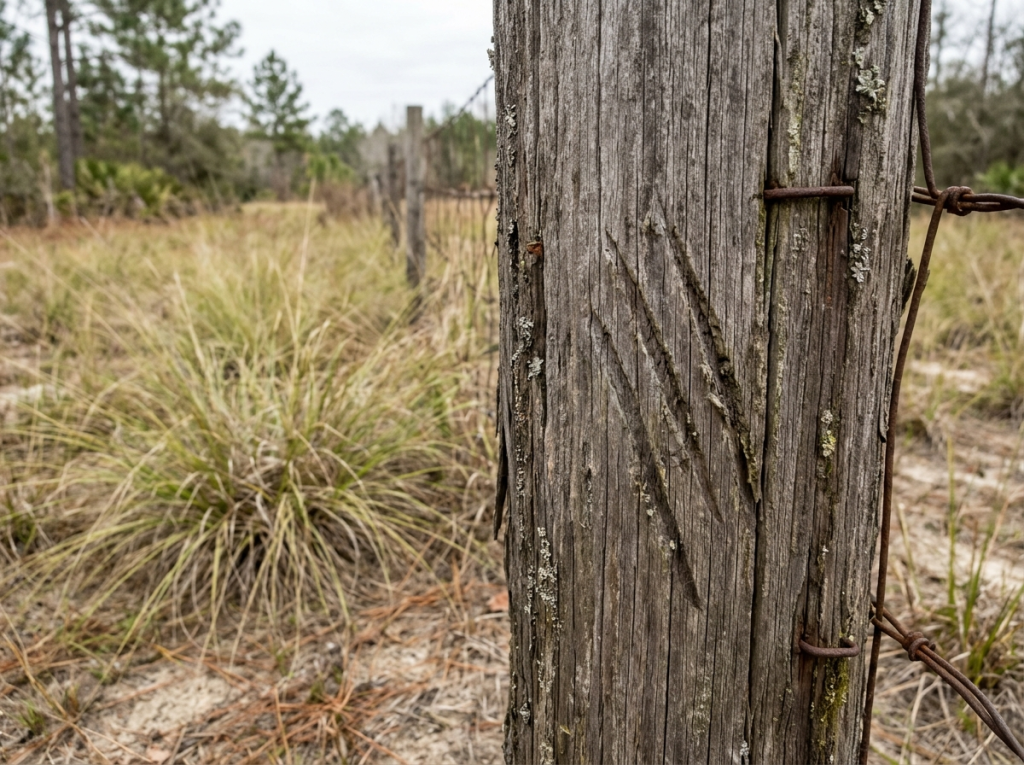
A man is the better guess, and it deserves a straight look. The figure in Shealy's film walked upright, and so does a man. But the film shows hair dark against the grass and arms long enough to set it apart, even at a distance. In Alabama the height of five to six feet is about what a person stands, so height settles nothing. The smell comes closer. A man can smell bad enough out in a field, I suppose, but in the older Florida stories it gets to you well ahead of the animal, and that is not how people usually announce themselves.
The claws are the odd part. Fixed, bear-like, half an inch to two and a half inches long is not what a farmhand carries, or a dog either. They come up in one place only, in what Michael Clark reportedly told, so I'd hold them loosely. A bear is the animal people reach for when they hear about claws like that, and yet a bear does not stand up and walk off across a field. The claws point one way and the walk points another, and the story sits in the gap between them.
6 How the Legends Join
Stand at the edge of the Big Cypress with the sun going down and the grass pale, and you can picture it easily enough. A dark shape walking out across the open, long arms, the picture shaking as it goes. The smell, in the older stories, would have come first.
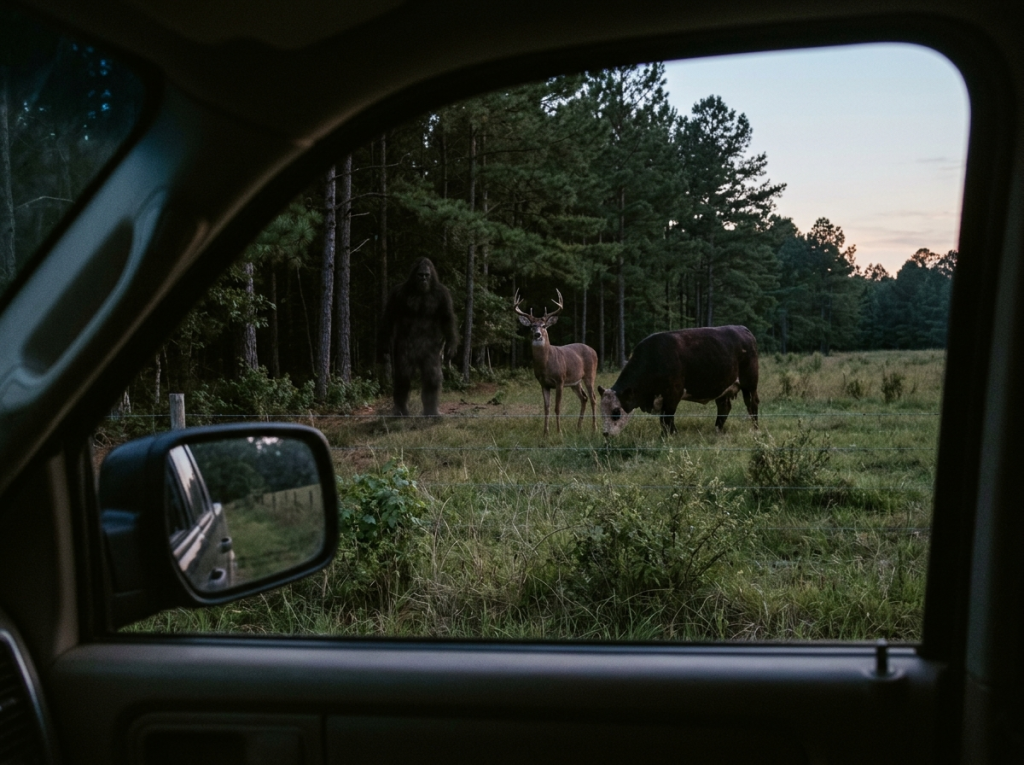
Now stand in the Wiregrass of Houston County with Ashford behind you. Early in 2015 people there were talking about something apelike and strongly smelly, five or six feet tall, with claws like a bear's. It has the same upright walk and the same long arms. The dark hair and the smell are Florida's, and Alabama brings its measurements and its claws.
The two places are a long road apart. The tellings never say how the name Skunk Ape got from one to the other, or whether it did. Around the Everglades it was already known, and in Alabama it is the word the talk landed on.
The Florida film ends as the picture shakes and the shape moves off. The Alabama talk ends with a television station and a paranormal group, who each had their say and let it be. Both stop with the animal still out there. You are left at the edge of a field, watching something cross it.
Sources
Field Guide is drawn from the legends as they are recorded. Its first-hand account is imagined. Its pictures are imagined scenes.