
Leopard Eel is a figure of Alabama folklore.
Where it is told
Field Guide
The Leopard Eel of Lake Jackson
For years, Florala’s spotted water creature had a local name. In 2018, it gained a scientific one.
How to know it
- Also called
- Reticulated siren, the name published in 2018.
- Build
- Eel-shaped, with two small front legs and no hind legs.
- Colour
- Leopard-spotted.
- Gills
- Feathery and outside the body.
- Where
- Lake Jackson at Florala, Covington County, on the Alabama-Florida line.
- When
- Talked about for years, reported in numbers in 1994, caught in 2009, and described as a new species in 2018.
- Kind
- A salamander.
1 Dock at Lake Jackson, Florala
I like to picture a morning on a dock at Lake Jackson, with a cane pole in my hand. Florala sits beside the lake, where Alabama meets Florida. In my imagined morning, the water is flat and grey before the sun clears the trees.
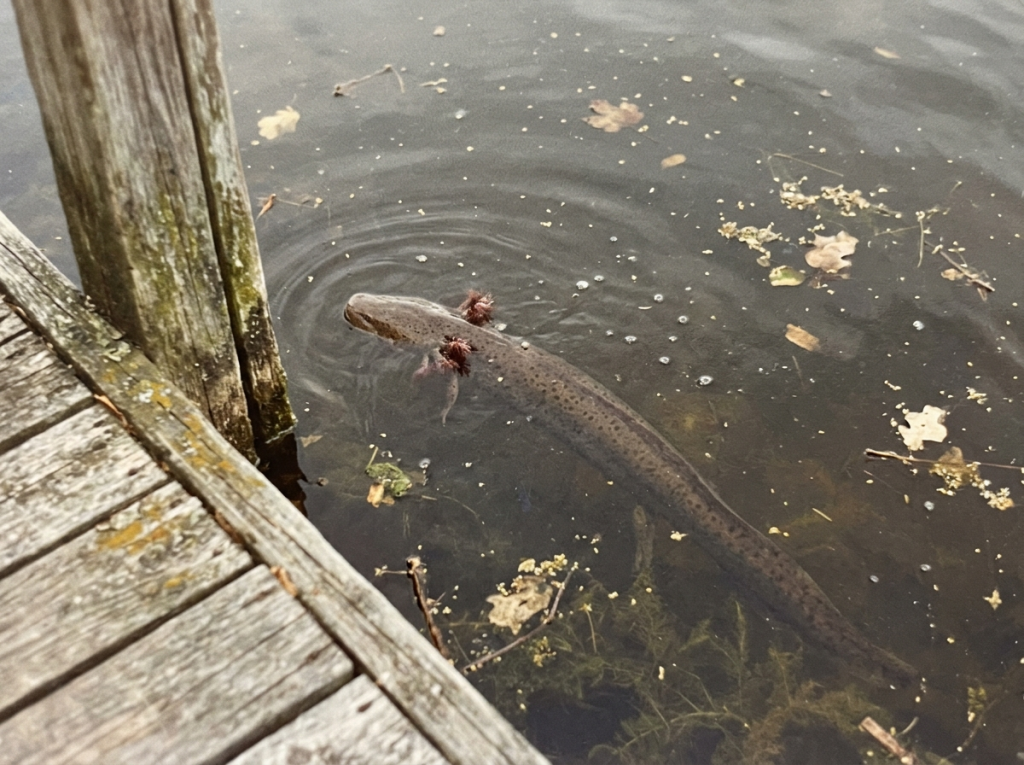
A spotted animal comes up near the bank. At first glance, I take it for an eel. Then I see two small legs near the front and none at the back. Feathery gills stand outside its long body.
I let the bobber drift while I watch. The creature looks strange enough to belong in a water story, though the features I have given it belong to a real salamander.
2 What They Call It
For years, people around Lake Jackson talked about an animal they called the leopard eel. Scientists had never formally described it.

I imagine the name being passed across the counter of a store near the lake. A customer pauses over a jar of fishing lures while the person behind the counter points toward the water. “Folks call it the leopard eel,” the shopkeeper says. The customer turns the name over once, then returns to choosing a lure.
3 How Witnesses Describe It
The record gives the local talk a shape beyond the scene I have imagined. In 1994, a biologist reported seeing large numbers of the animals. Another biologist caught one in 2009.
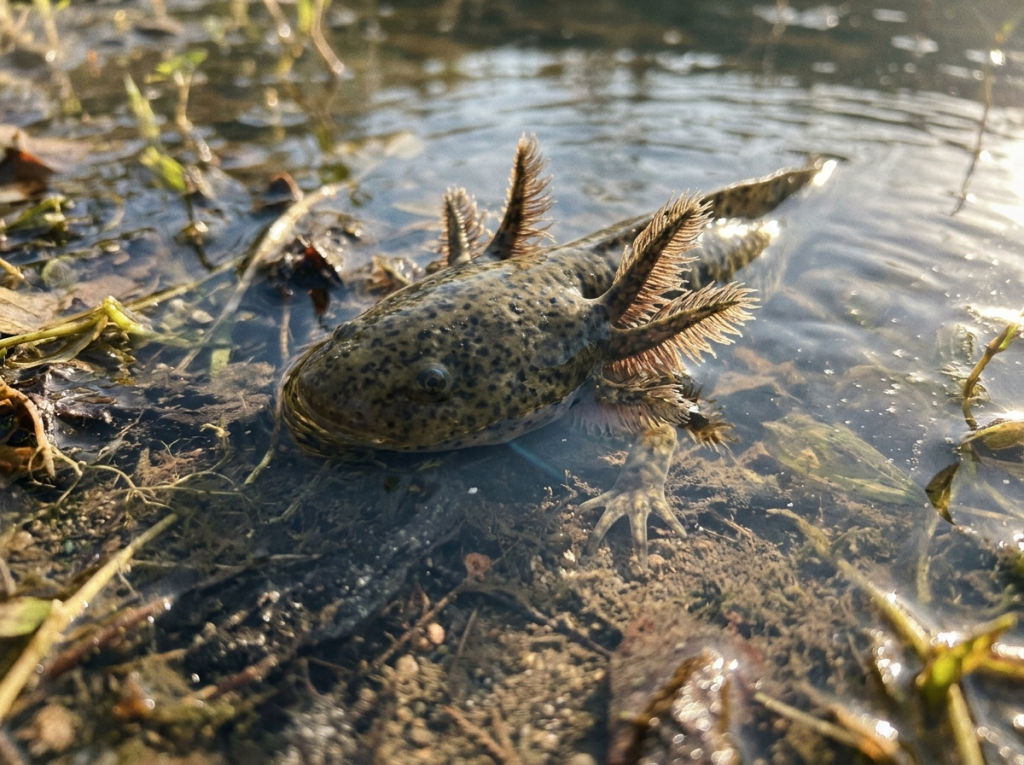
I picture my own glimpse ending much sooner. As I lean over the dock boards, the bobber pulls at the line. I lift the pole, then look back toward the animal before it slips from view.
4 Where and When
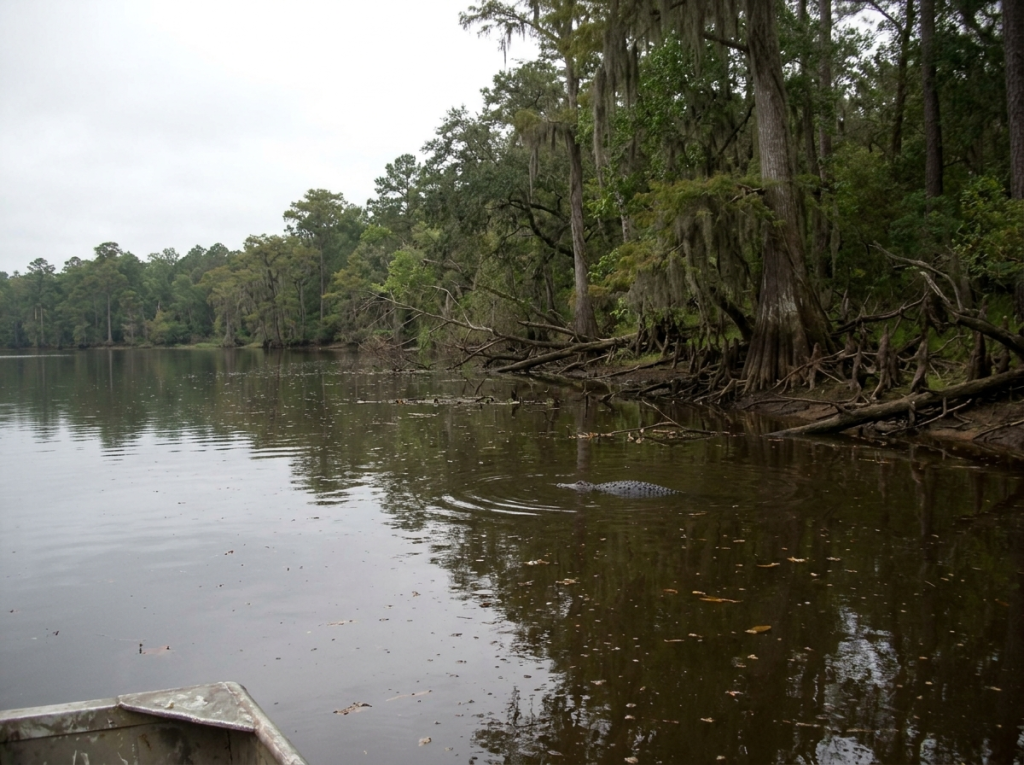
In 2018, researchers published the animal as a new species, the reticulated siren. The local paper reported that scientists called it a mystical, mythical beast.
5 Telling It Apart
The name leopard eel can put an eel in my mind before I have taken a proper look. An eel has no legs, while the animal in this story is a salamander.

On my imagined dock, I would keep watching the shallows after it vanished, hoping for another glimpse.
6 How the Stories Join
The leopard eel is one of the rare local water legends that turned out to describe a real animal that had not yet been formally named.
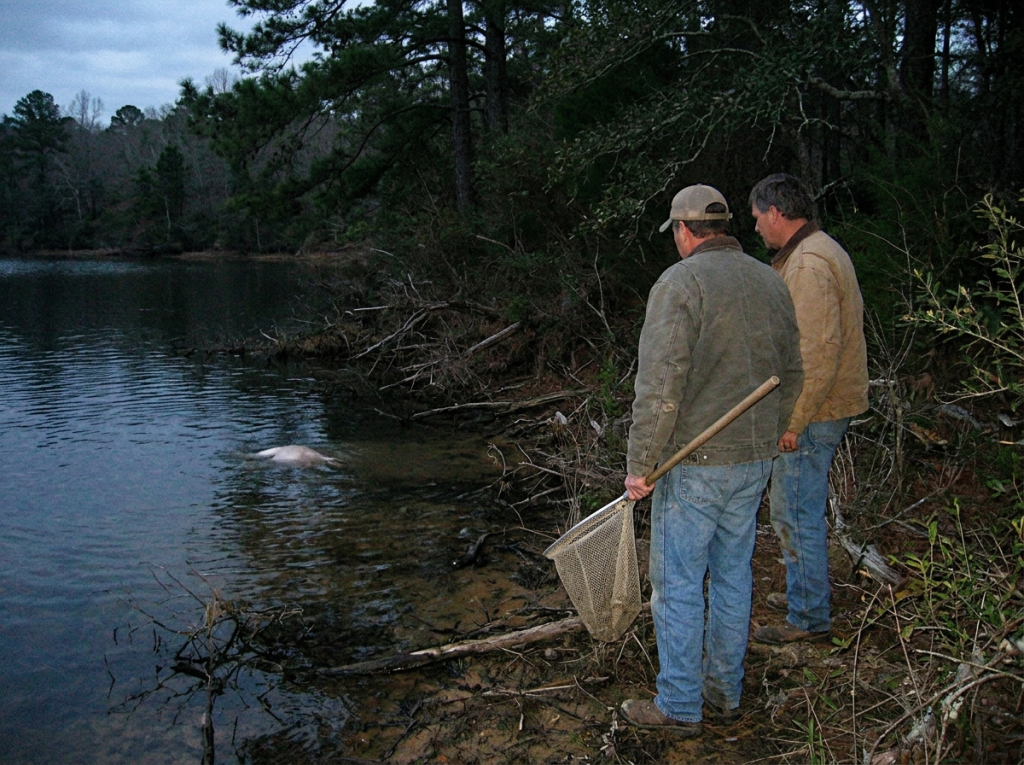
I return in my mind to the dock and the slack line. The bobber tugs again, and I raise the pole to bring it in.
Sources
Field Guide is drawn from the legends as they are recorded. Its first-hand account is imagined. Its pictures are imagined scenes.