
Horned Serpent is a figure of Alabama folklore.
Where it is told
Field Guide
The Winged and Horned Serpents of Moundville
On a quiet museum round, a guard considers serpent images left by a mound town on the Black Warrior River.
How to know it
- Horned serpent
- A serpent shown with horns in Moundville designs.
- Winged serpent
- A serpent shown with wings in Moundville designs.
- Bird-serpent
- A bird and serpent joined in the design of a bowl.
- Rattlesnake disk
- A disk displayed at the park museum.
- PICTURE
- A rattlesnake disk in one case and a clay bowl with a horned serpent in another, side by side, lit evenly, shot straight on.
- CAPTION
- A rattlesnake disk and a horned serpent design associated with Moundville.
1 A Guard's Walk at Moundville, Hale County, Alabama
I walk the museum last thing, when the doors are locked and the rooms go quiet. My keys are the only sound. I pass the cases and stop at the bowl that joins a bird and a serpent.

During the day, visitors lean in at the glass, take a look and move on. On my closing round, I have time to stay.
The bowl is displayed here with a rattlesnake disk. They are among the objects associated with Moundville, the great Mississippian mound town on the Black Warrior River.
2 What It Is Called
The names describe the images: horned serpent, winged serpent, bird-serpent. Each gives me something to look for as I make my way through the room.
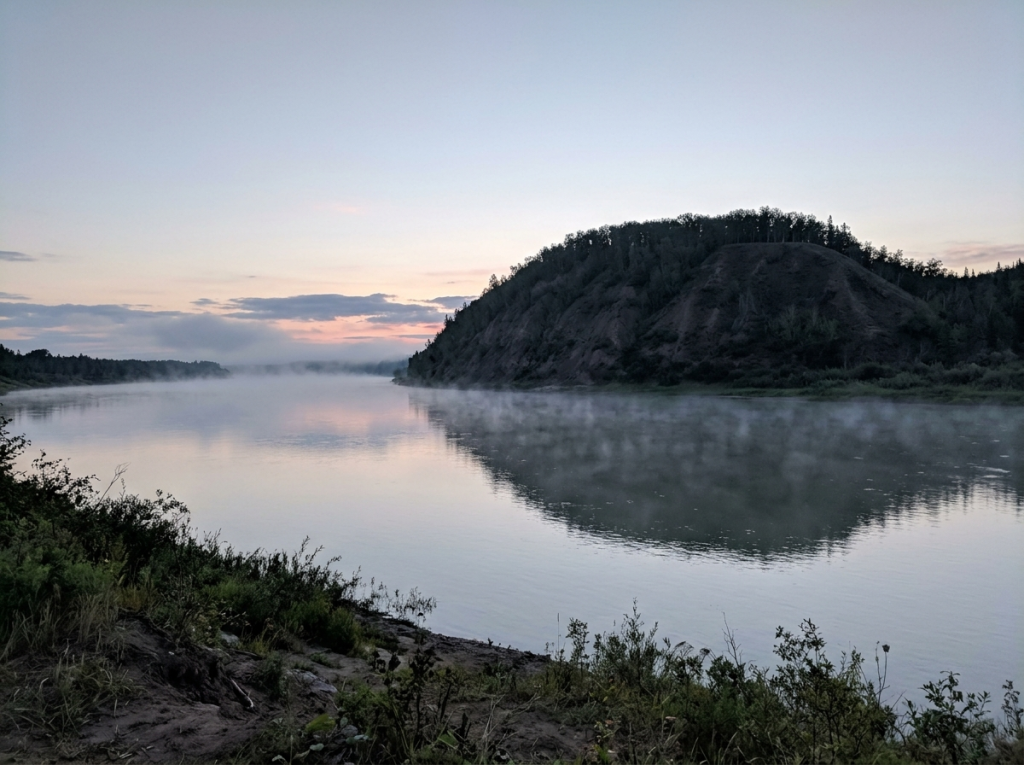
A Mississippi newspaper column about a Chickasaw serpent legend points to the Moundville horned-serpent design as part of a wider Southeastern belief in great serpents that live in deep water and the world below.
3 How It Is Pictured
At Moundville, images of winged and horned serpents appear on pottery and ornaments from burials made after about 1300. I return to the bowl and study the bird and serpent joined in its design.
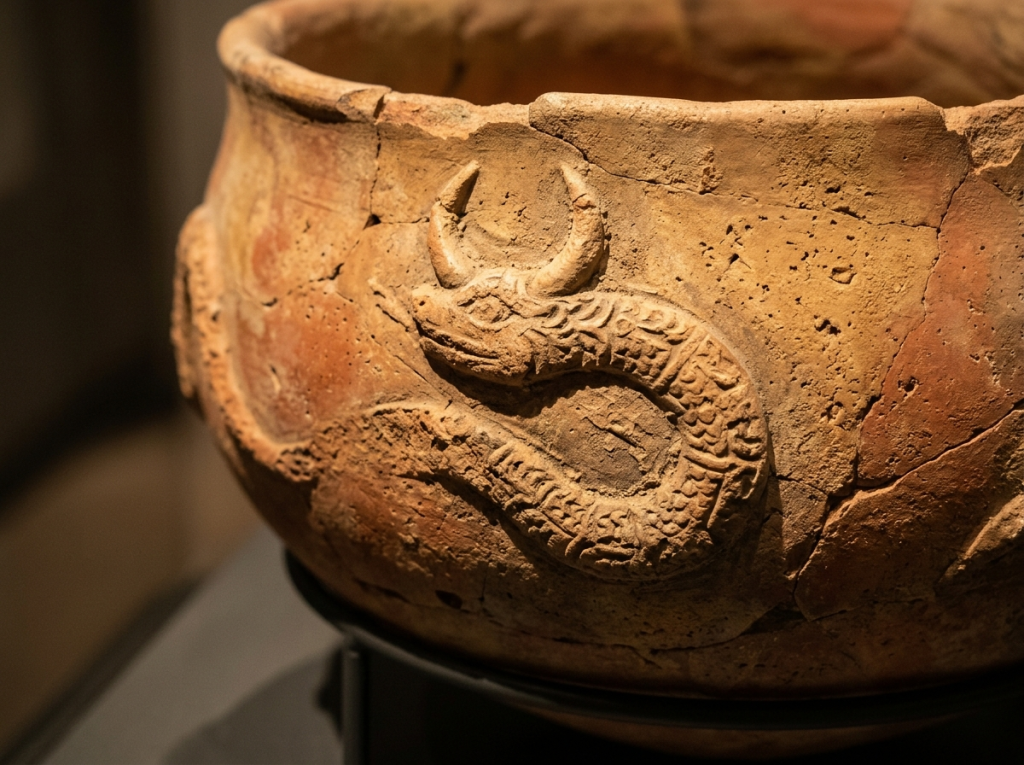
I can describe what I see, but I cannot say what size the maker imagined for the creature or what every part of the image meant.
4 Where and When It Turns Up
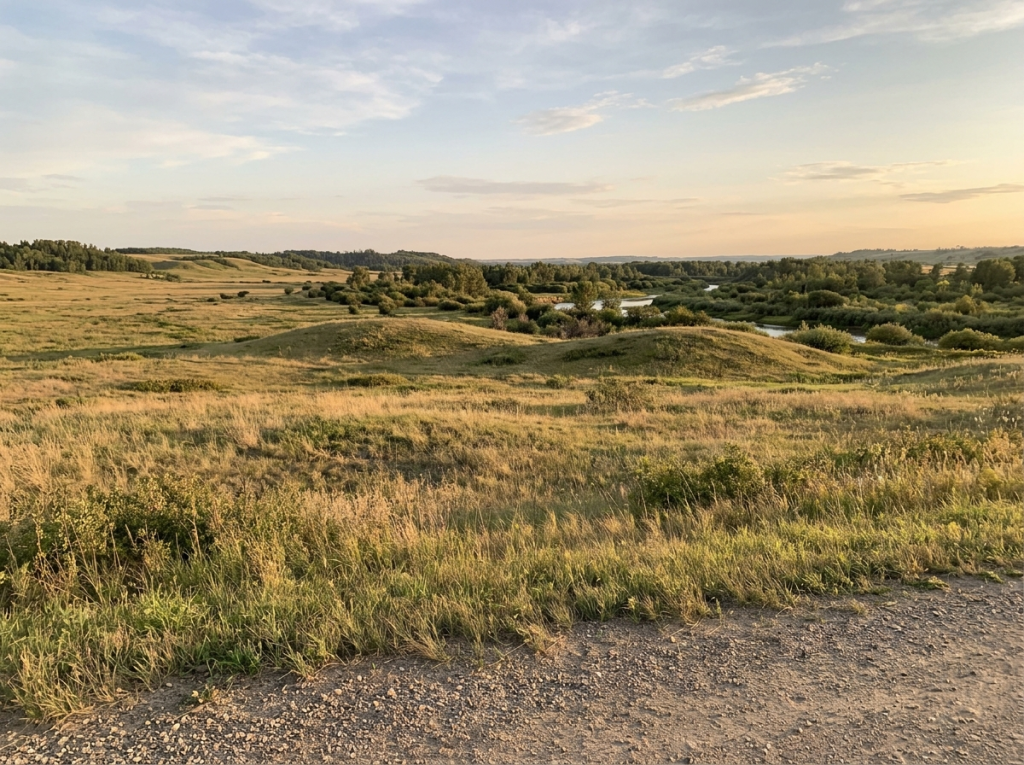
As I continue my round, I look toward the dark windows and think of the mounds outside. Moundville is in Hale County, Alabama. The images on the burial objects belong to the town’s later life.
5 What It Does
The Encyclopedia of Alabama connects Moundville’s symbols with the town’s later life as a centre of funeral ceremony, and with themes of ancestors, war and death.
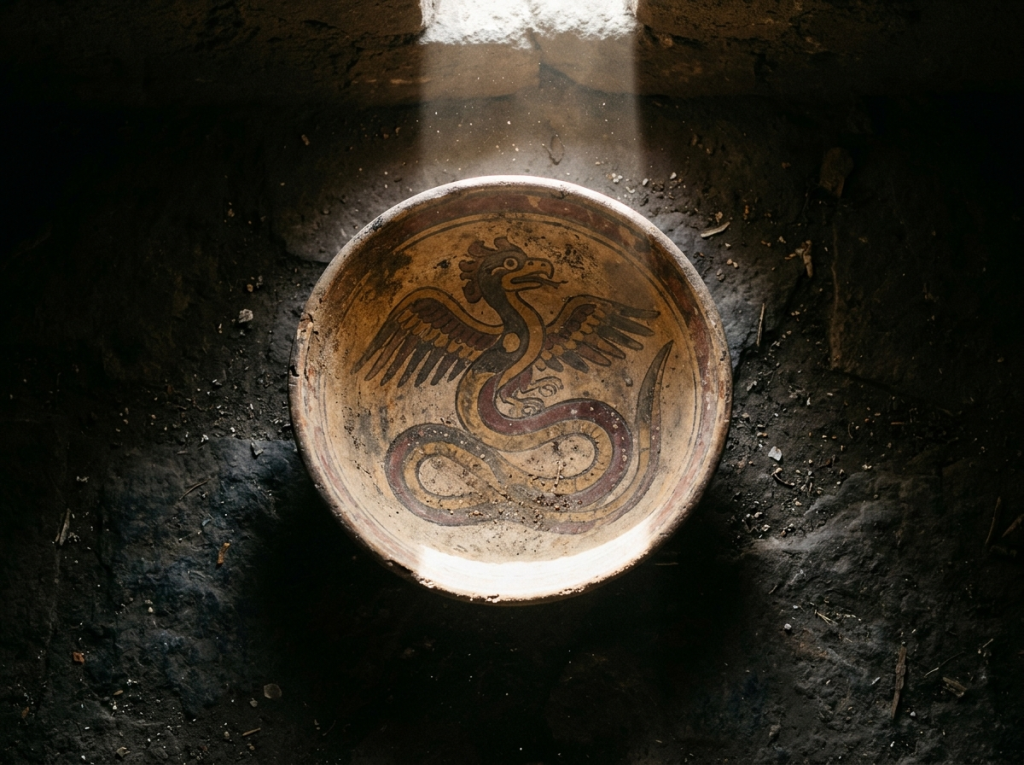
I stand before the bowl for another moment. Those connections give me a way to think about the image, though they do not tell me a story of what this particular creature did.
6 Telling It Apart
Before I finish my round, I stop at the rattlesnake disk. I hold my light on the case for a moment, then let it fall on the floor ahead of me as I walk on.
Sources
Field Guide is drawn from the legends as they are recorded. Its first-hand account is imagined. Its pictures are imagined scenes.