
Alligator Snapping Turtle is a figure of Alabama folklore.
Where it is told
Field Guide
The Old Snapper of the Coosa and Tallapoosa
Alabama's alligator snapping turtle is a river animal with a hooked beak and a ridged back, and it turns up at boat ramps and in photographs.
How to know it
- Size
- Weights run from 83.6 pounds on a certified scale to "close to 200" in a photograph nobody has measured.
- Build
- A hooked beak and a ridged shell, the shell almost 22 inches long on the Wetumpka fish.
- Where
- The Tallapoosa River at Wetumpka in Elmore County, and Lake Mitchell on the Coosa River near Clanton in Chilton County.
- When
- Late at night in one telling; the other gives no date at all.
- Habits
- It takes a fisherman's line and comes up out of deep river water.
- Habits
- Once photographed, it is let go again.
- Mistaken for
- Nobody mistakes it for anything; people call it prehistoric and go on staring.
1 What They Call It
In Alabama it goes by alligator snapper, or just a big turtle, which sells it short. The name comes from the hooked beak and the ridged shell. It is the largest freshwater turtle in North America, and it looks the part.
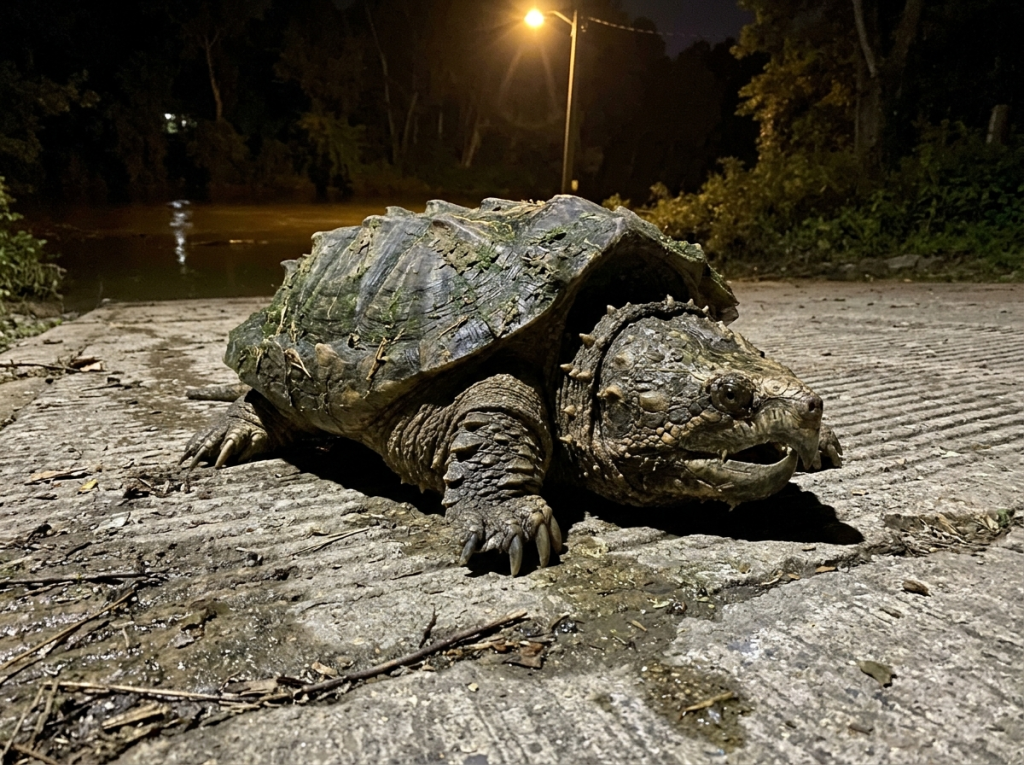
Nobody has to be talked into believing in the animal. The tall tales in Alabama are about size. A man tells you he saw a snapper, and by the time the story reaches the next county it has gained a hundred pounds and lost its date. Two stories are told here. One is a catch at Fort Toulouse in Elmore County that was weighed and written up. The other is a set of photographs from Lake Mitchell in Chilton County that nobody has settled.
The newspaper that covered the Wetumpka catch called it a prehistoric surprise, and the phrase has stayed with it. It suits a beak that hooked and a back that ridged.
2 Fort Toulouse Boat Ramp, Wetumpka
It was late on the twelfth of October, 2012, at the Fort Toulouse–Fort Jackson park on the Tallapoosa. One man stood just off the boat ramp with a line in the water, and the river ran dark past him.
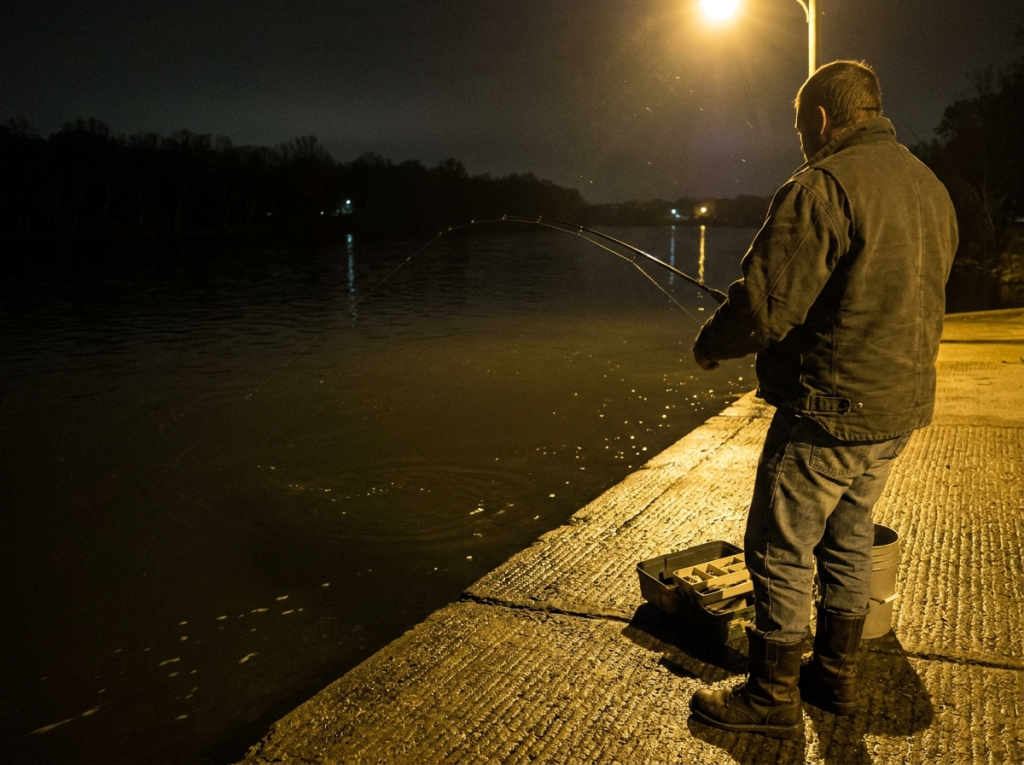
Something took the hook, and it was not the quick tug a catfish gives. It was slow and heavy, and the rod bent over and stayed that way. Whatever it was did not run. It came in toward the ramp a foot at a time.
Then the lamp over the ramp caught the water, and the beak broke the surface. It was hooked, and it was wider than a man's hand. The back came up behind it, ridged and dark and wet, and it kept on coming long after anyone would have thought it was done.
The rod was still bent when the whole animal lay in the light. Later it was weighed at 83.6 pounds, and the shell ran almost 22 inches. The paper called it a prehistoric surprise, and that is the line that got repeated, because nothing else fit a thing like that on the end of a line in a public park.
3 How Witnesses Describe It
There are not many details, and they agree. The Wetumpka fish had a hooked beak and a ridged shell, and the shell came to almost 22 inches. The Lake Mitchell photographs show a turtle put at close to 200 pounds, though no one measured it and no scale is named. The beak and the ridges are what people reach for, because those are the parts that look old.
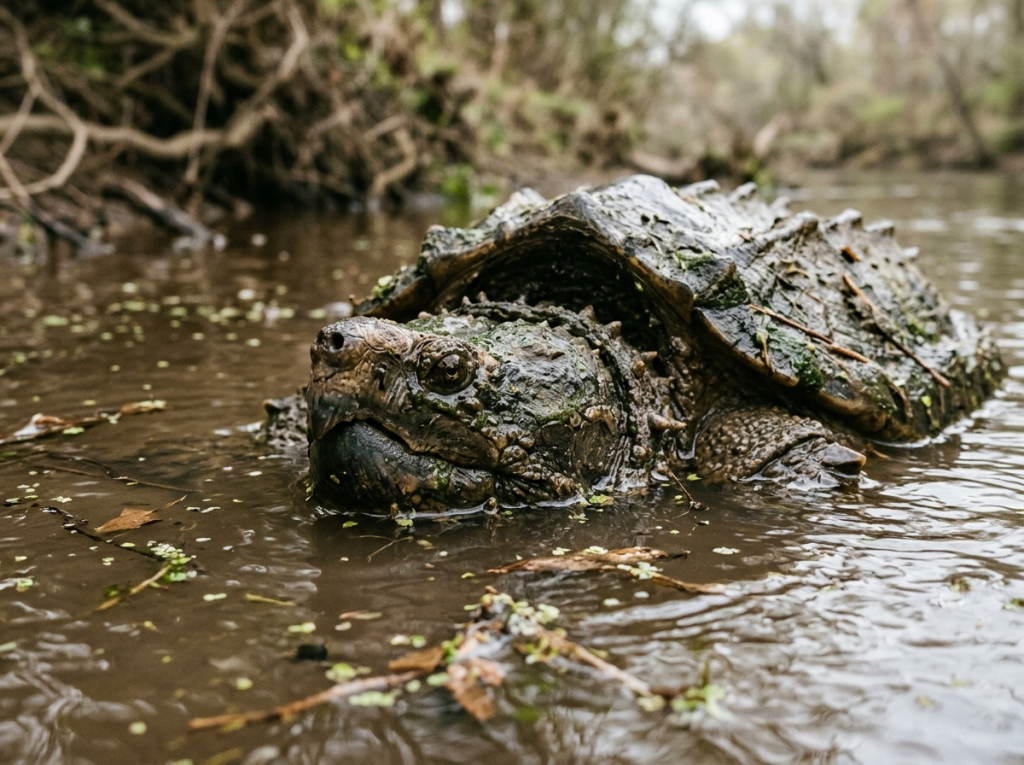
Eighty-three pounds goes on a form. Two hundred pounds gets said out loud at a bait shop. The first has a date, a ramp and a newspaper behind it. The second has photographs and a publisher who said it was still trying to confirm the details, and that is where it stayed.
Nobody gives a colour, a smell or a sound, so anyone who tells you what the turtle smelled like is making it up.
4 Where It Turns Up
Wetumpka is in Elmore County, at the fort park on the Tallapoosa. Clanton is in Chilton County, on the Coosa, and Lake Mitchell is the water the 2016 photographs name. They are different rivers, and a turtle that big would find either one roomy.
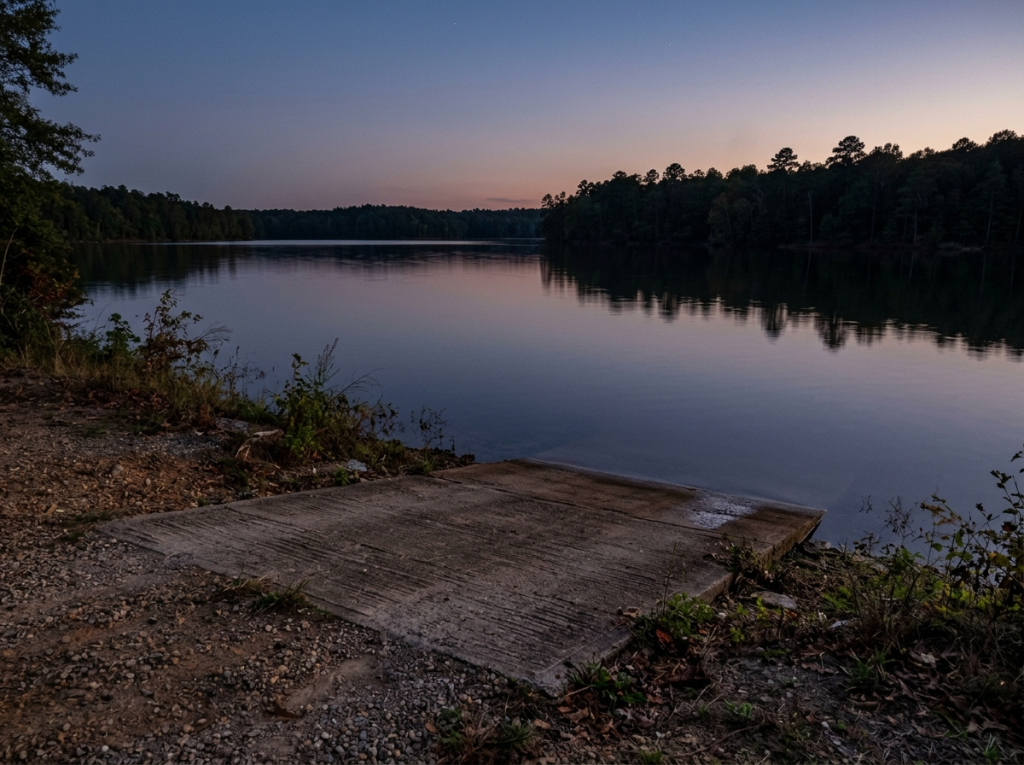
The ramp story gives a night: late on October 12, 2012. The Lake Mitchell post gives no date, only the year it went up, 2016, and says the turtle was pulled out and then released. Of the Wetumpka fish we are told only that it was hooked, brought in and weighed. Nobody says what became of it after.
The post credited an Alabama man with the catch and gave no name. It was shared widely online as proof of monster turtles in the Coosa lakes, a big claim to hang on a story with no measurements.
5 Behaviour and Dealings With People
All it does to a person, in these stories, is get caught by one. At Fort Toulouse it took an angler's hook from the water just off the boat ramp and came up into the lamplight. At Lake Mitchell it was pulled out, photographed and put back. There is no chase and no attack, and nobody is lost to it in either story.

What it does to people is make them talk. Wetumpka got a newspaper story. Lake Mitchell got photographs, and the photographs went off on their own. People hold up a phone or point at a scale and say what it weighs, and the number changes with every telling.
It comes up out of dark river water where a person had figured there was nothing, and it goes back down the same way.
6 Telling It Apart
You will not take this for a deer, a dog or a cow. It lives in the water, and in both stories it was seen on a line or at a ramp, not at the edge of a field. The hooked beak marks it, and so do the ridges on the shell. A ridged back coming slowly up out of a river is a snapper, and a big one.
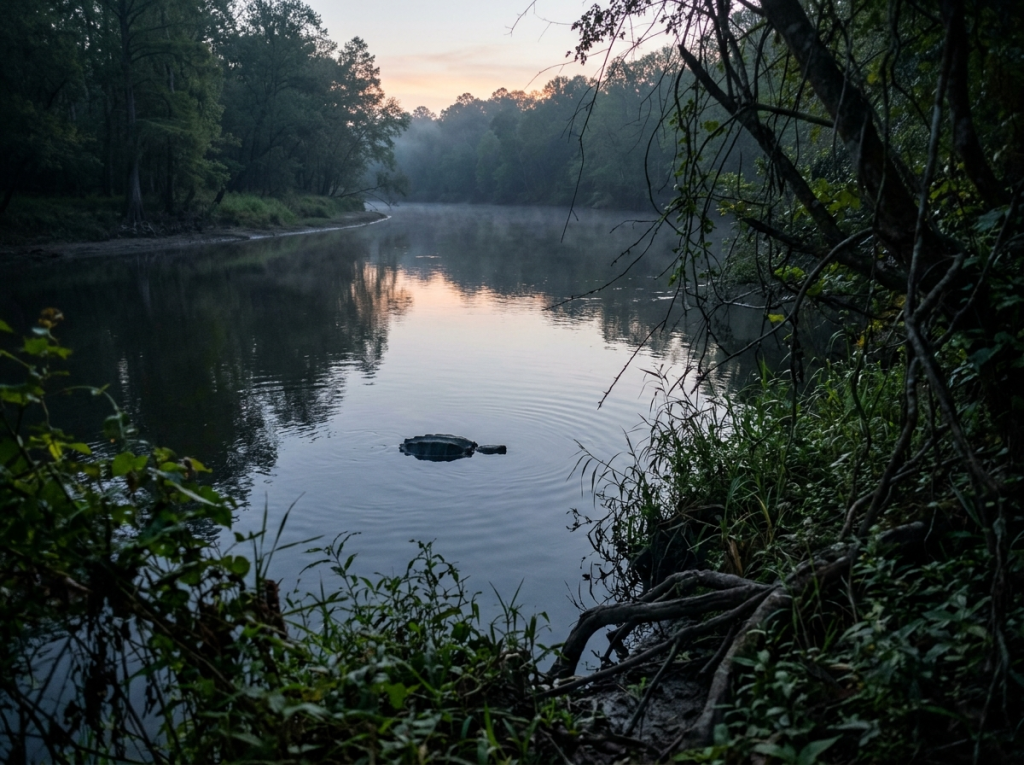
The two stories are not the same kind of telling. The ramp at Fort Toulouse has a date, a weight, a measurement and a newspaper. The Lake Mitchell photographs have none of those, and the publisher said it was still trying to confirm what it had.
One snapper has been weighed at 83.6 pounds. The other has only photographs, and some people hold the first up beside the second.
Sources
Field Guide is drawn from the legends as they are recorded. Its first-hand account is imagined. Its pictures are imagined scenes.