
Chupacabra is told of in Alabama, Texas and Mississippi.
Where it is told
Field Guide
The Hairless Thing on the Gulf Road
Reports from Texas, Mississippi and Alabama gave the name chupacabra to unusual animals. Two prompted coyote identifications.
How to know it
- Build
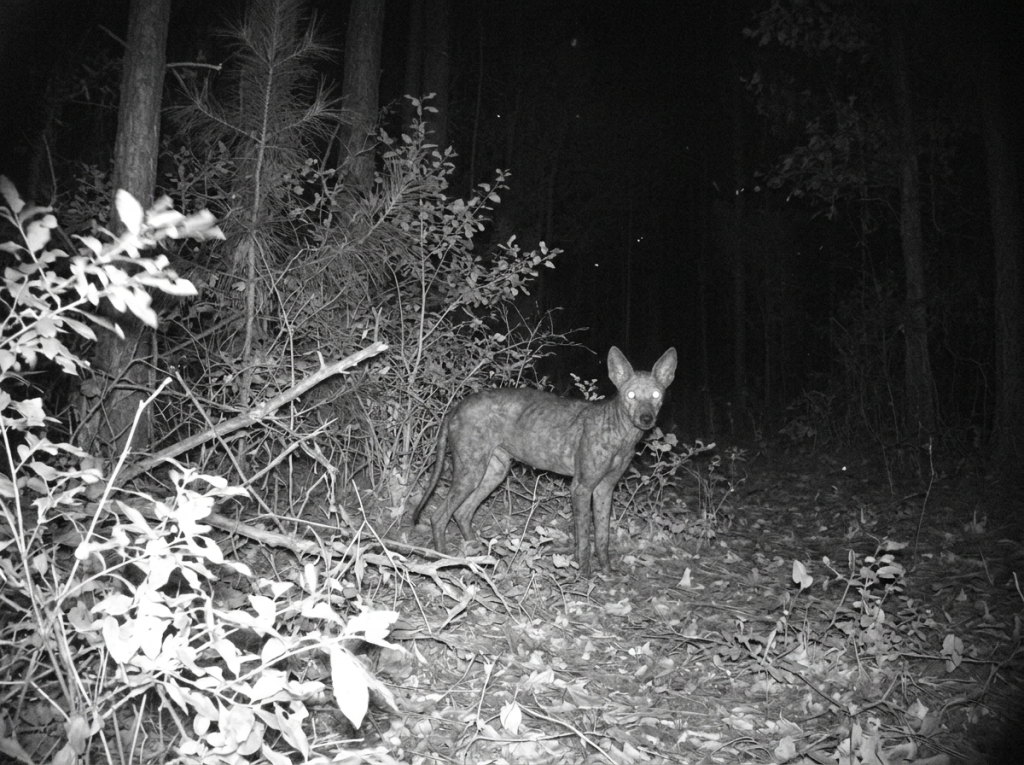
- A skinny, sickly canine in the Alabama trail camera photos, and a coyote-like predator with a strangely shaped hind end in the Tuscaloosa video.
- Covering
- Hairless in the Alabama trail camera photos and nearly hairless on the animal found near Cuero.
- Where
- Near Cuero in DeWitt County, Texas; Simpson County, Mississippi; and Talladega, Lee and Tuscaloosa counties in Alabama.
- When
- Texas in 2007, Mississippi in 2011, and Alabama reports in 2023 and 2024.
- Habits
- The chupacabra is said to prey on livestock.
- Identification
- DNA from the Cuero animal pointed to a Texas coyote. Alabama wildlife officials said the animal in the trail camera photos was almost certainly a coyote with severe mange.
1 What They Call It, Cuero, Texas
I imagine Dolores Vega stacking feed sacks in her brother's barn when the phone on the wall rings. Her neighbor has news from near Cuero. In 2007, Phylis Canion saved the head of a nearly hairless animal found there, and the find became a local sensation. People called it a chupacabra, a creature said to prey on livestock.

Dolores keeps goats. In my imagined scene, she sets down the phone and goes to check the latch on their pen. Later, biologists test tissue from the animal, and its DNA points to a Texas coyote.
2 What People Say It Is
In 2011, Truitt Barnard found an unusual animal on his property in Simpson County, Mississippi, and shot it. Its strange appearance prompted people to compare it to a chupacabra. Photographs spread as neighbors debated its identity.
I picture Dolores hearing about the report from her neighbor, who has seen one of the photographs. “They don't know what it is,” the neighbor tells her.
3 How the Alabama Animals Looked
In 2023, Alabama's Wildlife and Freshwater Fisheries Division posted trail camera photographs of a hairless, skinny, sickly canine that people were calling a chupacabra. The agency said it was almost certainly a coyote with severe mange.
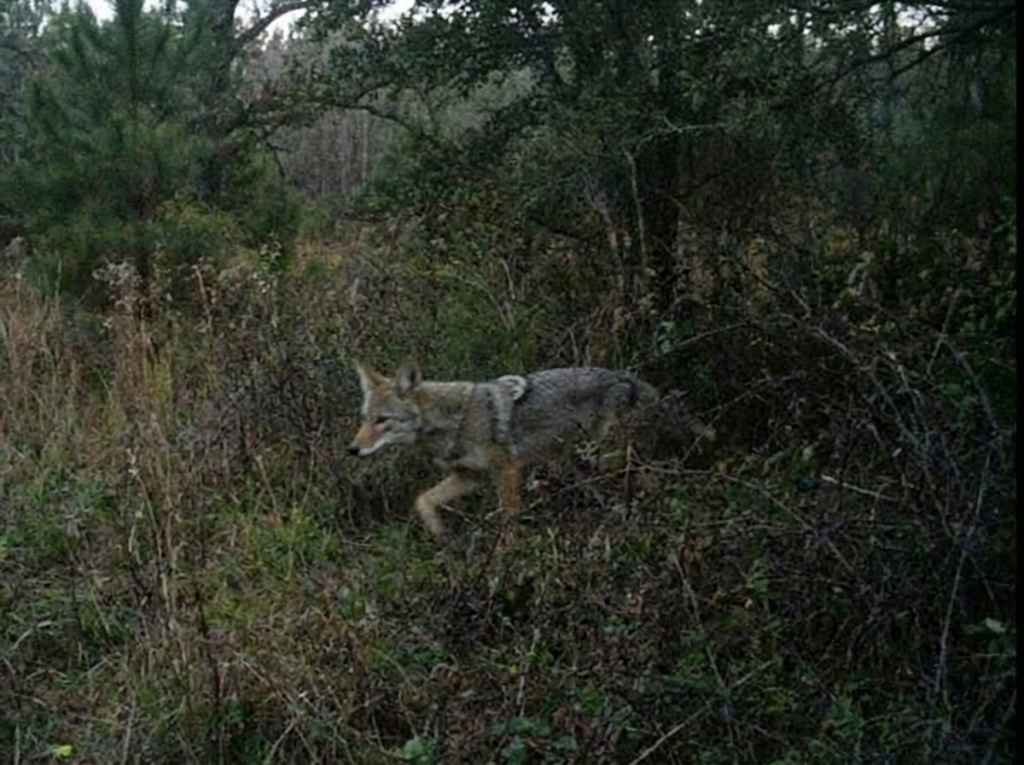
In May 2024, a Tuscaloosa radio station's website shared footage from the Tuscaloosa area of a predator that looked like a coyote but had a strangely shaped hind end. The post asked readers whether it might be a chupacabra. It did not say exactly where or when the video was made, and it offered no firm identification beyond the coyote guess.
4 Where the Reports Turn Up
I imagine Dolores spreading a map on her kitchen table, with Cuero marked in one corner and Simpson County farther east. Alabama's wildlife division says reports like the trail camera sighting reach it regularly, and that mange had recently turned up in Talladega and Lee counties. A cryptid blog lists those two counties and Tuscaloosa County as places with chupacabra reports.
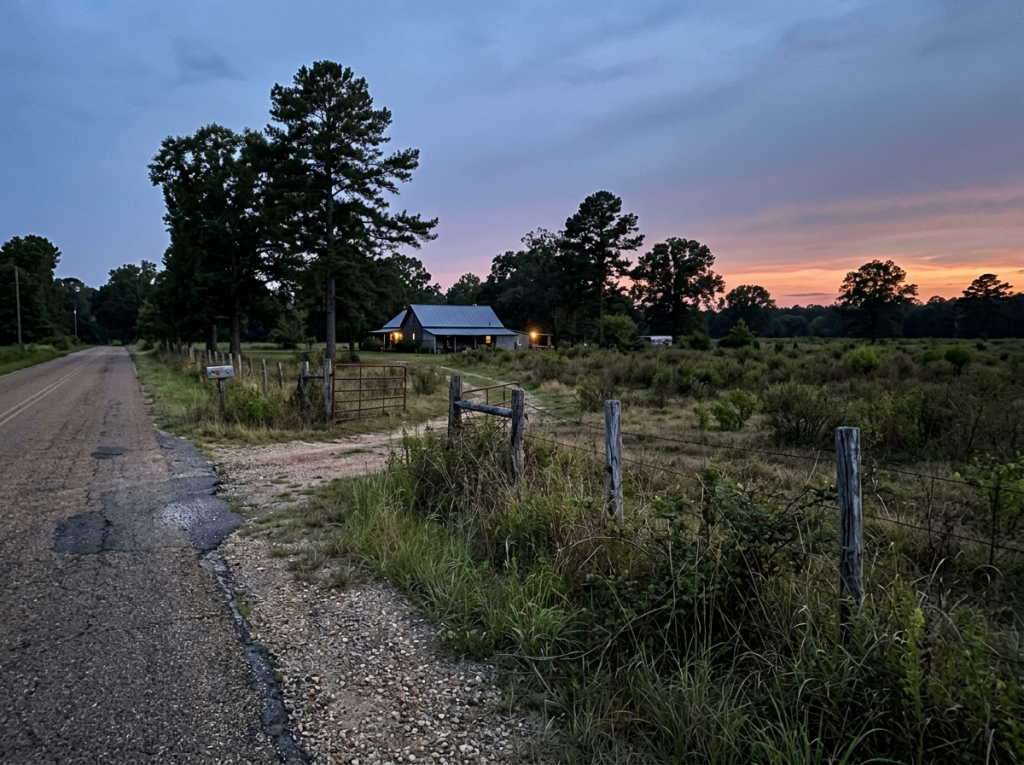
Dolores adds three marks to her map. They show the counties named by the blog, though they do not pinpoint where either Alabama image was made.
5 Looking at the Evidence
In my imagined scene, Dolores lays the reports beside her map and studies the pictures. The marks give her places to look for more stories, but she leaves the photographs loose on the table.

6 Around the Kitchen Table
I imagine Dolores inviting her neighbor in for coffee. Her neighbor points to the photograph from Mississippi. “That's the one I saw,” she says.
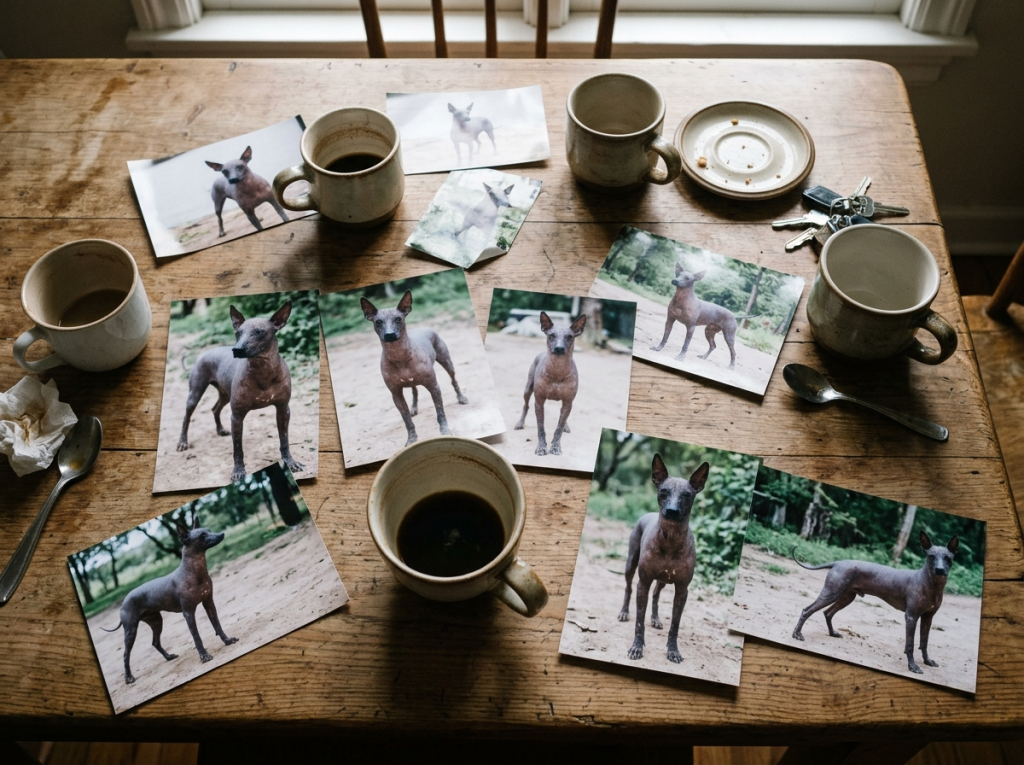
Dolores moves the map aside to make room for the cups. They sit at the table, looking through the pictures together.
Sources
Field Guide is drawn from the legends as they are recorded. Its first-hand account is imagined. Its pictures are imagined scenes.