
Two-Toed Tom is a figure of Alabama folklore.
Where it is told
Field Guide
Two-Toed Tom of the Alabama Swamps
A red-eyed alligator marked by a trap survived two attempts to kill him and was said to have gone on to Florida.
How to know it
- Size
- About fourteen feet long.
- Eyes
- Red.
- Tracks
- A foot with only two toes, the rest said to have been lost to a steel trap.
- Where
- The swamps of Alabama and Florida.
- Habits
- Ate livestock and people.
- Movement
- Said to have moved on to Florida.
- When
- Carl Carmer wrote the story down in 1934.
1 At the Pond Edge, Geneva, Alabama
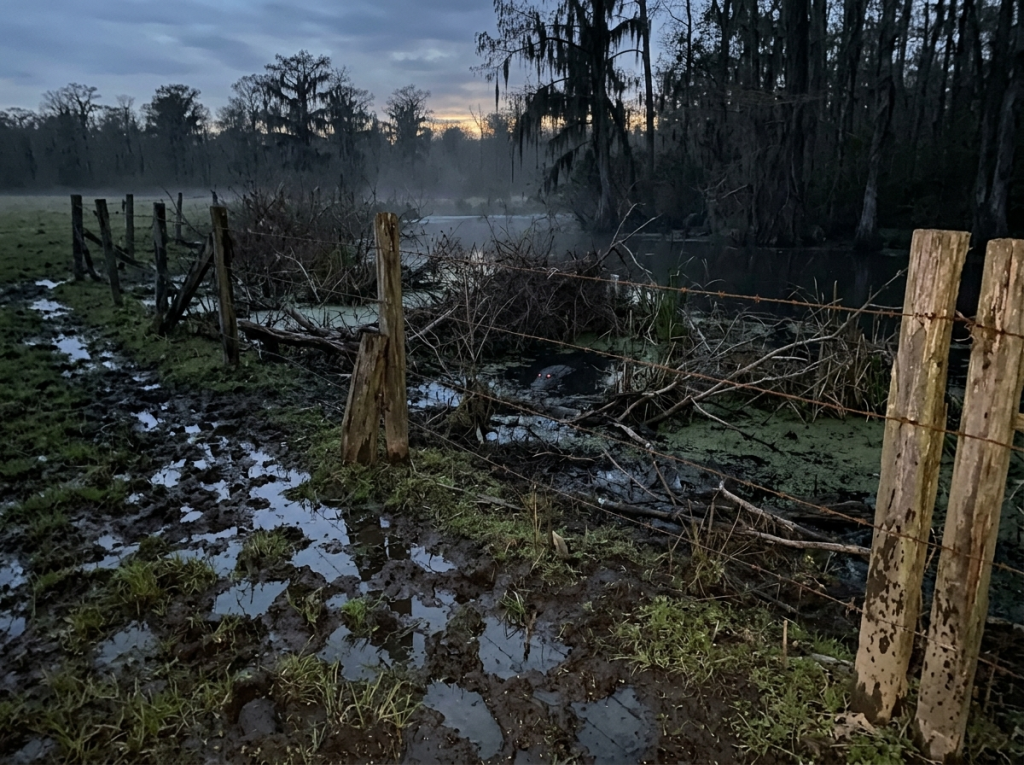
When I tell the story of Two-Toed Tom, I picture a father taking his son down to a pond near Geneva. They stop by the cattle gate as the light goes out of the water. Two red points sit low on the surface and stay there while the father and son watch.
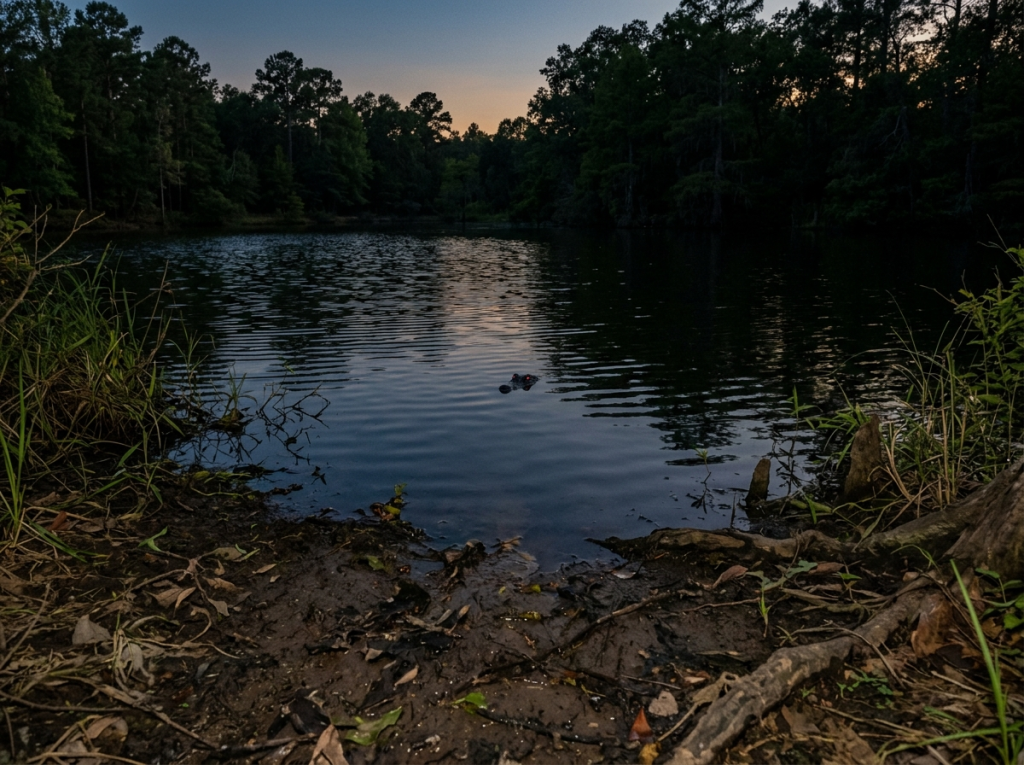
Neither speaks. At last, the father puts a hand on the boy’s shoulder, and they turn toward home. They walk at an ordinary pace, though the boy keeps looking back.
2 What They Call Him
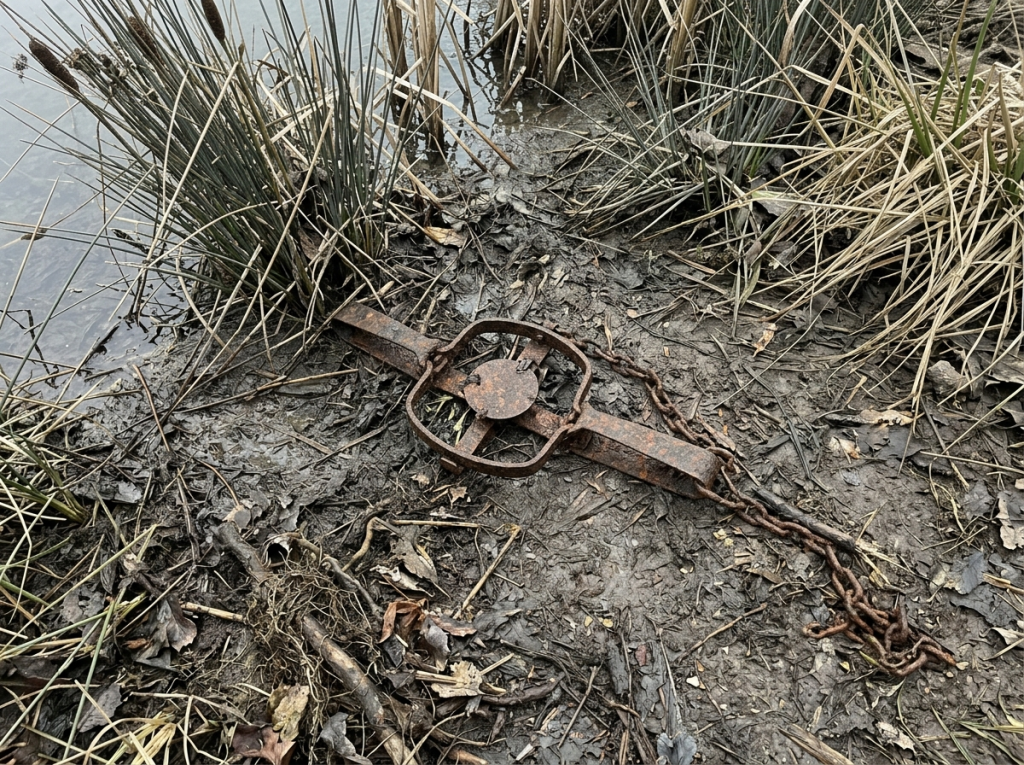
In the legend, the alligator is called Two-Toed Tom. He is said to have lost all but two toes on one foot to a steel trap. Carl Carmer wrote the story down in Stars Fell on Alabama in 1934.
3 How He Is Described
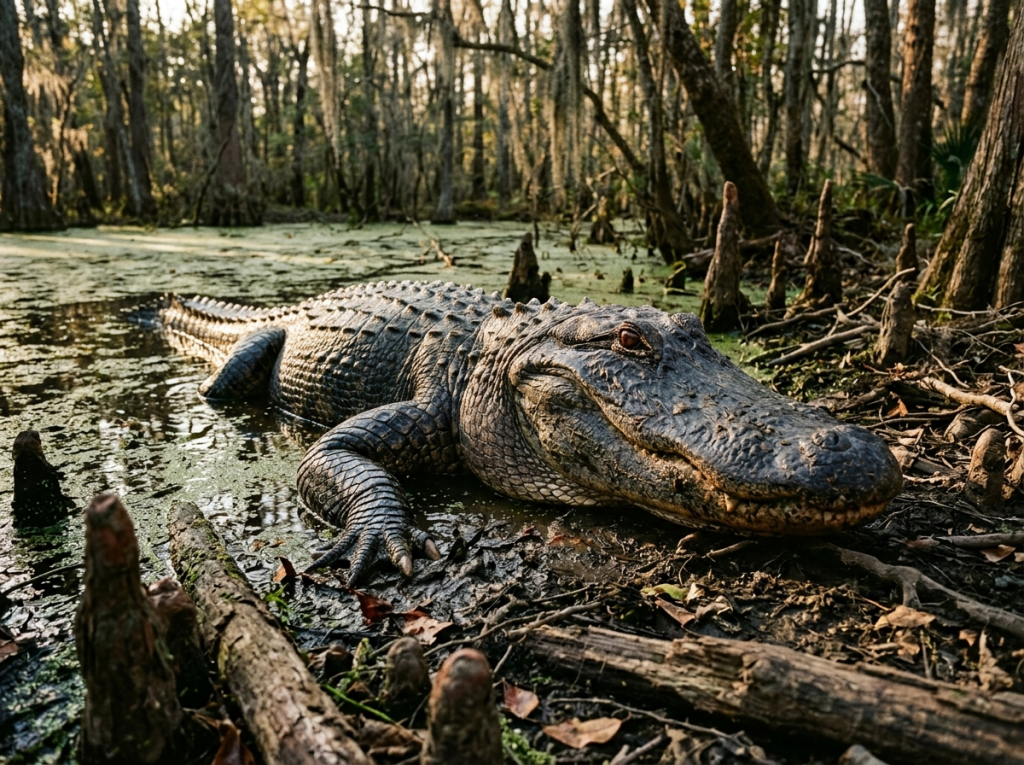
Tom is about fourteen feet long, with red eyes. I imagine the boy at the pond trying to measure that length against the cattle gate, then deciding he would rather not see an alligator that size come through it.
4 Where He Turns Up
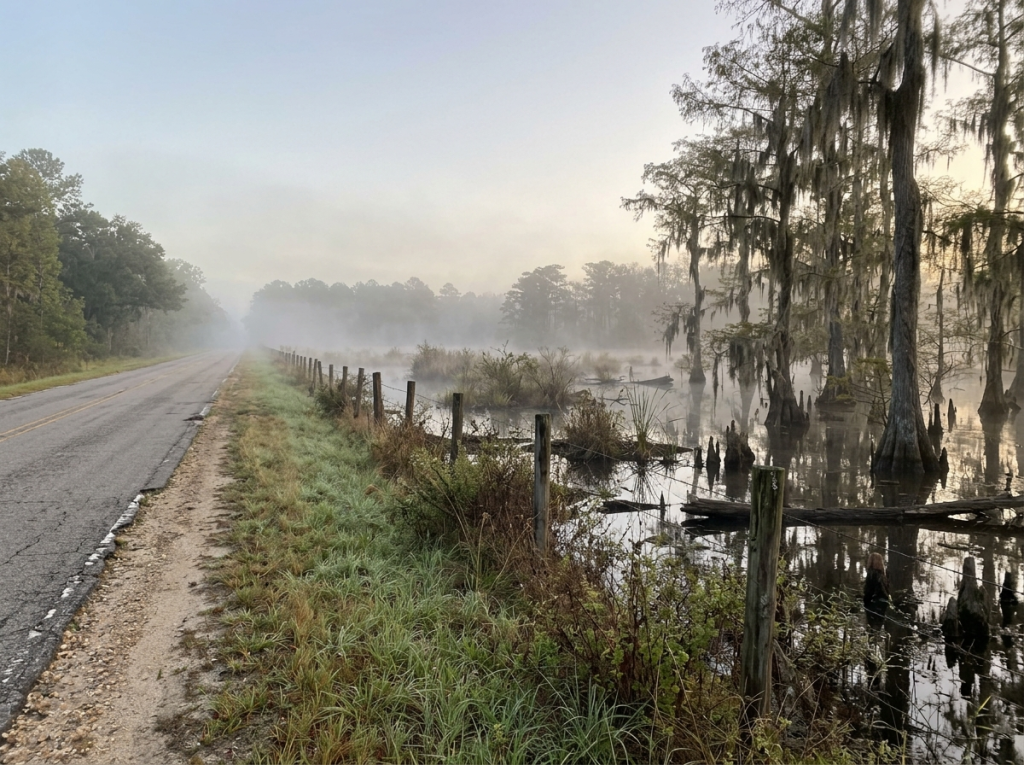
The legend places Tom in the swamps of Alabama and Florida. I set my father and son near Geneva, in Geneva County, Alabama. Just south of the county, in Esto, Florida, there is a festival for Tom.
5 What He Does
Tom is said to have eaten livestock and people. A sharpshooter waited for him for a week in a blind. A farmer named Pap Haines dynamited a pond. Tom survived both attempts and was said to have moved on to Florida.

6 Telling Him From the Rest
In the scene I picture, the boy reaches the house and looks back once more. The pond is dark now. He has seen two red points on the water, but no print on the bank, so he cannot say what was watching them.
Sources
Field Guide is drawn from the legends as they are recorded. Its first-hand account is imagined. Its pictures are imagined scenes.