
Mary Bibb is a figure of Alabama folklore.
Where it is told
Field Guide
Mary Bibb and the Rocking Chair at Maple Hill
At Huntsville’s oldest burial ground, a bride’s rocking chair and a governor’s ghostly carriage belong to two enduring tales.
How to know it
- Name
- Mary Bibb is a name often given to a young bride of the Bibb family.
- Sound
- A faint creak of rocking is said to follow a knock on the crypt door.
- Movement
- In another telling, a chair outside a crypt rocks on its own.
- Where
- Maple Hill Cemetery in Huntsville, Madison County, the city’s oldest and largest burial ground.
- When
- The bride died on her wedding day; the governor’s carriage is said to appear on moonlit nights.
- Habits
- The bride was said to have been laid in the family crypt seated in her rocking chair.
- Company
- Governor Thomas Bibb, buried in the same cemetery, is said to ride the streets in a ghostly carriage.
- Doubts
- Neither story is documented, and the crypt is not marked for visitors.
1 What She Is Called
The name I heard was Mary Bibb. The tale calls her a young bride of the Bibb family, though it does not always give her that name. She died on her wedding day, the story says, and was laid in the family crypt seated in her rocking chair.
The chair is what stayed with me. When my cousin first told me about her, he leaned back as if he were settling into one and moved slowly to and fro. He told me that if someone knocked on the crypt door, a faint creak of rocking might come from inside.
My cousin wanted to find the bride’s crypt and try the door.
2 At the Crypt Door
An imagined account, Maple Hill Cemetery, Huntsville
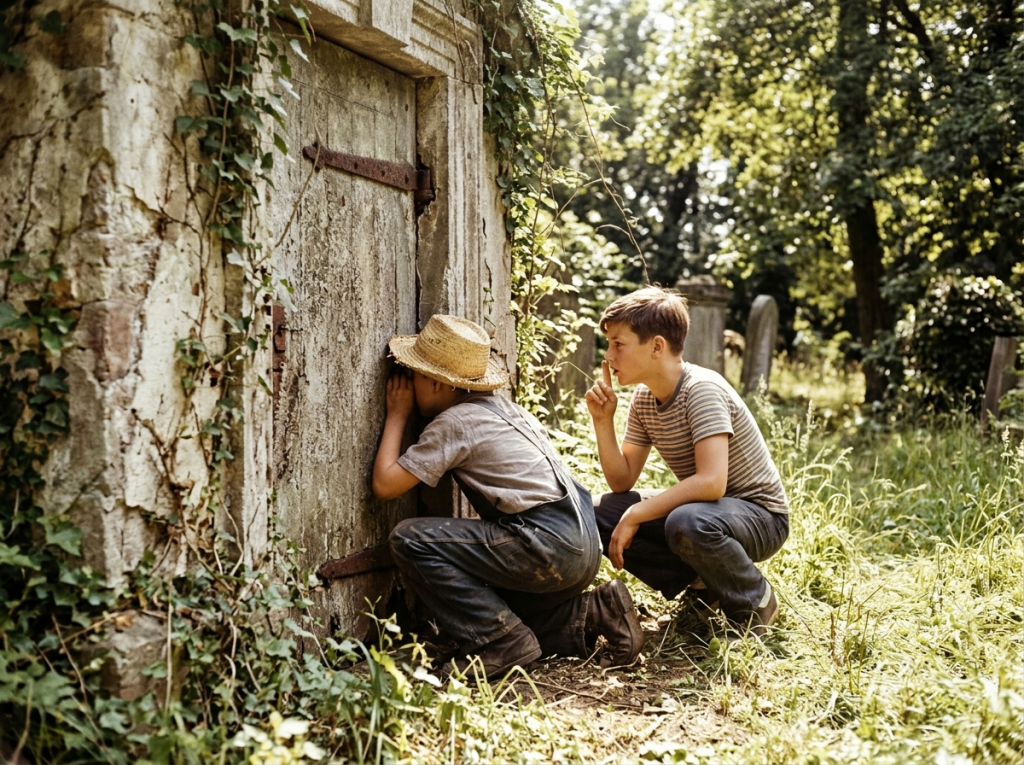
I was nine the summer my cousin brought me to Maple Hill. We went in the daytime, with hours to walk before sunset. The cemetery is Huntsville’s oldest and largest, and I remember watching my cousin closely as we went among the stones.
The crypt is not marked for visitors. We walked until my cousin stopped at a door and said, “This one.” He had no proof that it was the Bibb family crypt, and neither did I. It was simply the one he chose.
He knocked first, not hard. Then he put his head near the door and held up a hand for me to be quiet. I held my breath until my ears rang.
I heard a faint creak, slow enough to make me think of a chair easing back. It could have been something else. My cousin straightened up and looked at me, but neither of us spoke until we reached the gate.
“I heard it,” I told him.
“I heard something,” he said. He would not call it a chair, though I tried to persuade him.
3 A Chair That Rocks Alone
Later, I heard another version of the chair story. In that telling, a chair outside a crypt rocks on its own.
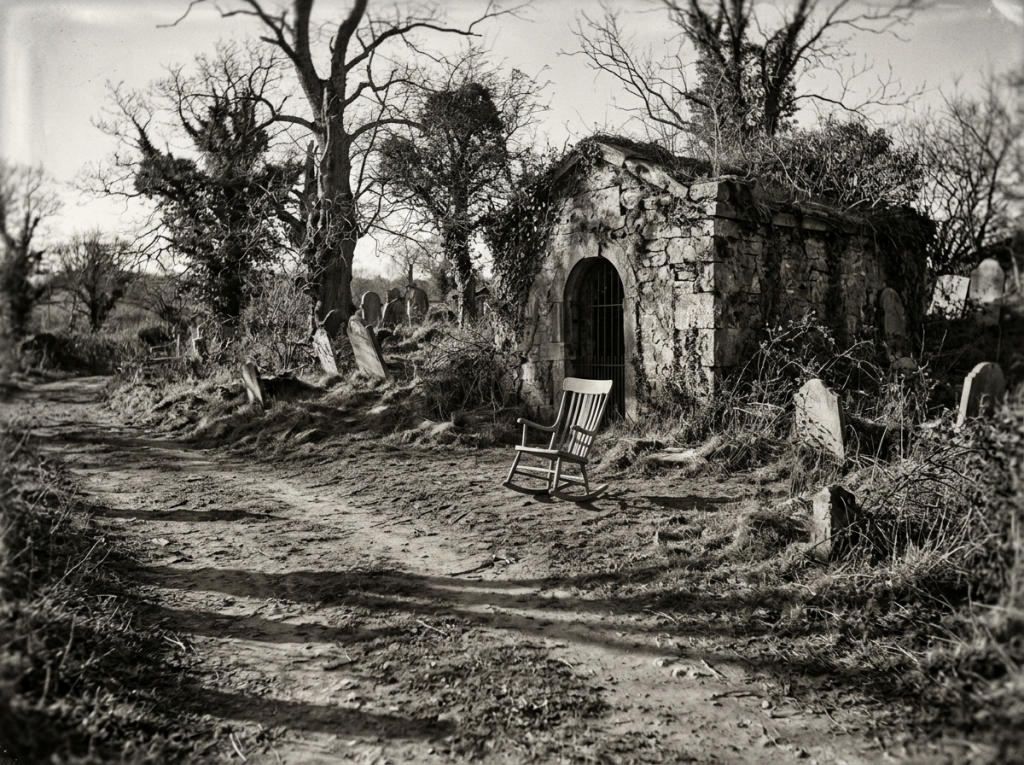
I imagined coming around a stone and finding it there, tipped back, then forward, with no one in it. The picture was vivid enough that I mentioned it to my cousin.
“That is not the story I told you,” he said. He was right. His chair had been inside, with the bride.
4 The Governor's Carriage
I also heard another Maple Hill tale, about Governor Thomas Bibb, who is buried there. He is said to ride the streets in a ghostly carriage on moonlit nights.
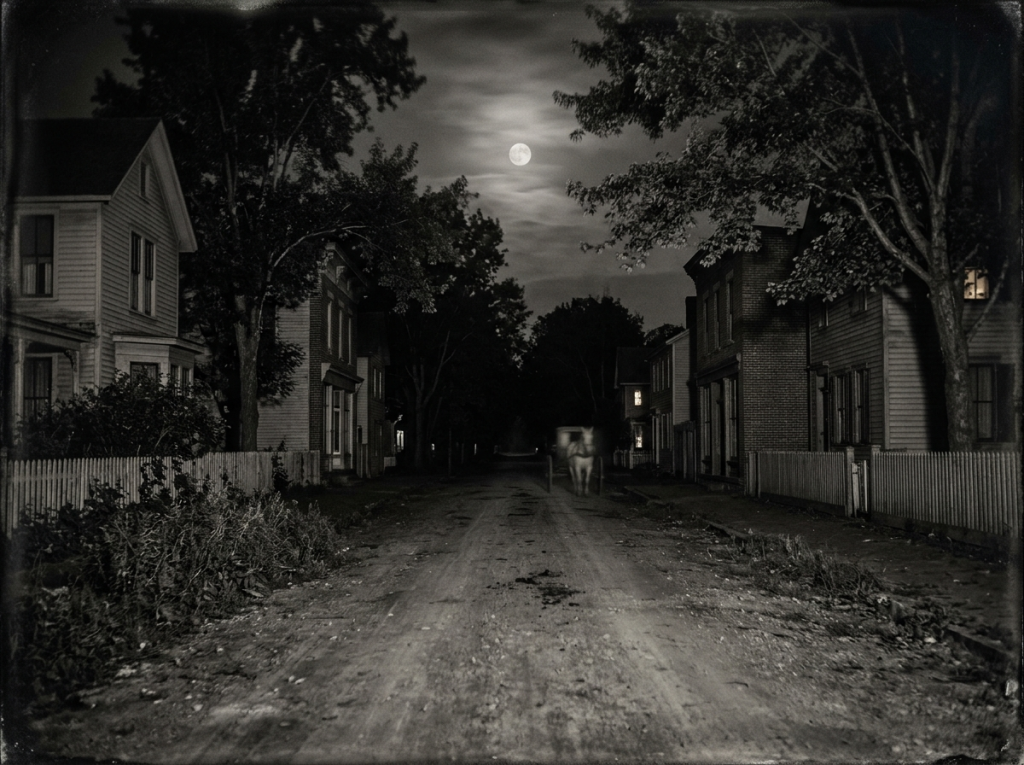
I imagine a street washed pale by the moon, with a carriage coming along it between the houses. The story does not say who drives it, which street it takes, or whether its wheels make a sound. It gives me enough to picture the carriage, but leaves the rest of the street to my imagination.
5 At the Gate
After we reached the gate on our visit, my cousin put his hand on my shoulder.
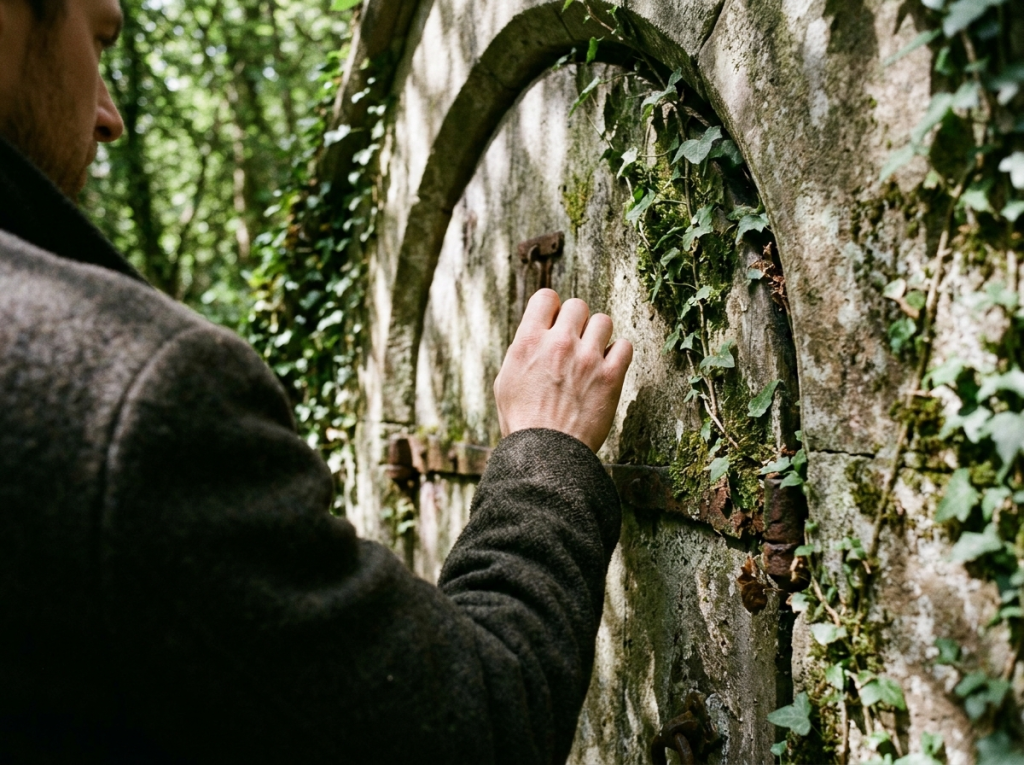
“You can call it a chair if you like,” he said.
I did, at least until we got home.
6 How the Stories Fit
Neither story is documented. They share a cemetery and the Bibb name, but the bride’s chair and the governor’s carriage belong to separate tales.

Maple Hill is open daily from dawn to sunset. When I think of the place, I picture the long walk among the stones before my cousin chose a door.
Sources
Field Guide is drawn from the legends as they are recorded. Its first-hand account is imagined. Its pictures are imagined scenes.