
Sally Carter is a figure of Alabama folklore.
Where it is told
Field Guide
Sally Carter and the Pearls at Cedarhurst
A girl sent down from Ohio in the 1830s is said to have stayed on in a Huntsville house, and she left a trail of pearls behind her.
How to know it
- Size
- A young girl, by every account, and nothing is said of her height.
- Colour
- A red lantern light is the only colour anyone gives her.
- Sound
- A child's voice, and drawers slamming where nobody is standing.
- Tracks
- Loose pearls turn up in the house, and her coffin is said to have held little else.
- Movement
- She is never seen walking; the lantern and the drawers do the moving for her.
- Where
- The Cedarhurst mansion in Huntsville, Madison County, and a playground at Maple Hill.
- When
- She died in the 1830s, and later residents are the ones who tell of her.
- Habits
- She topples her own tombstone, slams drawers, and asks for her pearls.
- Mistaken for
- The girl said to ask for her pearls at the Maple Hill playground, whom some take to be the same child.
1 Cedarhurst, Huntsville
I was twenty-two the spring they moved the family graves at Cedarhurst, and I was on the crew only because my uncle ran the backhoe and needed somebody to carry things. This was 1982. Everybody on the crew had heard about the Carter girl by then. Her tombstone, people said, would not stay up. You could set it straight on Monday and find it down by the end of the week.

We started on the Ewing graves, since she had been the Ewings' niece, sent down from Ohio to live with her aunt and uncle in that big house. She had died of some illness back in the 1830s, and the way the story went she never settled after. The people who lived in the house later talked about a red lantern, a child's voice, drawers slamming and pearls turning up loose where no pearls had any business.
When we got to hers, the men got quiet and slow. My uncle shut the machine off and did the last of it by hand. I stood close enough to see when the lid came off. I expected what you expect, and that is not what was in there. There were pearls, and there was a small charm bag, and that was about all.
Nobody said much. One of the older men picked up a pearl and put it back, and that was the only thing anyone touched that I saw. We finished by dark. I did not hear a voice that day, and I did not see a lantern. I did go home with my pockets checked twice, and I am seventy-odd now and still check them when I think of it.
2 Who She Is Said To Be
Sally Carter was a young girl from Ohio, sent south to live with her aunt and uncle, the Ewings, at the Cedarhurst mansion in Huntsville. She took ill and died there in the 1830s, and the family buried her with the rest of them.
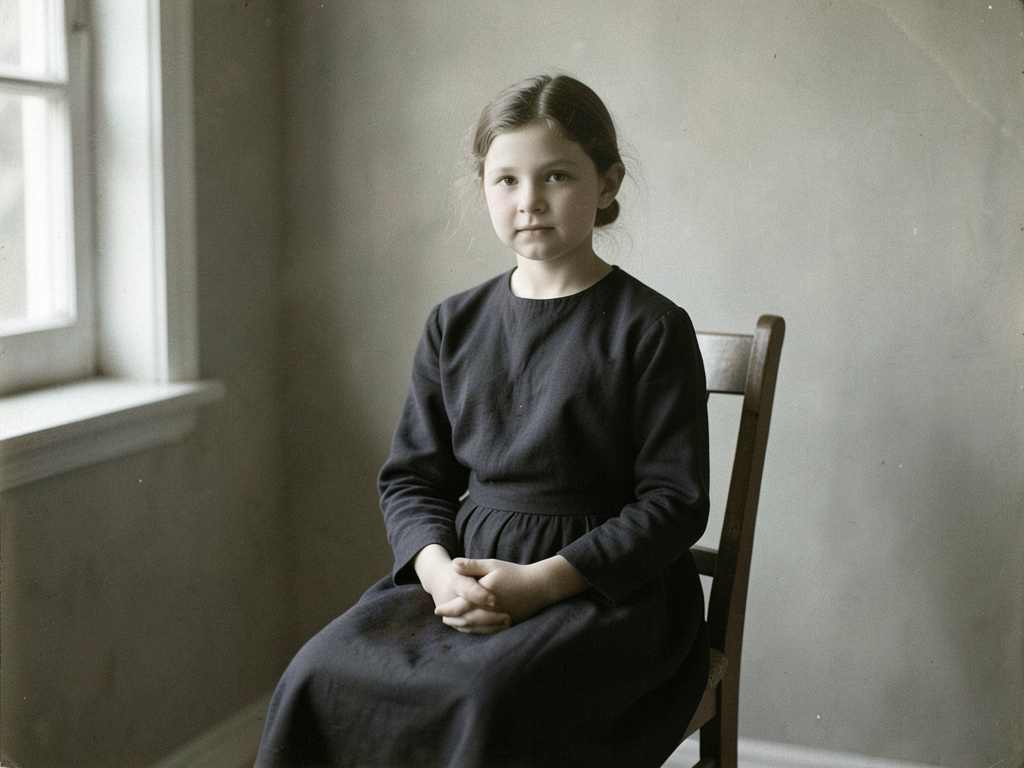
Locals just say Sally Carter. The Ewings were the people she had, and she was a long way from home when she got sick.
One woman who lived in the house later found a single pearl on a windowsill one morning and put it in a saucer on the kitchen shelf. The next week there was another on the stairs. She had never owned a pearl in her life, and she told people so, flat, like somebody who had quit being surprised.
The pearls are what people point to when they say the girl is looking for something. They turn up in the house, they were in the coffin, and they are what the girl at Maple Hill asks about.
3 What Witnesses Describe
The people who lived at Cedarhurst never described a face. They described the house, one thing at a time.

A red lantern light showed up where it should not, and it was enough to stop a person halfway up the stairs. A man who lived there said he stood on the fourth step a full minute with his hand on the rail, watching the glow slide under a door he knew was empty.
A child's voice came from rooms with no child in them. Drawers slammed upstairs while everyone sat downstairs at supper, and after a while the later residents quit blaming the wind and started calling it her.
Then the pearls, loose in the corners of the house. A lantern goes out and a voice stops, but a pearl is still there in the morning, cold in the palm of whoever found it.
The stone was the neighbors' story. The family would set it upright and walk off, and when they came back it lay in the grass again. They told it the way you would mention a bad step on a porch.
4 Where And When She Turns Up
The house is Cedarhurst, in Huntsville, Madison County. It now sits inside a private gated neighborhood and is not open to the public, so a fence is as far as anyone gets. Nearly everything in her story happened on that one property: the death, the toppling stone, the lantern, the voice, the drawers and the graves.
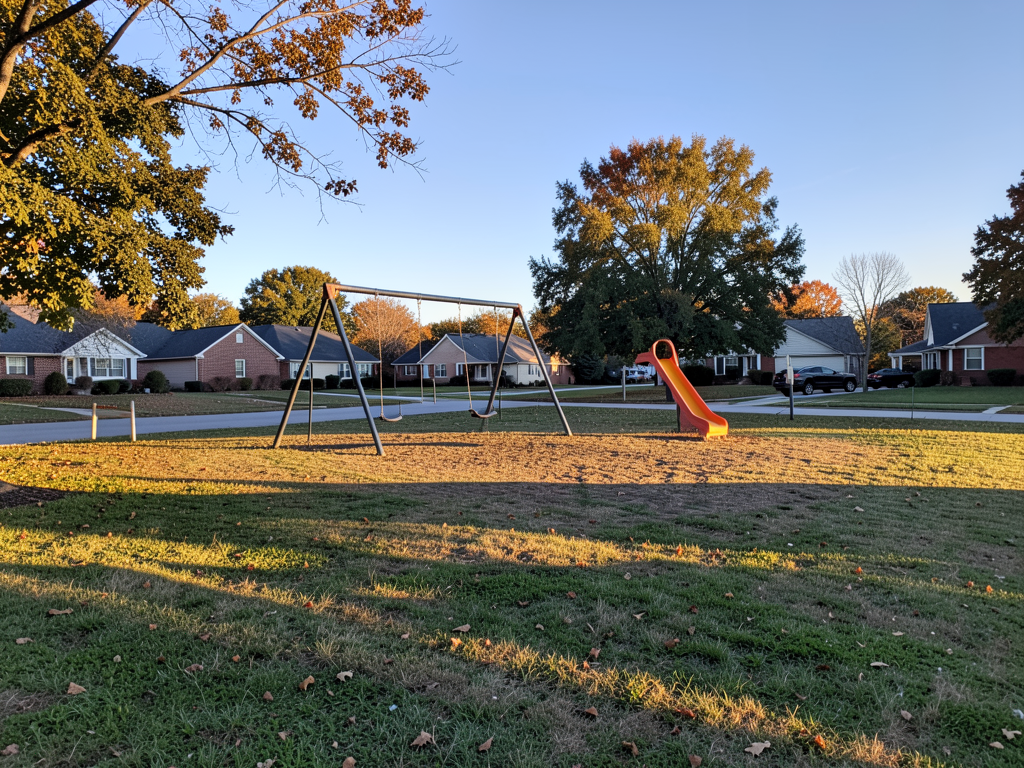
She died in the 1830s. After that the house had families in it, one after another, and it is those later residents who tell of the lantern and the drawers. Then came 1982, when the graves were moved and her coffin is said to have held only pearls and a charm bag.
Then there is Maple Hill. A mother told it once, standing by the swings while her own boy climbed the slide. A small girl she had never seen came up beside her, plain as any child, and asked whether she had seen her pearls. The mother turned to answer, and the girl was not there. Some take that girl for Sally Carter.
5 Telling Her From Other Things
A house that old makes its own noise. Drawers stick and slam when the weather turns, and floors give under nobody. Plenty of the Cedarhurst families said as much at first.
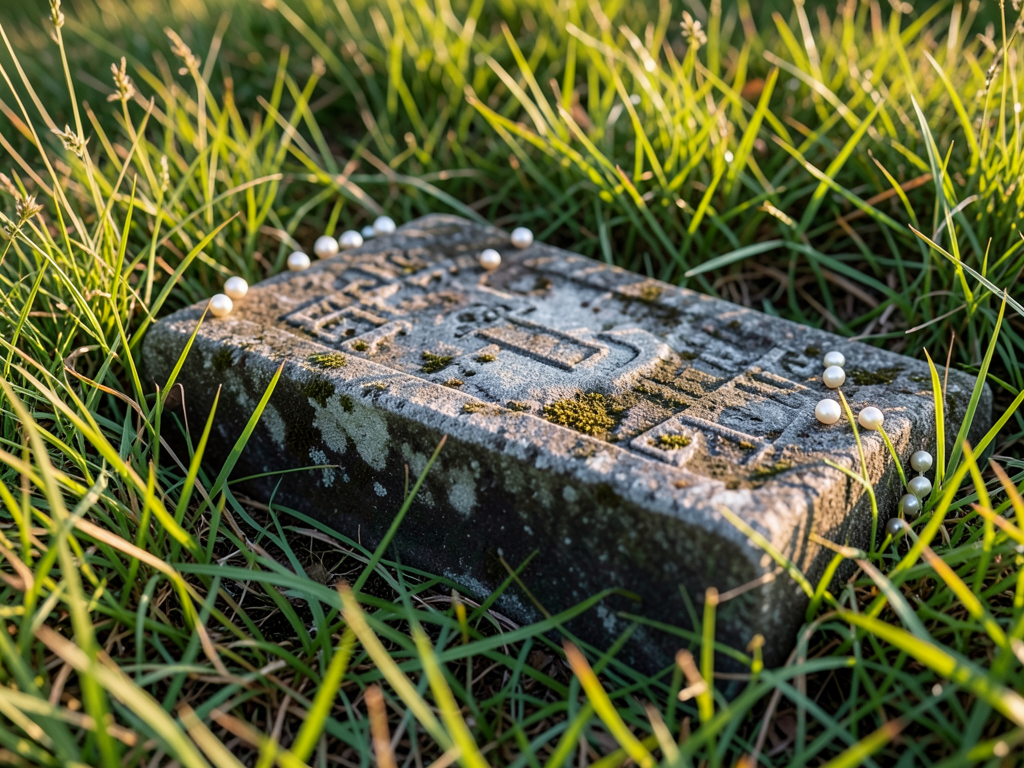
A red lantern could be a person carrying a light, and that is where most people started. What stopped them was that nobody was carrying it. The child's voice could have been a real child from down the road, but no child was ever found who owned it.
The stone could be settling ground, or somebody's careless hand. But it kept falling however it was set, and by the end the family had quit blaming the dirt.
A man who lived there for a while said the drawers he could live with, and the lantern he could put down to his eyes. Then he found a pearl lying loose on the floor of an upstairs room, and he sat down on the bed and looked at it for a good while. He kept it in a jar afterward.
6 How The Stories Fit Together
The pearls turn up in all three places: loose in the house, in the coffin in 1982, and in the mouth of a girl at a Maple Hill playground who asks for hers.

A marker that keeps falling and a grave that held so little go together. One says she would not stay put, and the other says there was hardly anything there to stay.
I think of that crew sometimes. I went back once that summer and stood at the fence, and the grass over the filled ground had already come in green. A boy rode past on a bicycle with a playing card clipped to the spokes, and the whole way down the road it clattered like small drawers shutting.
Sources
Field Guide is drawn from the legends as they are recorded. Its first-hand account is imagined. Its pictures are imagined scenes.