
Prince Madoc is a figure of Alabama folklore.
Where it is told
Field Guide
Prince Madoc and the Five Caves of Little River
A Welsh prince said to have landed on the Alabama coast in 1170 left no portrait, so the people who tell his story point at a cliff above the Little River.
1 A Boy Below the Bluff, Mentone
My grandfather took me down along the Little River the summer I was nine, and he did not take me to see Madoc. He took me to see the water. But he could not walk a creek without telling you who had been there first. So about the time we got our feet wet, he stopped and pointed up at the bluff.
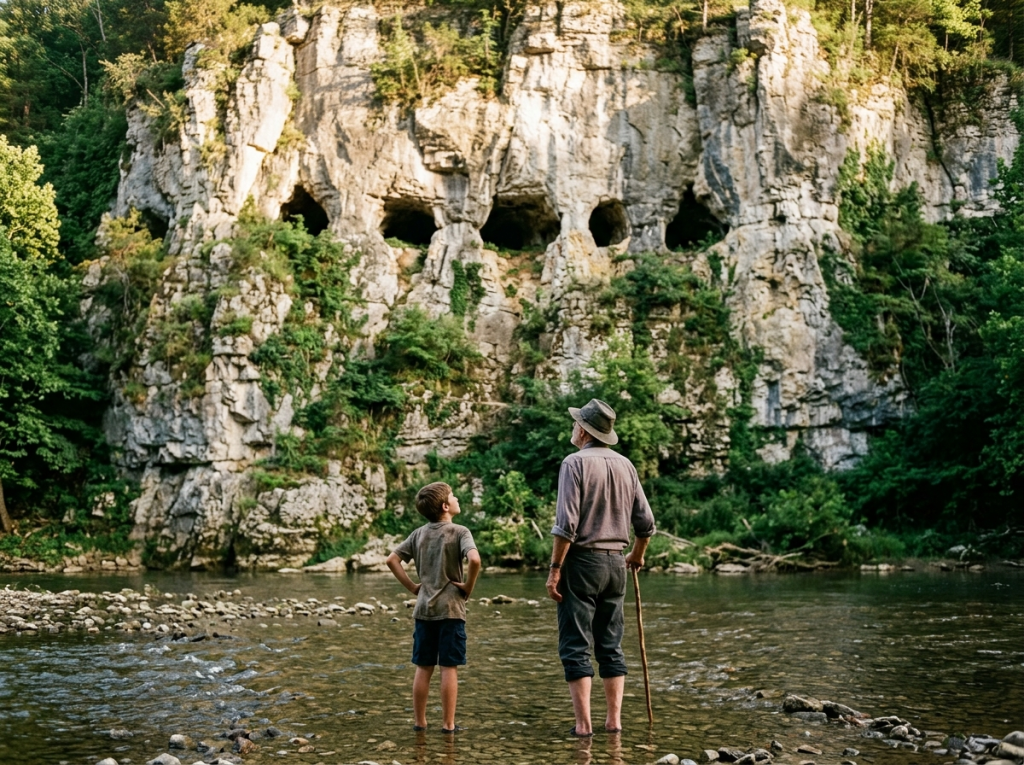
"Count them," he said.
I counted five. They were dark openings in the cliff, side by side and a long way above us, higher than any boy had a business climbing. He said some of them ran into one another inside, and that once there were stone walls ringed around the whole business. I looked for walls and couldn't make out any from the water. He said that was what once meant.
Then he told me about the Welsh prince. Madoc sailed from Wales around 1170, he said, and came ashore on the Alabama coast. That was hundreds of years before Columbus, and hundreds before de Soto came tramping through. The caves were his followers' doing. A fortress, my grandfather called it, and he said it like a man laying down a trump card.
I asked him how he knew. He said the timber had been cut with axes, old axe work, and that you could look at the way the five caves sat and see a fortress for yourself. I looked up at the five dark mouths and, I'll admit, I saw one. Caves in a row will do that to a boy.
He also told me, because he was an honest man, that the professors did not agree. They called it a myth, every one of them. He said it without any heat, the way you'd mention that a neighbor voted the other way. Years later I learned that Madoc had been taken out of the school textbooks once the historians objected. By then my grandfather was gone, and I stood on the bank wishing I could hear what he'd have said.
The caves aren't open to the public, so I never went up. I just stood there with the water running cold over my shoes, the same as I had at nine, and looked.
2 Who Madoc Is Said To Be
Madoc is a Welsh prince, and the telling puts him on a ship around 1170. Ask for more and you won't get much. He is a man, or was, and the whole weight of him rests on being first, the one who got here before everyone you were taught got here.
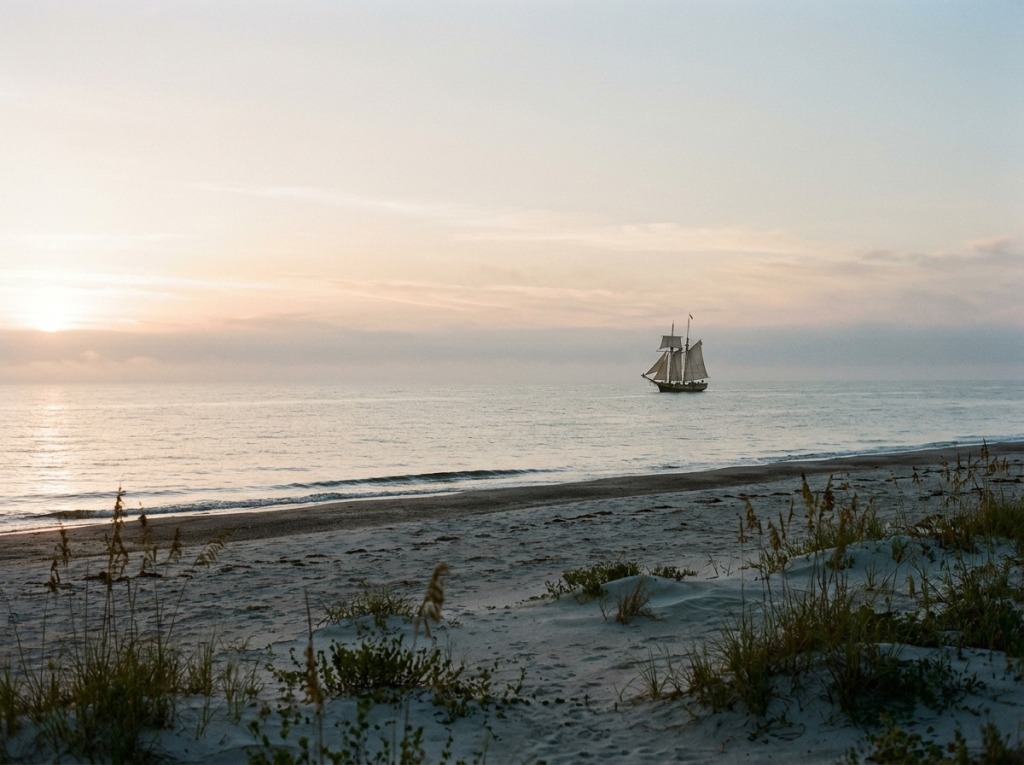
A woman in Mentone, who has told it to her grandchildren on the porch more than once, put it to me this way. "He's not there to look at. He's a date." She said it plainly and went back to shelling peas. The date is 1170, and the place he is said to have come ashore is the Alabama coast, a long way from DeKalb County and a good deal of water besides.
The claim is big, and the people who carry it keep the order straight. Madoc came centuries ahead of Columbus and centuries ahead of de Soto. If the Welsh got here in 1170, then everybody else came late. They'll say that last part twice if you let them.
Nobody I asked could tell me how tall he stood, or what color his hair ran, or what he said when he stepped off the boat. There's a prince, a date, a coast, and the people who followed him. So the talk turns to the cliff, because that is where his followers are said to have left something behind.
3 What the Cliff Shows
When people want to point to Madoc's work, they don't describe a man. They describe a bluff. High above the Little River near DeSoto Falls there is a cliff with five caves in it, side by side. Some are joined by openings, so a person inside one could pass to the next without going out in the weather.
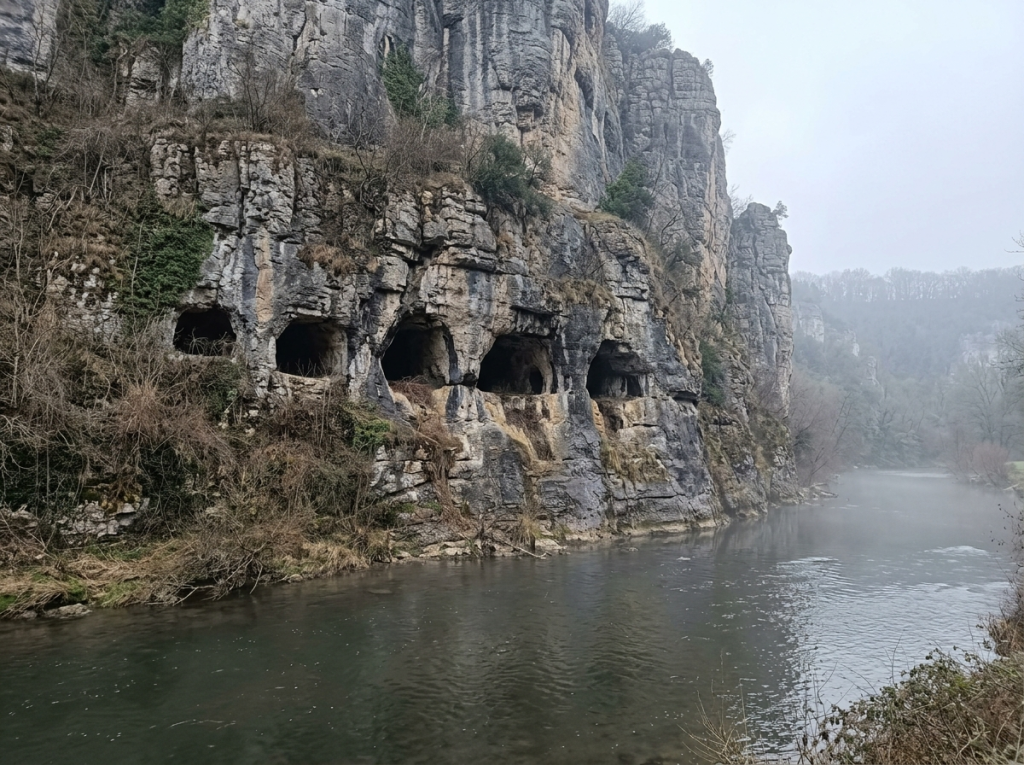
The caves were once ringed by stone walls. Anyone telling it will lead with the walls, because a wall means somebody meant to keep something in or out. Add the way the caves sit, and the people who favor the legend call the whole arrangement a fortress. Five rooms, a ring of stone, a river far below, and a cliff to put your back to.
A man who fished that stretch for years told me he never once looked up and thought of Wales. Then he said he'd had a cousin who could not look up without thinking of nothing else. "He'd stand there with the line going slack," he said, "counting them like they might change." The caves did not change, as far as the cousin could tell.
Then there's the timber. They say there is old axe-cut wood about the place. That is a quiet claim, that somebody with an axe was here and had a reason to be. A cave has no use for timber, but a fortress does.
The walls and the layout get the loud talk. The timber gets a softer voice, and it is the one the tellers go back to last, as if saving it. When I asked the fisherman which of the three he'd put his money on, he thought about it a good while. "The wood," he said. "You can't count a wall that's gone."
4 Where and When It Turns Up
The tale belongs to DeKalb County, to Mentone and to the Little River near DeSoto Falls. Drive out from town on a morning when nothing is moving and you will find the bluff waiting above the trees. Folks pull the truck onto the shoulder, step out, and look up with their hands on their hips. Then they count.
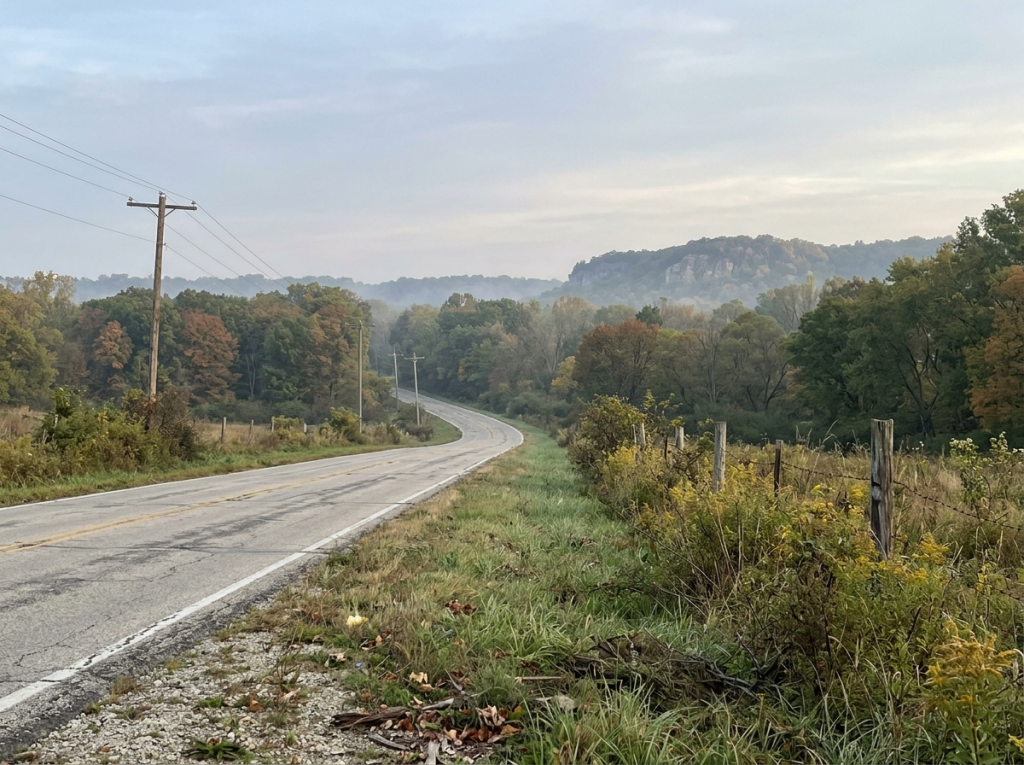
As for time, it runs on two clocks. The first is 1170, when Madoc is said to have landed. The second is the long stretch after, when his followers are supposed to have made a place above the water. A person standing at the river today looks at the same five openings and is asked to believe a Welsh follower once looked out of them, eight centuries back.
There's a modern clock too, and nobody who tells it hides that. Historians objected, and Madoc was taken out of the school textbooks. A retired schoolteacher I talked to remembered the page being there and then not being there, and she did not say it with any cheer. "Somebody decided the children shouldn't be told," she said. "I never knew who." She did not say whether she believed it herself, and I did not press her.
So the telling has stood in the middle of an argument for as long as anyone remembers. You can't ask about Madoc in Mentone without hearing the other side too, because the one arrives with the other.
5 Madoc and the Doubters
The legend divides people. On one side are those who point at the caves, the walls, the axe-cut wood, and say that adds up. On the other are the scholars and archaeologists, who reject the Madoc story as myth.

The fisherman told me about an afternoon on the gravel bank below the bluff. Two men had come down there, strangers to each other, and one of them had his arms crossed the whole time. The other pointed up at the five openings and counted them off on his fingers: caves, walls, timber. The man with his arms crossed never argued the count. He said "myth," and after a while he said it again, and neither one moved an inch. The fisherman said he reeled in and went home before it ended, and he figured it had not.
The historians went further than talk, since Madoc was removed from the school textbooks after they objected. Not many stories get written out of the schoolbooks by name. A tale nobody cared about would have been left to fade, and this one got a correction.
And the caves are not open to the public. You can look from below, and you can talk, and you can argue. You can't go up and settle it with your hands.
6 Telling Madoc Apart
Nobody sees Madoc, so there's no mistaking a man in the dark for him. What gets mistaken here is the cliff.

The first mistake, to hear the scholars, is the plain one. Caves are caves, they say. Five side by side is a lot, but it doesn't by itself make a fortress. The people who tell the story answer that the openings are joined, that the walls once stood, and that the timber was cut with axes. That's the line between a hillside with holes in it and a place somebody lived.
The second mistake is one of time. The legend asks you to set a Welsh prince on the Alabama coast around 1170, ahead of Columbus and de Soto, and to credit his followers with the caves above the Little River. A man who would rather keep the dates the schoolbooks give won't be moved by walls. The tellers know it. They'll tell you themselves that the scholars call it myth, and then they'll point up at the bluff anyway.
The schoolteacher gave me the way she'd recognize it if she heard it on a stranger's tongue. "If somebody tells you about a Welshman who beat Columbus here, and there's five caves in a row over the Little River, you've got Madoc," she said. "Then ask about the wood. They always bring up the wood." She laughed a little, and said the walls she'd have to take on faith.
Sources
Field Guide is drawn from the legends as they are recorded. Its first-hand account is imagined. Its pictures are imagined scenes.