
- Where
- Exact spot
- When
- Earliest account the 1830s, latest 1982
- Accounts
- Several witnesses
- Reports
- Historical
- The site
- No trespassing
- Also called
- Sally Carter's Ghost
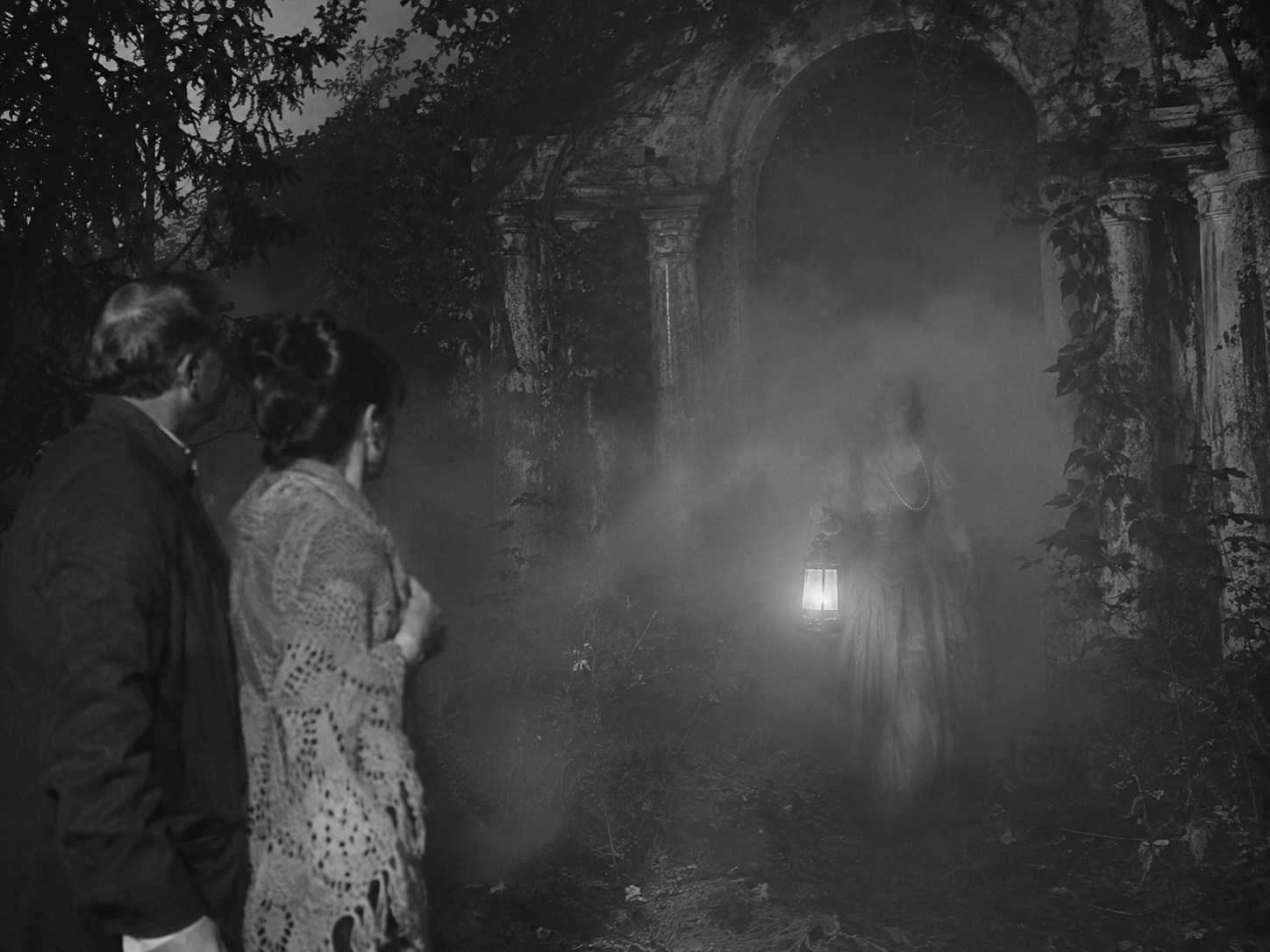
The story goes that Sally Carter, a young girl sent from Ohio to live with her aunt and uncle, the Ewings, at the Cedarhurst mansion, died of illness in the 1830s and never rested. Her tombstone is said to have kept toppling, and later residents told of a red lantern, a child's voice, slamming drawers and loose pearls. When the family graves were moved in 1982, her coffin reportedly held only pearls and a charm bag. Some link her to the girl said to ask for her pearls at the Maple Hill playground. Cedarhurst now sits inside a private gated neighborhood and is not open to the public.
Part of the lore of Sally Carter.
Where it is told
The Full Tale
The Pearls in the Small Box
In 1982 a two-man crew was hired to move the old family graves at Cedarhurst, and the smallest coffin held something nobody had buried in it on purpose.
1 The Stone That Leaned
I was twenty-six that spring and had worked for Mr. Tolliver about eight months. His outfit moved old graves out of the way of roads and new houses, and that March the job was the family plot behind Cedarhurst, the big house in Huntsville. The land was being sold off for a street of brick houses, so the Ewing family had to be moved to a new cemetery across town. The county had signed off. All we had to do was dig.
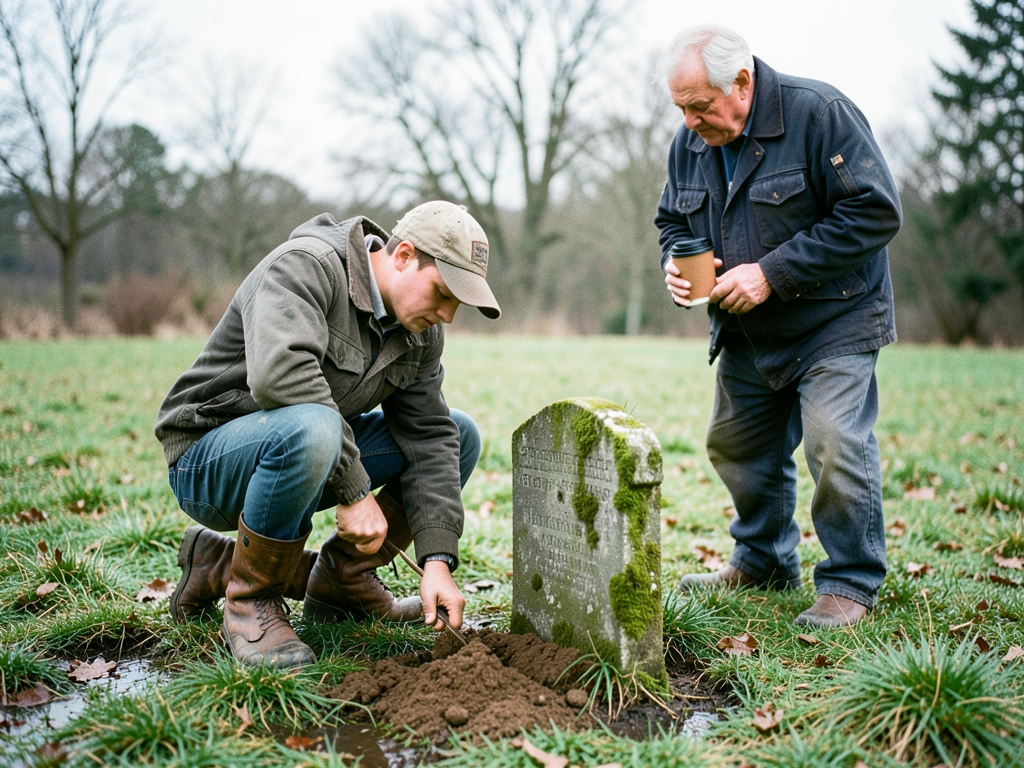
When I pulled in that Monday, Mr. Tolliver was standing at the end of the row with his coffee, looking down at a small gravestone lying face down in the wet grass.
"That's the third time it's fallen since the surveyors staked the plot," he told me. "They say it's the ground heaving from frost."
"In March?" I said. "In Huntsville?"
"That's what I told them."
I knelt and turned the stone over. It was a small slab with a lamb carved on top, worn nearly smooth. The name was still clear: Sally Carter. Most of the dates had weathered away, but you could make out the 1830s.
I set it upright and packed the dirt around the base with my boot heel. Mr. Tolliver watched me do it and didn't say a word.
2 Who Was in the Row
At lunch we sat on the tailgate of the truck, and I asked Mr. Tolliver who Sally Carter was, since hers was the only name in the row that wasn't Ewing.

He had read up on the family before he took the job. Sally had been sent down from Ohio as a girl to live with her aunt and uncle, the Ewings, here at Cedarhurst. Nobody seemed to know why her people sent her south. Not long after she came, she took sick in the house and died, and the family buried her out back with their own.
"She was just a child, then," I said.
"A young girl," he said. "That's all anybody wrote down."
I thought about my sister's girl, who was about to start school that fall, and I didn't ask anything else.
We spent Tuesday and Wednesday on the rest of the row: old Mr. Ewing and his wife, some of their grown children, and a baby with no name on its stone. We lifted what was there, laid it in new boxes lined with clean muslin, and wrote a number on every lid. Mr. Tolliver took his cap off each time a lid came up, and he made me do the same. By Wednesday evening only the little grave at the end was left.
3 What the Neighbors Told Us
Two families were still renting rooms in the old house while the builder finished the lots. On Thursday morning one of the tenants, a woman named Mrs. Odom, brought a plate of tea cakes out to the back porch for us. Mr. Tolliver thanked her, then asked whether anything odd had ever happened in the house. He said people who live near old graves usually have a story, and he liked to hear it before he opened the last one.

Mrs. Odom had several.
At night, she said, a red light moved along the back fence, low to the ground, like somebody carrying a lantern. Sometimes it stopped near the cedars where the graves were. She had never seen who carried it.
Upstairs, in the hall, she sometimes heard a little girl's voice, talking softly the way a child talks to herself while she plays. Her husband said it was the pipes. Kitchen drawers slammed shut with nobody near them.
"And the pearls," she said. "I keep finding them on the floor, one at a time. Little ones, round as a seed. I swept up eleven last winter. They're in a jar on my windowsill."
Then she told us one more thing, the one I have remembered longest. Children at the Maple Hill playground, she said, had a story about a girl nobody knew who walked up and asked them whether they had any pearls. Some people in town said that girl was Sally Carter, still looking for hers.
Mr. Tolliver thanked her for the tea cakes. On the way back down to the plot we passed the little stone. It was still standing.
4 The Small Box
We opened Sally Carter's grave on Friday morning. It had rained overnight, and the cedars were still dripping.
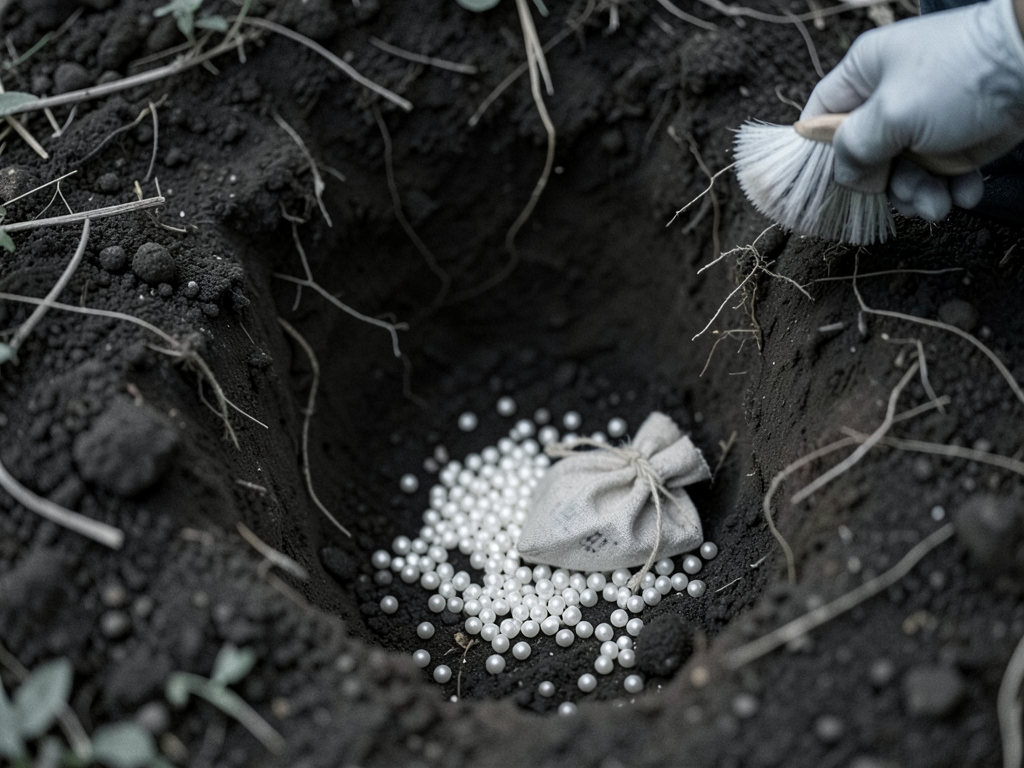
I dug down to the depth, and then Mr. Tolliver went the rest of the way with a hand trowel, because that is the rule when you get close. The wood of the coffin had mostly rotted. It came away in soft dark pieces, and he cleared the dirt back with his fingers.
Then the trowel stopped.
"Dale," he said. "Come look at this."
I knelt beside him with my cap already off, ready for what we usually find. There were no bones. There were pearls, dozens of them, small and round, scattered through the dirt. Some had gone brown and some were still white. Near the head lay a little cloth bag tied shut with thread, no bigger than my palm.
We went over the whole floor of the coffin with a soft brush. There was nothing else in it. Only the pearls and the bag.
Mr. Tolliver lifted the bag with two fingers and set it on a clean cloth. "That's a charm bag," he said. "My grandmother kept one. You put in it whatever you want kept safe."
"Are we going to open it?" I asked.
"No," he said. "It isn't ours to open."
He wrapped it in the cloth, laid it in a small new box with the pearls, and wrote the number on the lid himself.
5 The Last Load
That afternoon we drove the whole family to the new cemetery. On the second trip the little box rode in the cab between us, and Mr. Tolliver buckled the seat belt across it.
At the new plot we set the stones in a row in fresh concrete, Mr. Ewing first and Sally Carter's last. Mr. Tolliver pressed down on top of hers with both hands. It didn't move.
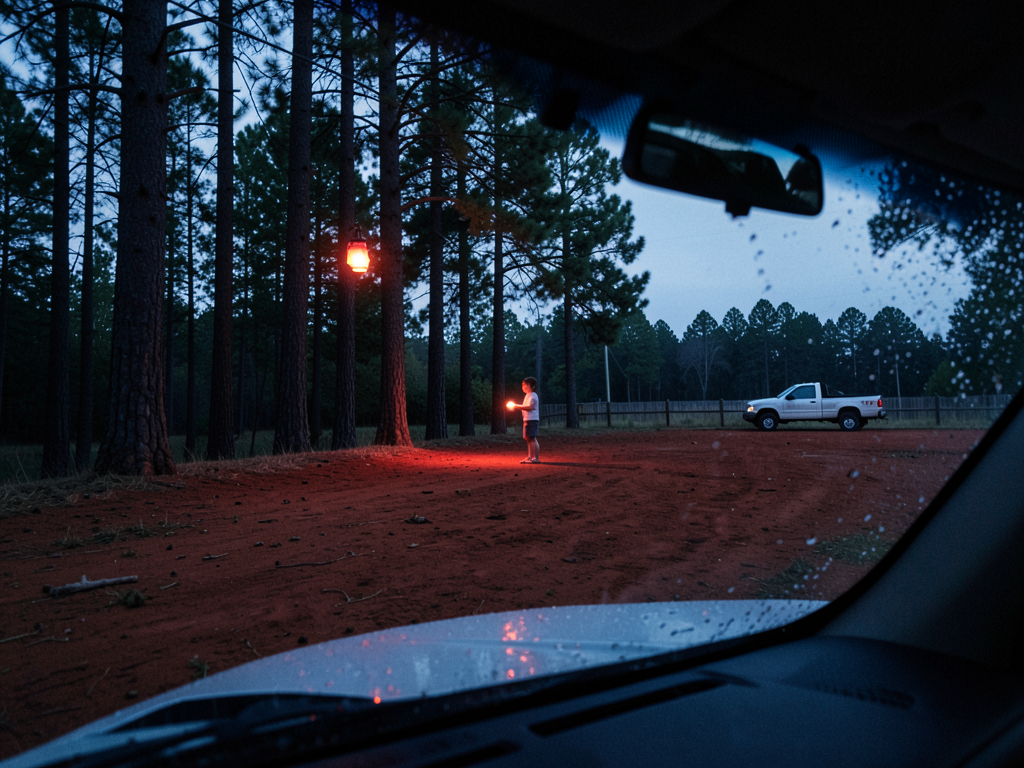
Around six I drove back to Cedarhurst to return the builder's key. The street was empty. Where the family plot had been there was only raw red clay under the cedars.
I parked by the back fence, and while I sat there a small red light came along the far side of the clay, low to the ground, moving at a slow walking pace. It didn't swing the way a flashlight does. It went to the spot where Sally Carter's stone had stood, and it stopped there. I sat with the key in my hand until it went out, and I never did return it that night.
I didn't tell anybody about that light for a long time.
Years later I was at my sister's table for Sunday dinner when her daughter, the same girl I had thought about on that tailgate, came in from playing at Maple Hill. She was quieter than usual. Her mother asked what was wrong.
"There was a girl by the swings I never saw before," she said. "She asked me if I had any pearls."
My sister laughed and asked who the girl was. My niece said she didn't know, that the girl had walked off toward the trees before she could answer.
I put my fork down. I thought about Mrs. Odom's jar on the windowsill, and the little box riding in the cab with the seat belt across it. Cedarhurst still stands, behind a gate now, and nobody digs there anymore.
Sources
- A Huntsville ghost story: Sally Carter's ghost (The Madison Record) www.themadisonrecord.com
- Ghosts of the Rocket City: Huntsville's Haunted History (Visit Huntsville) www.huntsville.org
This legend is tied to names a real victim and a real death or tragedy. It is told here with care for the people involved. The Full Tale is a retelling. Its names, voices and scenes are imagined around the legend as it is recorded. Its pictures are imagined scenes.