
Abigail Burns is a figure of Alabama folklore.
Where it is told
Field Guide
Abigail Burns and the Hall She Sang In
A guide to the opera singer of McCandless Hall, who is said to arrive in a white gown with flowers and to leave only footsteps and a scent.
1 Locking Up McCandless Hall, Athens
I worked nights on that campus for a good many years, and I'll tell you what I tell the new hires, which is that nobody has to believe anything. You just have to know which door is yours.

Mine was McCandless Hall, the auditorium. After a show, or after a rehearsal that ran late, I'd be the last one through, turning off lights row by row. A room that size has its own noises, and I knew all of them. Pipes ticked. The stage boards settled. A seat back would let go and spring up. Those I could have named blindfolded.
Footsteps were something else. They came across the floor when I was the only person in the building, and they had a walking pace to them, unhurried, like somebody crossing to a mark. I'd stand still and they'd go on a few steps and quit. I never once found anyone to go with them.
The flowers came to me first as a smell. I'd be standing in the dark of the house with the stage lit low, and the whole room would smell of a bouquet, fresh and a little sweet. There wasn't a vase in the building and nothing on the stage. I told myself somebody had left a corsage in the wings. I looked, and there was none.
I only saw her the one time. She stood up near the stage in a white gown with flowers held in front of her, the way a singer holds them when the applause is still going. I didn't call out. I didn't need to ask who she was, because every student on that campus could have told me. I finished the row I was on, and I'll admit I did it quicker than usual. When I looked again, the place was empty and the room was only a room.
People ask if I was scared. I wasn't, much. She looked like somebody still standing in the clapping. I locked up and went home, and I never carried a grudge against her.
2 Who She Was Said to Be
Ask a student at Athens State who walks McCandless Hall and you'll get the whole name, Abigail Lylia Burns, said slow, the way you'd read it off a program. She was an opera singer. She sang in that auditorium, and that is where the story keeps her.
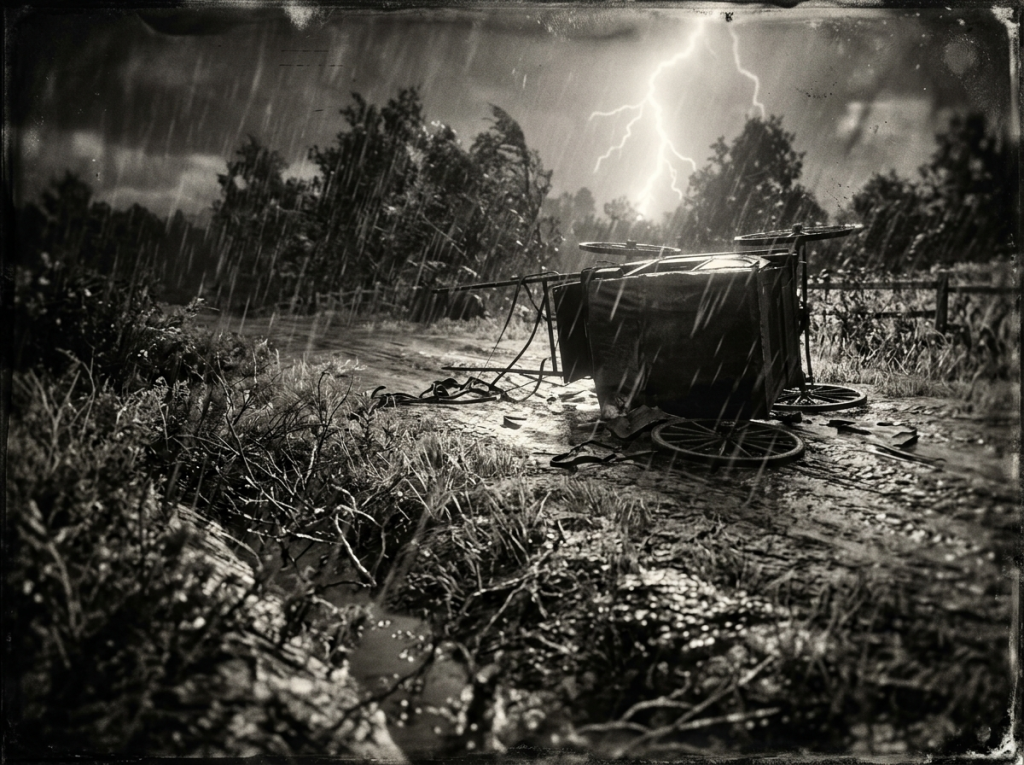
The story gives her no other life. Nobody makes her a founder's wife or a schoolteacher. She sang, and the room held on to it. Somebody in a dorm lobby starts in, and before they've got to the carriage the others are saying her middle name along with them.
What the story gives her is a death, and it's a plain one. The show ended, the house emptied, and she started home. Her carriage overturned in a storm and she was killed. A carriage, bad weather, a ride home after a good night.
I've sat through county stories that spent three paragraphs on the rain. This one spends a clause. She left the stage alive, and the students say she came back to it.
3 What Is Seen and Smelled
Picture a student alone in the house after rehearsal, the cast gone out to the parking lot, a coat still on a seat in row twelve. The lights are down to almost nothing. The coat could be anybody's. The gown is what gets seen, white against the dark, and everyone starts with it.
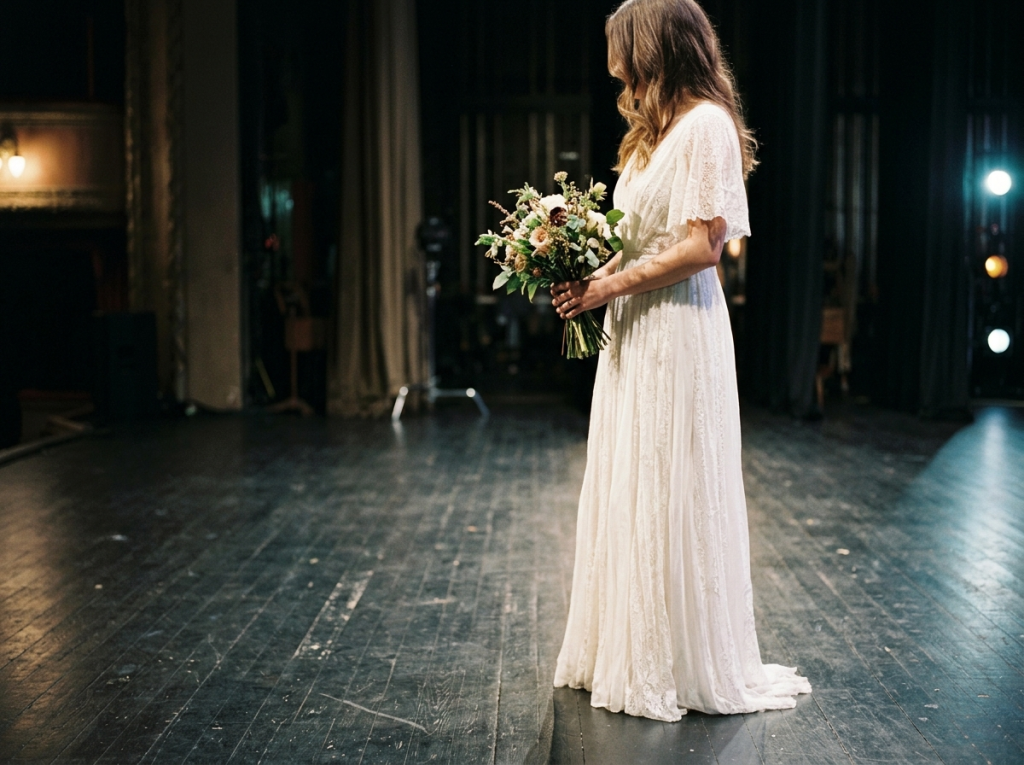
She holds flowers, the way a singer does when she has just finished. A bouquet is what the students say, held in front of her, and that is enough to carry around in your head.
Then there are the parts that need no eyes. People report her footsteps when the room is empty, and they report the scent of her bouquet. Plenty of students say only that. They were by themselves in the auditorium, they heard somebody walking the boards who wasn't there, and the air went sweet, like a florist's cooler opened in the dark. They never saw a gown at all.
The footsteps come first, usually, and the smell comes in under them. A person standing in the aisle with his hand on a seat back will hold very still, and the sweetness will sit there with him. Over in row twelve the coat is still lying where its owner left it, and by morning it smells of flowers too.
4 Where and When She Turns Up
The county is Limestone and the town is Athens. This is a town story, told on a campus, and mostly inside one building. I'd like to hand you a slough road or a creek crossing, but she has none. She has a stage.

The hall is where she's met, and she's met when it is empty. The house lights are being brought down, the audience has gone out into the night, and somebody stays behind to lock the doors or fetch a forgotten jacket. A crowded house gets the show. The empty one gets her.
Her death has a night attached, a performance and then a storm. Everything after that is loose. She comes when the room stands empty, and that is as exact as it gets.
Anyone who has worked a theater knows that hour. The pipes start in. A board shifts under the stage. It's the hour the night man kept to, and it's the hour she is reported in, a singer in a room that has finished applauding and has not yet gone dark.
5 What She Does and Doesn't Do
She appears, she holds her flowers, she lets the floor ring with footsteps, and the scent finishes the job. The people who tell it seem faintly pleased that it stops there.
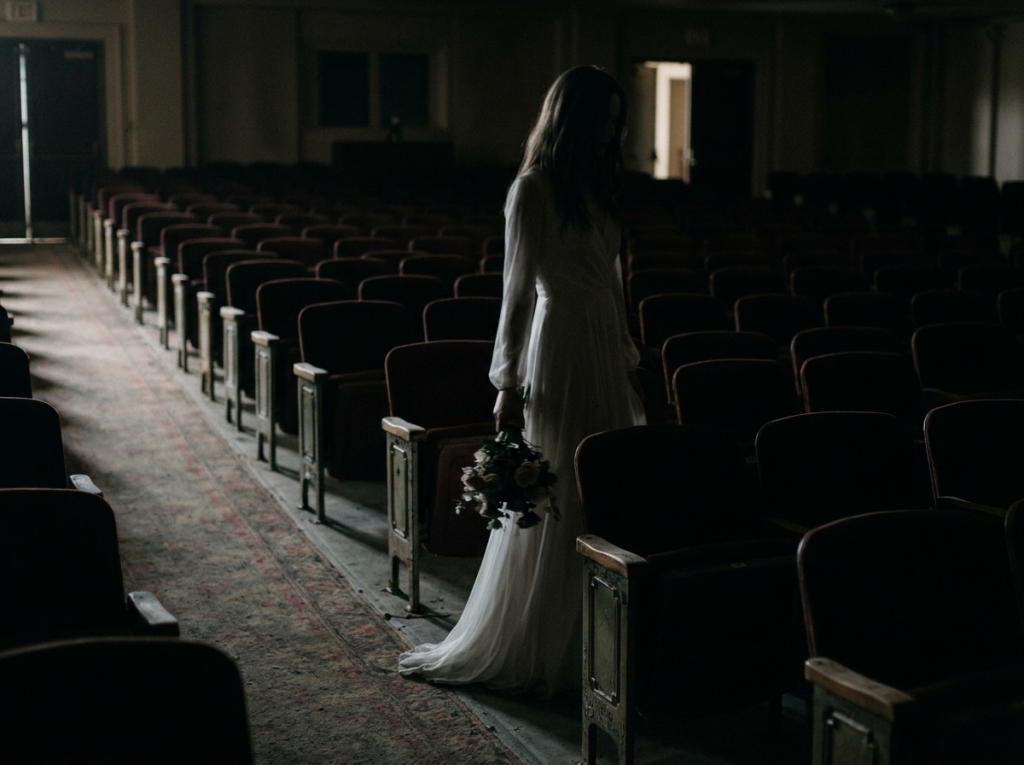
The carriage went over in the storm, but the place she is said to keep is the place she sang. A haunting on a road would be about the ride. This one is about the room, and she is still in it, holding what she was given.
Now, telling her from the ordinary dark. A late janitor can make footsteps in an empty hall, and so can a student working a scene alone. Neither of them will smell of a bouquet. A pale shape by itself could be a coat on a seat or a curtain hanging oddly. But steps and scent and a white gown together, in a room you've already walked and found empty, is her.
I think of the old night man, finishing his row a little faster than usual. He didn't argue with what he saw. He finished the row, the way you'd keep your place while somebody else takes a bow.
6 One Hall Among Several
McCandless Hall is not the only building on that campus with a ghost story. It is one of several, and the students seem to like having them. The singer is the one they tell first.

A show, a storm and a road home make one night. A hall, a white gown and a bouquet make one picture. The death happened away from the stage and the haunting happens on it, and the performance is what joins them.
A student can tell it in a minute and a half, and the listener has the whole of it: the name, the gown, the flowers, the steps, the sweet air.
Some evening the auditorium will be quiet, the audience gone and the seats tipped up in their rows. A pipe will tick and a board will settle. Then, low, from somewhere near the stage, comes the smell of flowers. In row twelve, a coat sits on a seat with its sleeves folded over the armrest, the way someone left it, and nobody has come back for it.
Sources
Field Guide is drawn from the legends as they are recorded. Its first-hand account is imagined. Its pictures are imagined scenes.