
Alabama River Alligator is a figure of Alabama folklore.
Where it is told
Field Guide
The Alabama River Alligator
A gator that grows past what people expect has been talked about on the lower Alabama River for years, and a creek near Millers Ferry put numbers to it in 2014.
How to know it
- Size
- Fifteen feet at Millers Ferry, and fourteen feet for the earlier Selma animal.
- Build
- 1,011.5 pounds at Millers Ferry, against 838 pounds at Selma.
- Where
- A creek near Millers Ferry in Wilcox County, about 80 miles west of Montgomery.
- Where
- The Alabama River near Selma, and the lower river in general.
- When
- August 2014 for the Millers Ferry animal, during the state's regulated season.
- When
- 2011 for the Selma animal, which held the Alabama mark until Millers Ferry.
- Habits
- Takes a hook, at least when a family party works a creek for it.
- Habits
- Draws talk of monsters in the lower river long before anyone puts one on a scale.
1 A Creek near Millers Ferry
August in Wilcox County is wet heat and brown water and mosquitoes that have not heard of the season. The state's regulated alligator hunt was open, and in August 2014 a family hunting party went down to a creek near Millers Ferry to work it. Millers Ferry sits about 80 miles west of Montgomery, in country where the roads run out to water more often than not.
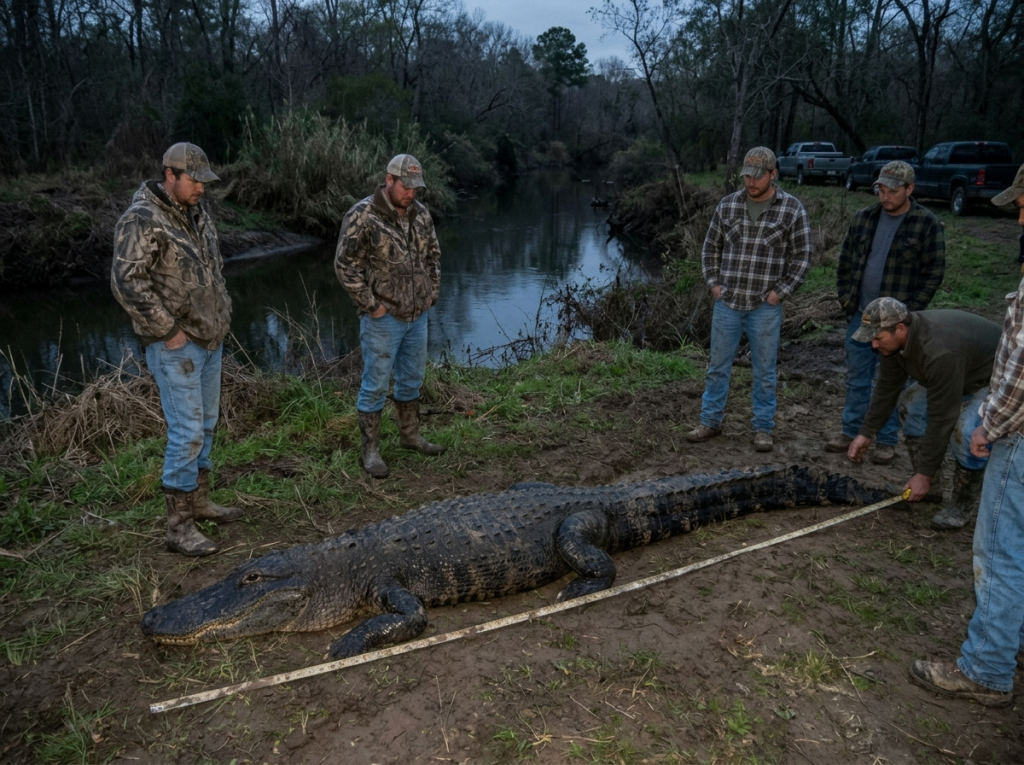
They hooked an alligator. That is all the account says about the moment, and it is enough. Hooking one is what they came to do. What they brought in was the kind of animal most people only claim to have seen.
It measured fifteen feet. It weighed 1,011.5 pounds. Say the half pound out loud when you tell it, because the half pound is how you know somebody really read the scale.
Every family on that water has a cousin who saw a big one once. You nod and pass the biscuits. This family had a tape and a scale, and the cousin's story had to stand next to them.
Local and national news called it a possible world record for a legally taken alligator. It easily beat the old Alabama mark, an 838-pound, fourteen-foot gator taken in 2011 from the Alabama River near Selma. That is a foot longer and 173.5 pounds heavier.
The talk in Wilcox County did not start that day. That day it got a number.
2 What They Call It
There is no spooky name for this one. Around Millers Ferry and down the river toward Selma it is a gator, then a big gator, and after supper on a porch it is a monster gator. The Alabama River Alligator is what you get when you add them all together, the ones that were pulled out of the water and the ones people only say are still in it.

It is a plain kind of legend. The animal does not walk on its hind legs and it carries no curse. It is an alligator that got far bigger than most people thought one could, living in water that looks like all the other water on the lower river. That river has carried boats and ferries and fishermen for a long time, and it has never once explained itself.
Before Millers Ferry there was Selma. In 2011 an alligator came out of the Alabama River near that town at fourteen feet and 838 pounds, and it held the Alabama mark until the Millers Ferry animal came along. For those years it was the number people measured everything against.
Then the creek near Millers Ferry gave up the bigger one, and 838 pounds became second place. The talk about monster gators in the lower Alabama River had been going a long time before either animal was caught. These two only gave it figures to hang on.
3 How Witnesses Describe It
What gets passed along is numbers. Fifteen feet and 1,011.5 pounds. Fourteen feet and 838. Glowing eyes and screams in the dark are not part of it, because nothing in the record has either. It is told flat, the way you tell about a catfish you are proud of and a little embarrassed by.
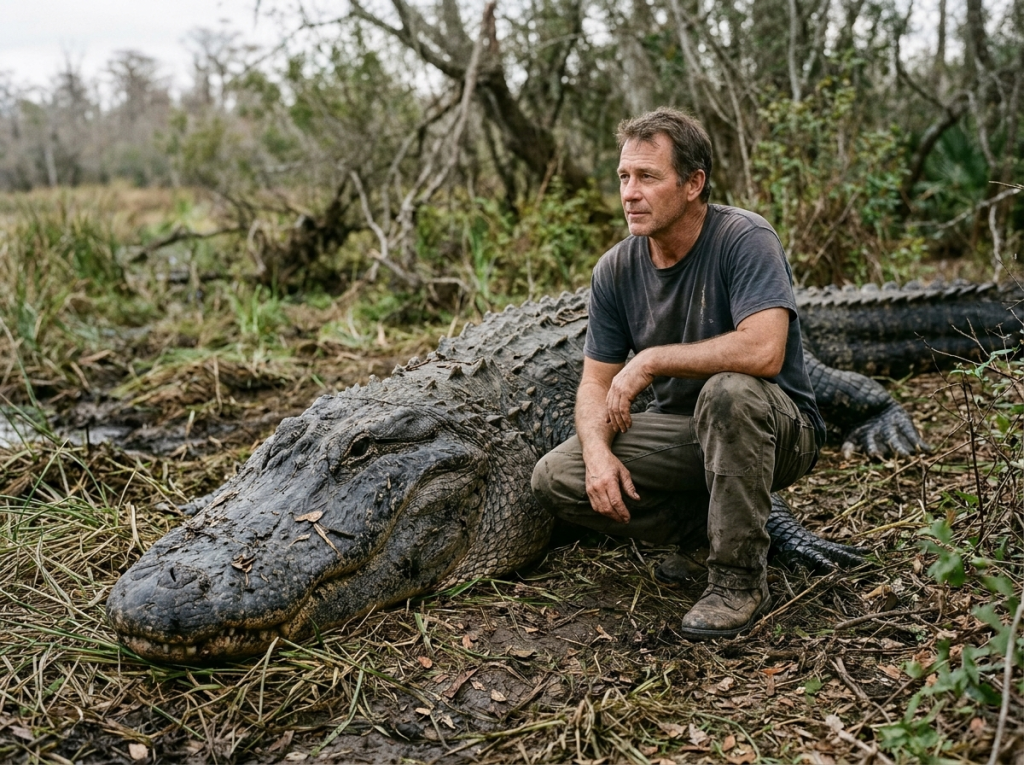
Fourteen feet and fifteen feet look close together on paper. The weights are not close. The Millers Ferry animal ran 173.5 pounds over the Selma one, and anyone who has dragged something heavy out of water can tell you how much of the weight rides in that last foot.
The record gives you size and does not give you a face. It has no scar, no crooked jaw, no story about how the animal looked at anybody. That is why the photographs get passed around more than the telling does. A tape laid beside a gator says more than a man's hands held apart.
Folks who have only seen gators in pictures ask whether the pictures are tricked. The photographs are what the family brought up out of the creek, along with the tape reading and the scale reading. The numbers were written down.
Down toward Selma the earlier animal gets told the same way, in feet and pounds and the year. It was the biggest Alabama had on paper until it was not.
4 Where and When It Turns Up
Two places, both on the same water. One is a creek near Millers Ferry in Wilcox County, about 80 miles west of Montgomery. The other is the Alabama River near Selma. Between them runs the lower river, and that is where the talk lives.
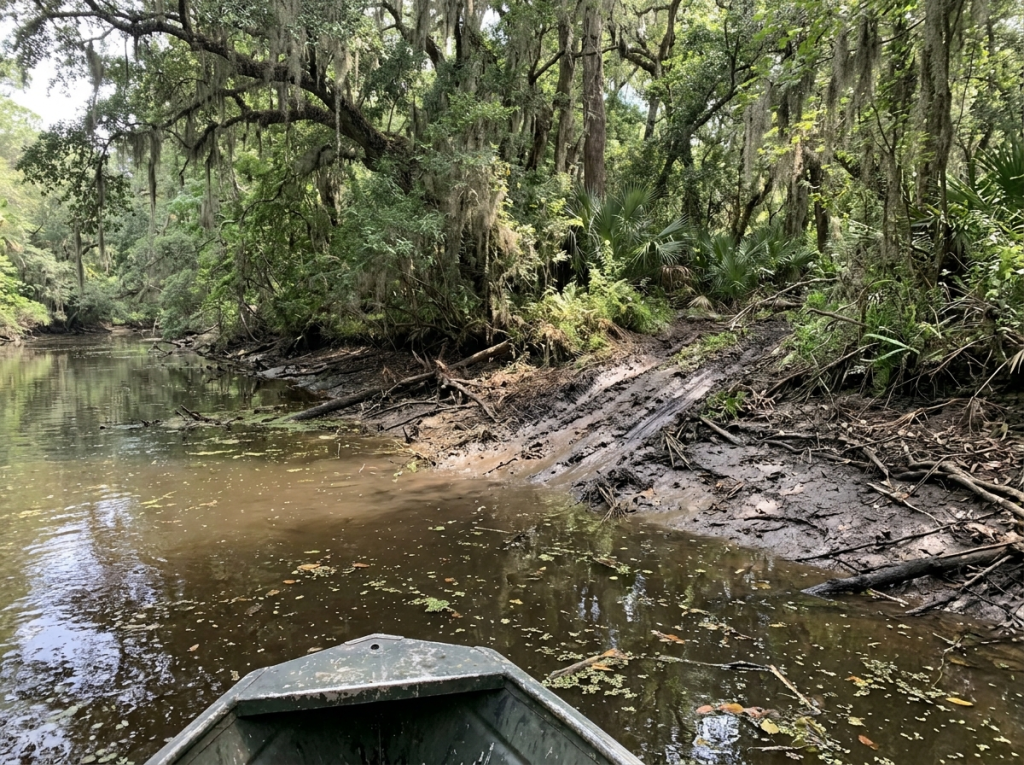
The Millers Ferry animal was taken in August 2014, during the state's regulated season, by a family party working the creek. The Selma animal came out of the river in 2011. Between those two dates, and since, the monster gator talk has gone on at landings and on tailgates and across fences.
A creek is a good place for a big animal to go unnoticed. It can look like any other creek, and most creeks go months without anybody giving them a second look. The family at Millers Ferry gave this one a look, and that was the whole difference.
People like to say the river is full of them. That is the porch version. What has been put on a scale is two animals, one at 838 pounds and one at 1,011.5. The rest is the old habit of looking at dark water and wondering what is under it.
If you want to see where it began, go down to Wilcox County in August and find a creek that looks like all the others.
5 What It Does
The one thing it is known to have done is take a hook. It was hooked in a creek by a family during the legal season, and the account ends where the scale is. It did not chase a boat or carry off a dog or hold a bridge. Nobody has put any of that on it.
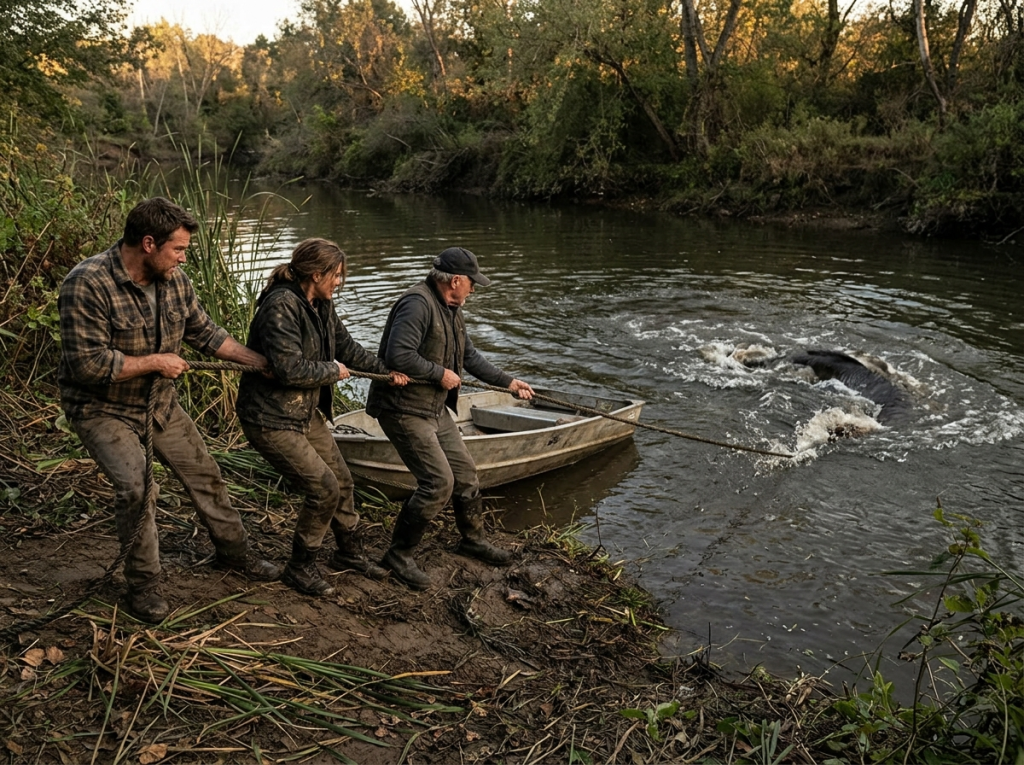
What it has done is change the talk. Before 2011, a man who said he had seen a gator over 800 pounds in the Alabama was bragging. After 2014, the man who says he has seen one over a thousand still gets teased, but he gets a longer look first, and somebody asks which creek.
The lower river always had talk about monster gators. Now a family in Wilcox County can say, with a tape and a scale, that some of that talk was not only talk. That is a small thing to be able to say, and it carries a long way on a porch.
The Selma animal had already done part of that work in 2011. The Millers Ferry animal finished it.
6 Telling It Apart
Size is the easy way to tell this animal from anything else on a creek. A thing that is fifteen feet long and weighs more than a thousand pounds is a good deal longer than a boat seat and heavier than anything else you are likely to meet along that water. A deer is a fraction of that. A dog is less.
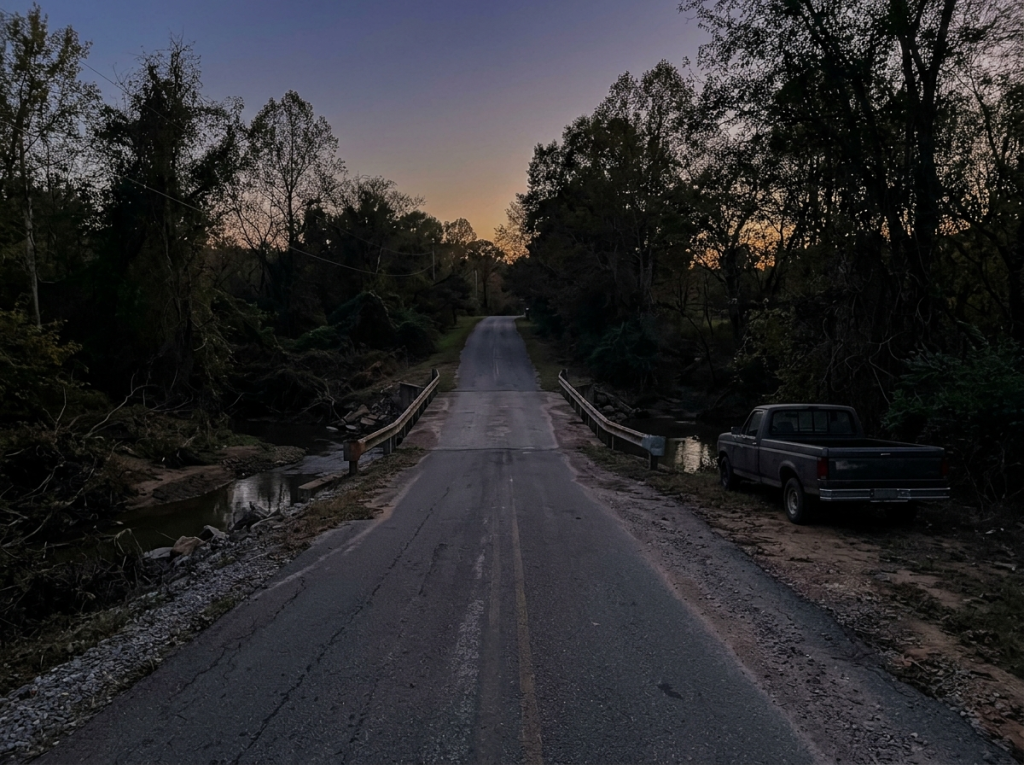
The Millers Ferry animal was hooked, brought in and measured, so there is no question what it was. The question on a creek road at dusk is different. It is whether a long dark shape in the shallows is a log or something that has been left alone a long time, and the only honest answer is to watch it a minute.
The Selma gator and the Millers Ferry gator came out of the same long river, and one beat the other. If a bigger one comes in, it will be a third number, and the family that brings it in will get the same long look the Wilcox County family got. Then the cousins will have to start over.
Sources
Field Guide is drawn from the legends as they are recorded. Its first-hand account is imagined. Its pictures are imagined scenes.