

Spirit Woman of the Singing River is a figure of Alabama folklore.
Where it is told
Field Guide
The Woman Who Sings in the Shoals
*Along the Tennessee at Florence, the river is said to hold a woman whose voice follows the water's mood.*
1 Low Water at Florence
First-hand account, Florence, Lauderdale County
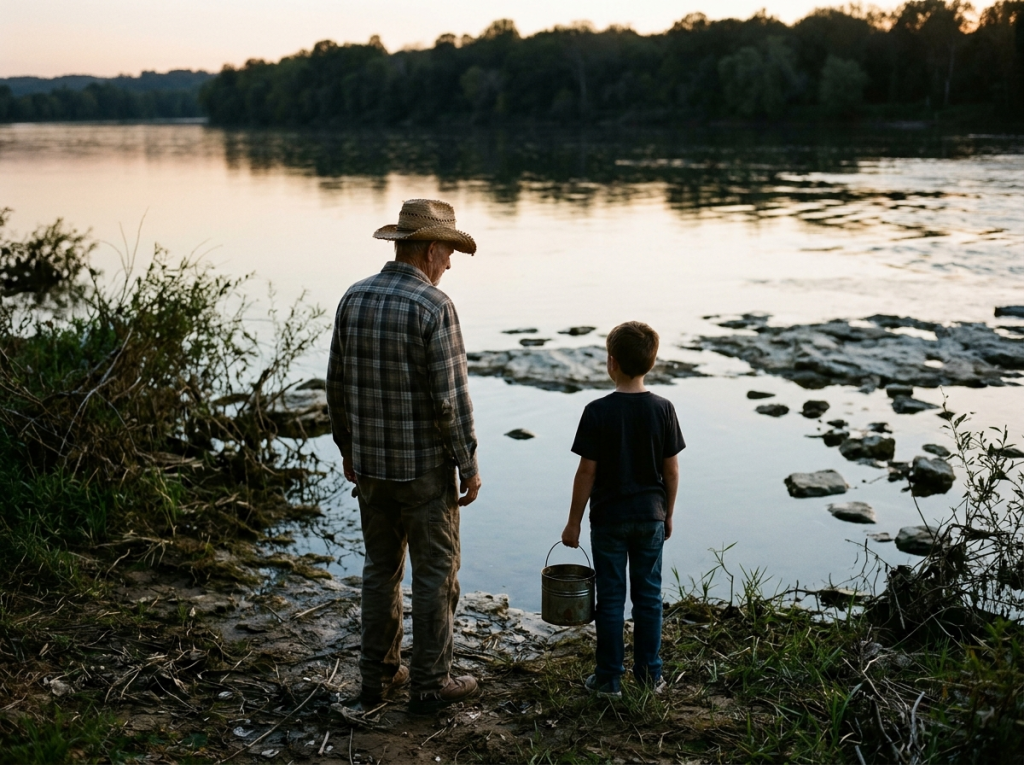
My granddaddy fished off the bank below town, and I went along from the time I could carry the bait bucket. He never said a word about the singing until the summer the river dropped so low you could walk out on rock that nobody had seen since he was a boy. We sat there in the evening with the lines out, and he told me to hush and listen. I thought he meant for fish.
What I heard was the river going over the shoals, a low sound, soft and steady, like somebody humming in another room so as not to wake the house. He said that was her. He said the Yuchi had a name for the river and believed a woman lived in it, and that when the water ran low she sang low. I was about nine, and I told him it sounded like water. He said yes, that is how she does it.
I never saw anybody out there, and he never claimed I would. Nobody in our family ever said they saw a woman standing in the river. What we had was the sound, and the notion that the sound meant something.
The spring I turned sixteen the river came up over the rocks, and I stood on the bank with him in the dark while it roared. Granddaddy said she was loud tonight, and that the old people said she got angry when the floods came. Then he took his hat off. He did that for funerals and for the national anthem, and I had never seen him do it for weather.
2 What She Is Called
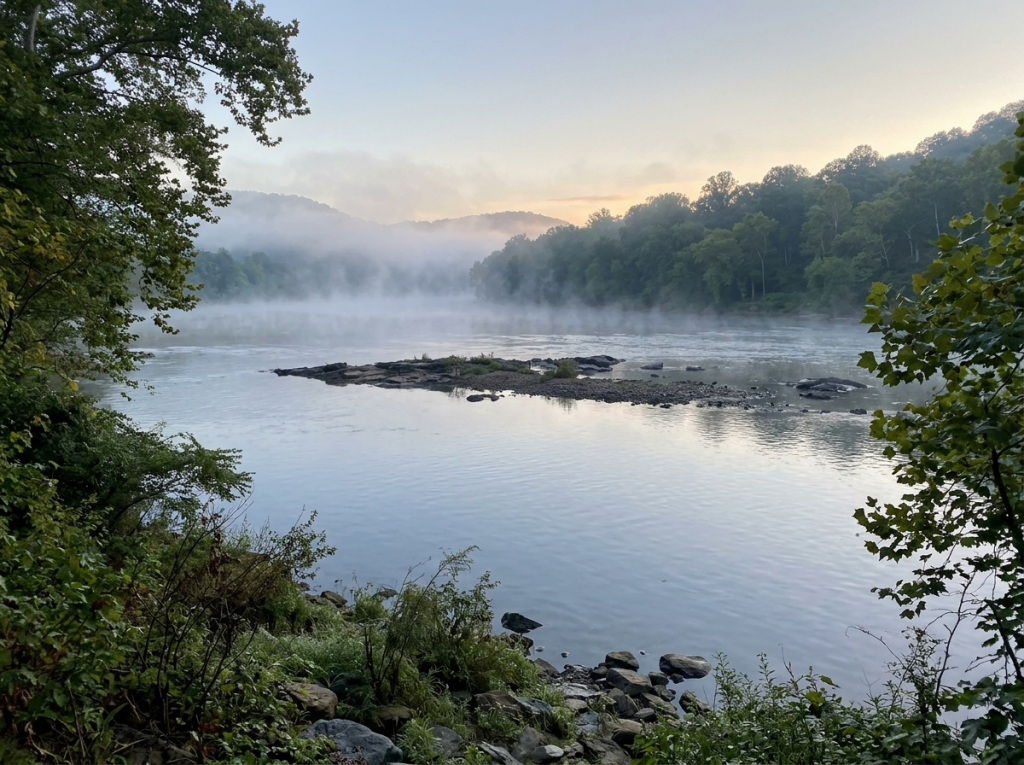
Most people around Florence say the Singing River and leave it there. The Yuchi called the river Nunnuhsae, and they believed a woman lived in its waters and sang to them. The Cherokee word was Unashay, and the Cherokee version speaks of a muse living in it.
Nobody ever handed me a private name for her. When I was grown I asked an old fellow at the feed store, and he scratched his neck and said she was just the lady in the river. Then he went back to stacking sacks of layer feed. That was all he had.
A muse and a woman are not quite the same thing, and I noticed it the first time I read the Cherokee telling. A muse sings because singing is her work. The Yuchi woman sings to the people, and that sounds more like company than work.
Then there is the girl. One telling credits a young girl whose singing carried downriver, and it never says whether she and the woman are one being or two. My aunt holds that they are one. My cousin Dale says that is nonsense. They went at it over a pot roast until the gravy skinned over, and neither gave an inch.
3 What Witnesses Describe
Ask around and people tell you what they heard. Dale swears he caught it one October from the bridge, a low run of sound under the traffic, and he could not say whether it was a voice or the shoals. He stood there with the engine running until a truck honked behind him. A woman who cleaned fish beside me at a church supper told me hers came on a night of hard rain, loud enough that she got up and shut the windows. Neither of them mentioned a face. Neither of them mentioned anything standing on the water.
The old Yuchi account puts her down in the river, not walking the shore. The sound changes with the water. When it runs low she is soft. When floods roar over the rocks she is loud, even angry.
I brought my own two children down to that bank with a bait bucket and told them to hush, the same as I was told. The Cherokee muse and the girl downriver both have a face somewhere, but nobody ever described one to me. If a man at the landing starts in on her hair, I let him talk.
I go down some evenings in low water, mostly alone now. Granddaddy has been gone eleven years. I stand where he stood, the shoals make their steady, hushed sound, and when it swells I take my cap off, which I would not have done before.
4 Where and When She Sings
Her country is the Tennessee River at the Shoals, and the town that holds her legend is Florence, in Lauderdale County. Two places keep the telling written down. One is the Singing River Sculpture on South Court Street in Florence, with a marker beside it. The other is a sculpture marker at the Muscle Shoals library, which carries the same tale.
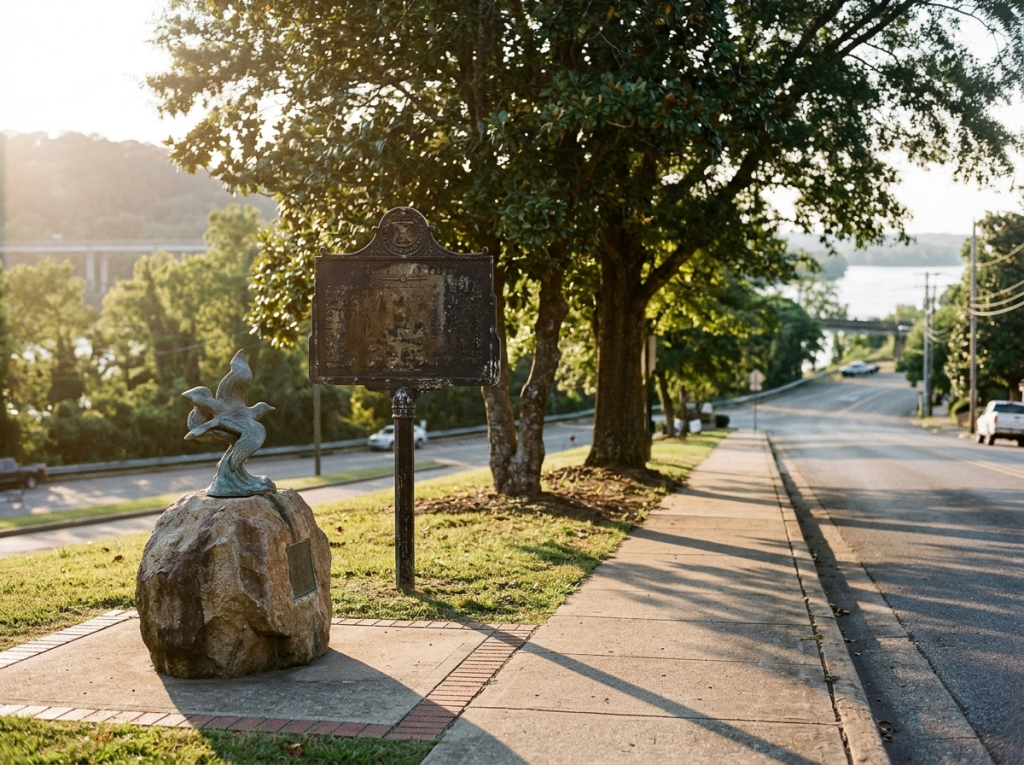
I walked over to the Florence one last fall, on a gray afternoon with nobody else around. A man was waiting on a bus nearby, and he watched me read the marker twice. He said his mother used to bring him there. I asked what she told him, and he said only that the river sang when it felt like it, and then the bus came. He climbed on without looking back, and I stood a while longer with my hand on the cold edge of the stone.
She keeps no hours. Low water brings the soft singing, and flood brings the loud, and the river sets the clock. It is the one thing in Florence that has never once been late. Granddaddy used to check the water before he checked the sky, and he planned his Saturdays by it.
5 How She Behaves
She sings, and that is all anybody reports. She sings to the people who live along the river, and some versions say she does it to protect them. I take to that version. When the water comes up and her voice comes up with it, it sounds to me like somebody hollering across a fence line to tell you the creek is rising.
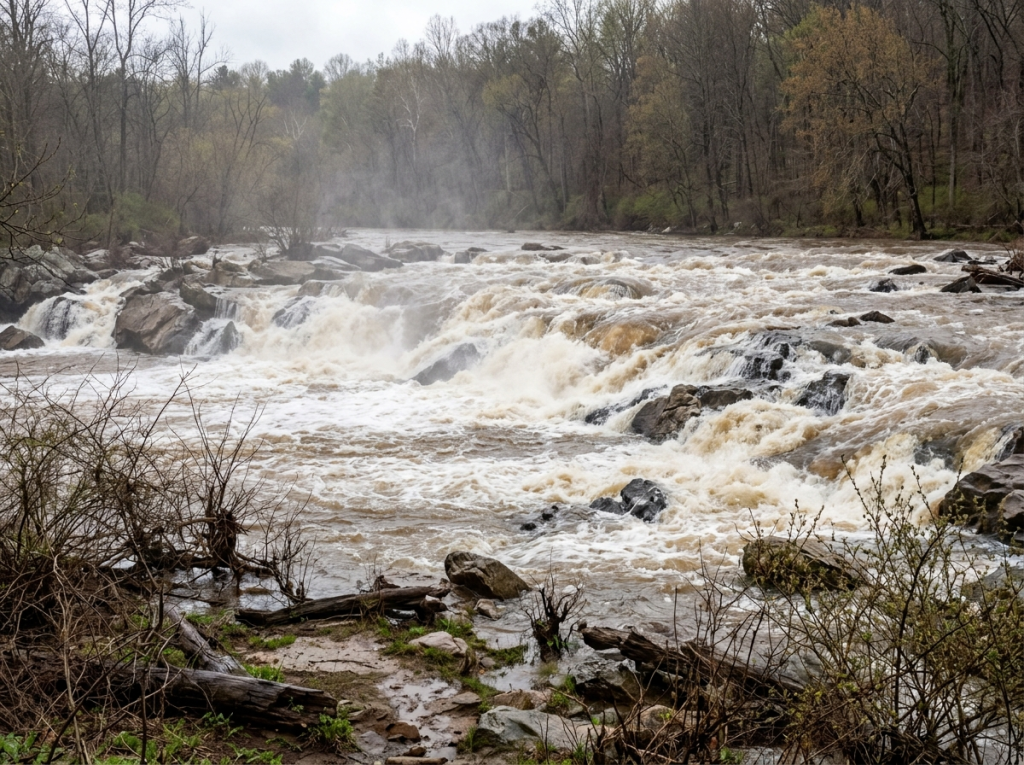
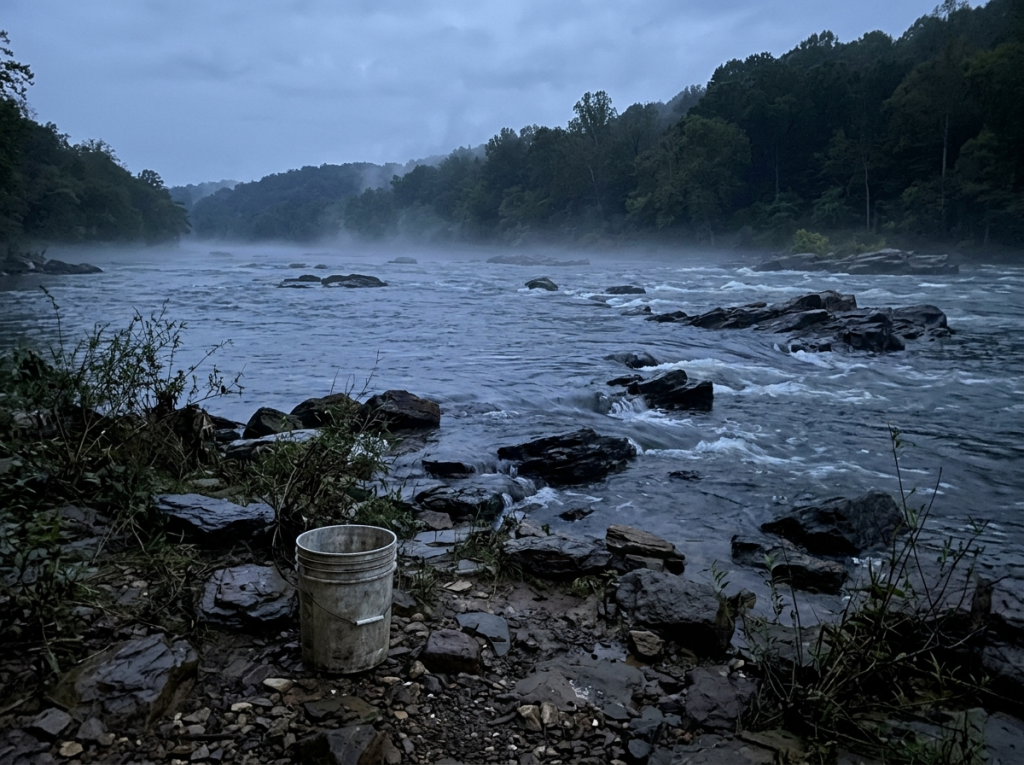
I stood on the bank during the flood of my sixteenth spring and heard it for myself. The rocks were gone under brown water and the whole river was shouting. Granddaddy said it sounded angry, and I could hear why. Nobody was out there pulling anybody under. The anger sat with the flood, and she was just the voice of it. When the spray reached my face I did not step back, and neither did he.
The soft sound in low water and the loud sound in flood are both the river going over the shoals. I know that, and so did he. It never changed what he took his hat off for.
The Yuchi knew that water better than any of us. They did not call what they heard a mistake. They heard her, and I have never been able to talk myself out of it.
6 How the Versions Meet
I have heard all three tellings on porches around here, each from somebody sure of it. The Yuchi have the woman in the water, singing to them. The Cherokee have a muse in the river Unashay. A third has a young girl whose voice goes downriver. The man who told me the girl's version had his boots up on the rail and would not hear a word about the other two.
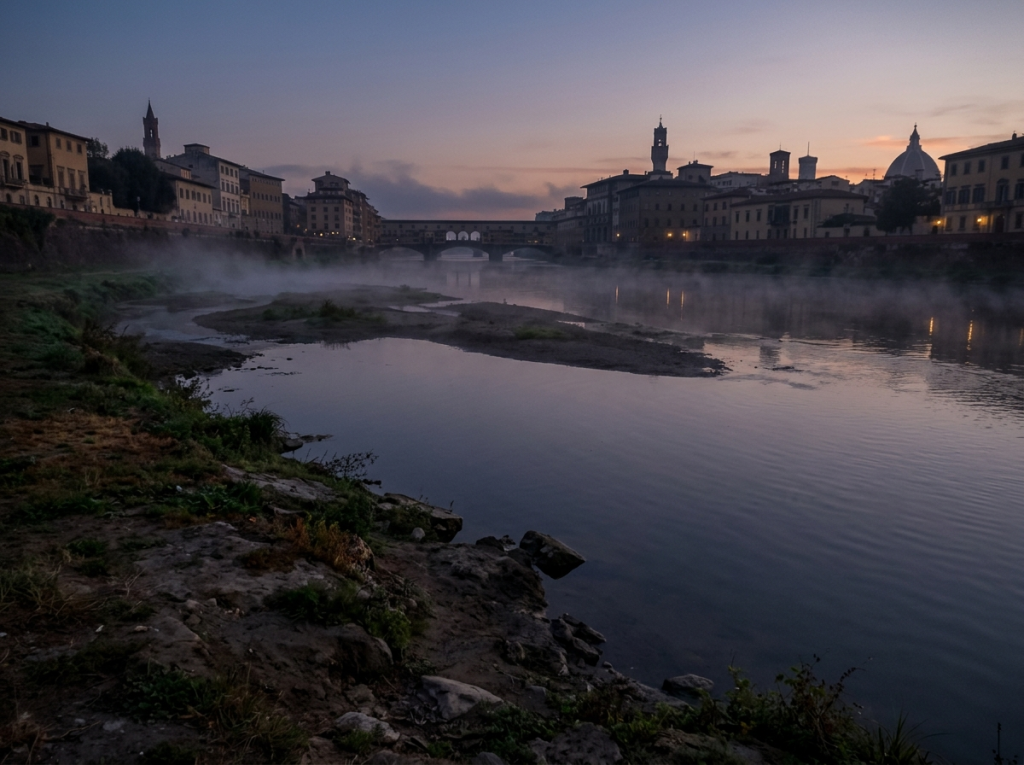
Some say she sings to protect. Some say only that she sings. I have sat through both arguments and gone home with the same river in my ears.
Once I read the marker on South Court Street, drove over to the Muscle Shoals library, and read the other. Same tale, two towns. A boy was running circles around the sculpture while his mother waited, and she told him to hush, and for a second he did. I stood there and listened with him, though all I could hear was a truck going by.
That evening I went down to the bank below town with Granddaddy's old bait bucket, set it on the rock, and sat. The light went thin over the shoals. I said nothing, and I waited for the water to start.
Sources
Field Guide is drawn from the legends as they are recorded. Its first-hand account is imagined. Its pictures are imagined scenes.