
Tennessee River Alligator is a figure of Alabama folklore.
Where it is told
Field Guide
The Gators of the Tennessee River
Alabama's river alligators have been reported since 1894, and a city that now asks you to keep your distance from them is looking at animals somebody let go on purpose.
How to know it
- Size
- Eleven feet in a Limestone County backwater in 2008, and ten feet three inches in the Jackson Bend subdivision.
- Build
- Heavy enough that one Huntsville male was put at 275 pounds.
- Movement
- It swims near walking trails, wanders through a neighbourhood, and slips back into a preserve.
- Where
- The Tennessee River and the Wheeler National Wildlife Refuge, from Decatur and Redstone Arsenal to Browns Ferry and Swan Creek.
- Where
- South Huntsville, on the greenway and in the neighbourhoods near Haysland Road and Jackson Bend.
- When
- Reports run from 1894 through the 1960s and 1979 to 2019, 2021 and June 2026.
- Habits
- It turns up in backwaters and refuge lands, and now and then at the edge of a city park.
- Habits
- A big one in Jackson Bend was judged to be acting abnormally, and that was the reason given for putting it down.
1 A Morning at Point Mallard, Decatur
Darlene Pruitt had walked the trails at Point Mallard Park every morning for eleven years. That was long enough that she had quit looking at the water. It was just the thing on her left, like a neighbour's fence.
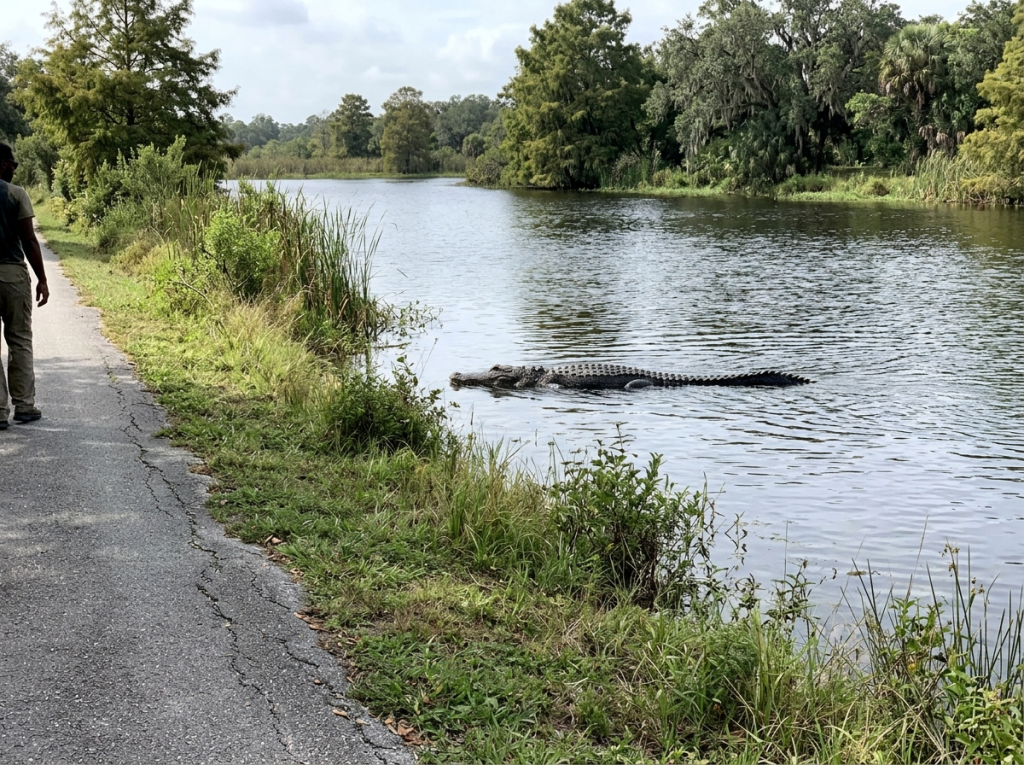
In 2019 the man ahead of her stopped short with his phone held up. Then a woman with a stroller stopped beside him. Darlene looked where they were looking. Out past the bank an alligator was swimming, a broad dark back and a long ridge of head, moving across the water as if it had nowhere to be.
She did not run. She stood on the pavement in her walking shoes and counted the benches between herself and the water. There were four.
Somebody filmed it, and the film got around that week. The city of Decatur put out a warning to walkers. Darlene read it standing at her kitchen counter with her keys still in her hand. The animal had been swimming beside the loop she walked, and she had gone past that water for years without a thought.
She still goes. She walks the same loop. These days she stops at the bend and looks at the river for a while before she moves on.
2 What They Call It
The name is plain. It is the Tennessee River alligator, or it is a gator. The first word of the name is the trouble. Alligators belong to Louisiana and Florida, and the Tennessee runs a long way from both.
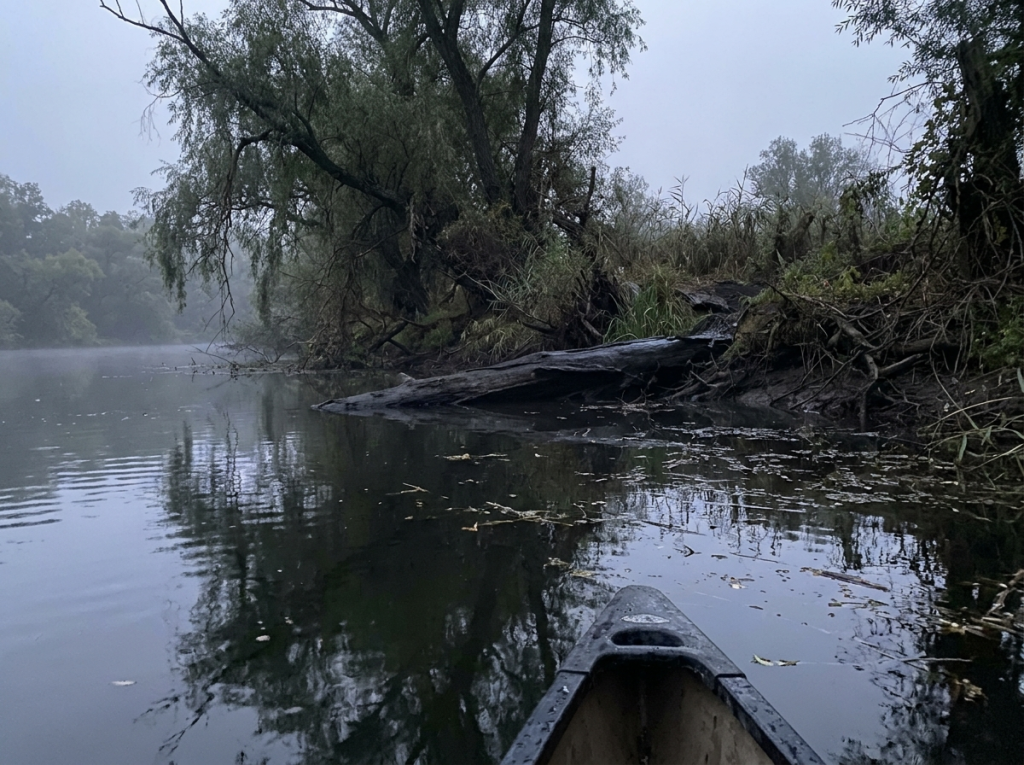
So the people who tell it start by apologizing. Alligators in the Tennessee River sound like a tall tale, they say, and then they say that the animals are real.
The name comes with a date, and the date is 1894. Reports of alligators in this river reach back that far, long before anyone carried a phone that could film one.
There is a theory for the oldest reports. From the 1930s into the 1950s, baby alligators were sold as souvenirs in Florida. Biologists suspect some of the old sightings trace back to those animals. A baby bought off a roadside stand and turned loose in a creek would be grown by the time anybody saw it again.
Huntsville cited the same 1894 date in 2021, when it asked residents to watch gators from a safe distance. The city wrote it down in an official notice, right next to the request to keep away.
3 How Folks Describe It
What people hand down about this animal is its size. They give you feet and pounds, and they spread their arms when they do it.

The biggest number comes from south Limestone County. In 2008 an Athens columnist stood beside a backwater and watched an 11-foot gator. Eleven feet is longer than a pickup bed, and it was lying in the water within sight of the bank.
The most exact numbers come from Huntsville. A male in the Jackson Bend subdivision measured ten feet three inches and weighed 275 pounds. That is a heavy animal, long and wide and solid from the snout to the tail.
At Point Mallard nobody has handed down a length. What people remember is the way it moved, out in the water by the trails, close enough that a phone could catch it. In the neighbourhood off Haysland Road, they tell of a large alligator that wandered through in June 2026 before slipping back into a nearby preserve.
Lay the numbers beside the places, and the animals are big and they keep turning up near the sidewalks.
4 Where and When It Turns Up
Start at the refuge. The first documented alligator at Wheeler National Wildlife Refuge was seen near Decatur in 1964. The talk was older than that, but 1964 is the year it was written down.
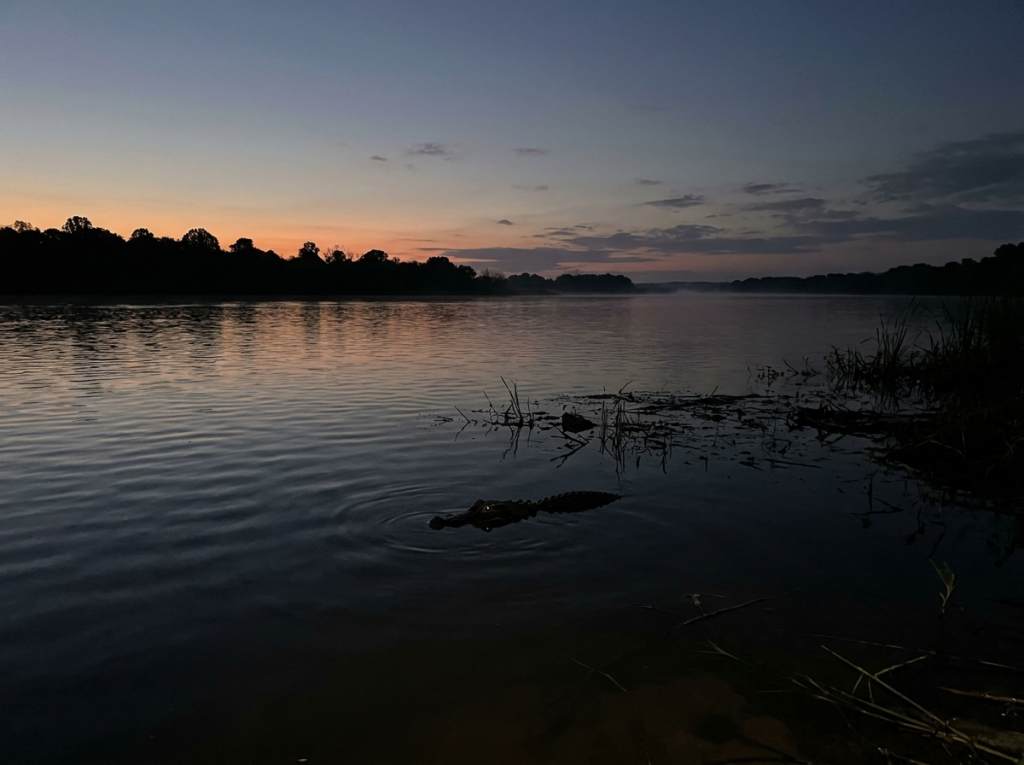
Then comes 1979. About 56 Louisiana alligators were released in remote parts of the refuge. Nothing swam up from the Gulf. They were put there on purpose, and people still go quiet when they say so.
Their descendants now turn up at Redstone Arsenal, at Browns Ferry and at Swan Creek.
A few dates sit apart from those. A columnist and a backwater in 2008. A park warning at Point Mallard in 2019. In 2021, a Huntsville notice after sightings along the greenway near Haysland Road, in southwest Huntsville where the city meets the river and the refuge lands. Folks there call it alligator country, and they say it with a straight face.
In June 2026 one was seen crossing a neighbourhood near Haysland Road. Somewhere in a nearby subdivision, state wildlife staff later dealt with the Jackson Bend male.
5 How It Behaves
The animal in these tellings stays in the water until something draws it out. The one at Point Mallard swam. The one in Limestone County lay in its backwater and let the columnist look. The Haysland Road one wandered through a neighbourhood in June 2026 and slipped back into a preserve.

The people around it are watchful. Decatur warned walkers. Huntsville asked residents to keep a safe distance. Both notices were put out for ordinary people on ordinary mornings, the walkers and the neighbours.
There is one hard ending. In the Jackson Bend subdivision, state wildlife staff euthanized the 10-foot-3-inch male after judging that it was acting abnormally. People whose job is reading alligators made that call, in a subdivision with houses around it and a preserve close by.
Most of the year, a gator is a long shape in the shallows that people point at from the bank. Now and then one gets into a yard, and the tone of the notices turns practical.
6 Telling It Apart
A shape in the dark can fool you. A deer will do it, or a dog, or a calf standing still in fog. This one does not fool people for long. The Athens columnist put a number on what was in the backwater, eleven feet. The person at Point Mallard got it on film.
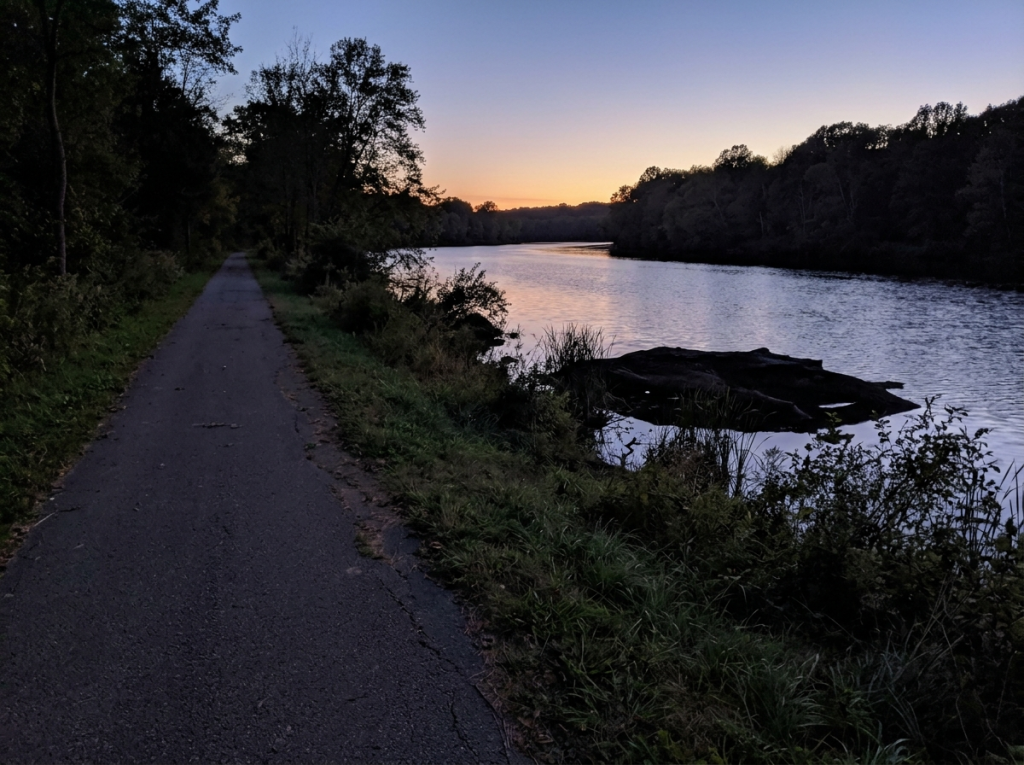
What gives it away is the size, and the water. Eleven feet in a backwater is no dog. Ten feet three inches and 275 pounds is no calf. In every telling the animal sits at the edge of something wet, a trail beside a park, a refuge shore, a greenway, a preserve behind a row of houses. When it leaves, it goes back to the water.
The easiest mistake is to take it for a tall tale. People did, for years. If you are on a trail near the refuge lands and something large is moving through the water, give it room. Somebody may already have filmed it, and the city may already have a notice written.
7 How the Legends Connect
Begin in 1979. About 56 alligators from Louisiana were released in the quiet back parts of Wheeler refuge, a long way from anyone's sidewalk. In 2021 a notice went up in Huntsville about the greenway.

The Decatur telling follows the water. It runs from the souvenir babies of the 1930s and 1950s, to the first documented animal near Decatur in 1964, to the release in 1979, to Redstone Arsenal, Browns Ferry and Swan Creek. The Huntsville telling picks up in southwest Huntsville near the river, where the greenway and the Haysland Road neighbourhoods begin.
Both tellings share a river. Both go back to 1894. In both places the city has asked the people who live there for the same thing, to keep their distance.
On one side there is a greenway in Huntsville and a big alligator stepping through a yard in June before it goes back to a preserve. On the other there is the refuge, with the gate that opened in 1979.
Sources
Field Guide is drawn from the legends as they are recorded. Its first-hand account is imagined. Its pictures are imagined scenes.